
 Access
 Login/Register
 Supplier Login












Author: Antje Stohl on behalf of VDMA Precision Tools, Edited by Ringier Trade Media Ltd
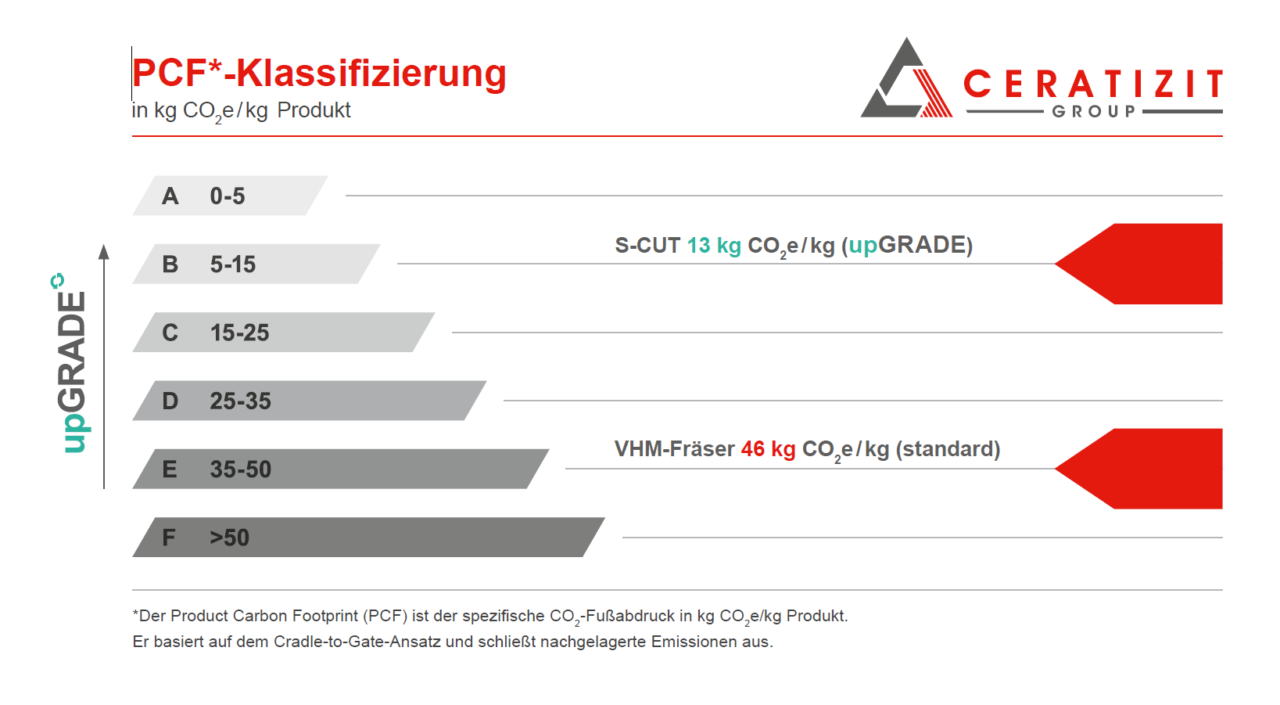
The upGrade carbide grade has a very low carbon footprint due to its high recycled content. Source: Ceratizit
In the precision tool industry, demand for verified Product Carbon Footprint (PCF) data has never been higher. Customers increasingly expect manufacturers to provide transparent climate metrics for every tool they supply. Yet, until recently, comparing the carbon footprint of similar products from different manufacturers remained problematic. Varying system boundaries, inconsistent functional units and data sources, and the absence of clearly defined product categories often turned the PCF into a confusing and unreliable figure.
A newly introduced standardised PCF methodology for tools now promises to change that—bringing clarity, comparability, and industry-wide consistency to an area long plagued by ambiguity.
From “Carbon Accounting” to Uncertain Numbers
Knowing the PCF of a tool should, in theory, offer a clear view of its climate impact. In practice, however, the value has often lacked reliability. “Even converting energy consumption into CO₂ equivalents used to be an adventure,” recalls Thomas Renner, Head of Quality Management for threading tools at Emuge in Lauf a.d.Pegnitz, Germany. Data sources often conflicted, producing conversion factors that varied widely. This inconsistency extended to raw materials: depending on the origin of the data, the CO₂ footprint of identical materials could differ significantly because suppliers used different calculation methods—or none at all.
According to Dr. Christoph Thurner, Group HSE Officer at Ceratizit in Mamer, Luxembourg, this made comparisons between products almost impossible. “Until now, two companies could manufacture essentially the same tool under similar conditions, yet their PCF values were not comparable because their methods differed so much,” he explains. The interpretation of which scope emissions should be included only added to the confusion.
A Standard That Makes PCF Comparable
To address these issues, a group of precision tool manufacturers collaborated under the umbrella of the VDMA to develop a unified methodology. The result is VDMA Standard Sheet 35111:2025-03, which defines a clear and practical approach for determining the PCF of tools.
The standard is based on a cradle-to-gate assessment. It includes direct Scope 1 emissions, energy-related Scope 2 emissions, and selected upstream Scope 3 emissions. The system boundary ends at the manufacturer’s factory gate, after which downstream emissions become the customer’s responsibility. A notable feature of the standard is its step-by-step approach: companies may calculate emissions at the company-wide level or break them down more precisely to individual machines. “The aim is reliability without overwhelming small and medium-sized enterprises,” emphasizes Renner.
For the first time, the standard establishes which scope categories must be calculated, which may be included optionally, and how the data must be processed. This creates a transparent, industry-wide framework that finally makes comparisons meaningful.
Clarity Creates Competitive Advantages
For manufacturers, the new standard is not just a requirement—it is an opportunity. Ceratizit now provides detailed CO₂ balance sheets for all its tools, including those with a higher carbon footprint due to material selection. The company has also introduced tools produced using recycled carbide grades. One example is the upGrade carbide grade, which has a significantly lower PC₂ footprint because of its high proportion of recycled material. “By analyzing our processes, we identified certain raw materials as the main drivers of our PCF. That insight even changed our purchasing strategy—we now actively source materials with a lower carbon footprint,” Thurner notes.
Emuge has taken similarly decisive action. By switching to 100 percent renewable electricity, the company reduced its greenhouse gas emissions by roughly 55 to 70 percent in the 2025 calendar year. “Because electricity accounts for about 70 percent of our CO₂ emissions, this had a massive impact,” says Renner. Customers directly benefit as well: choosing a tool with a lower PCF automatically reduces their own upstream emissions—an increasingly important factor in procurement decisions, funding eligibility, EU taxonomy classification, and supplier evaluations by OEMs.
One example is Emuge’s high-feed drill, which cuts machining time by 50 percent. Its carbon footprint is determined in accordance with the new PCF standard, giving customers both productivity gains and verified sustainability data.
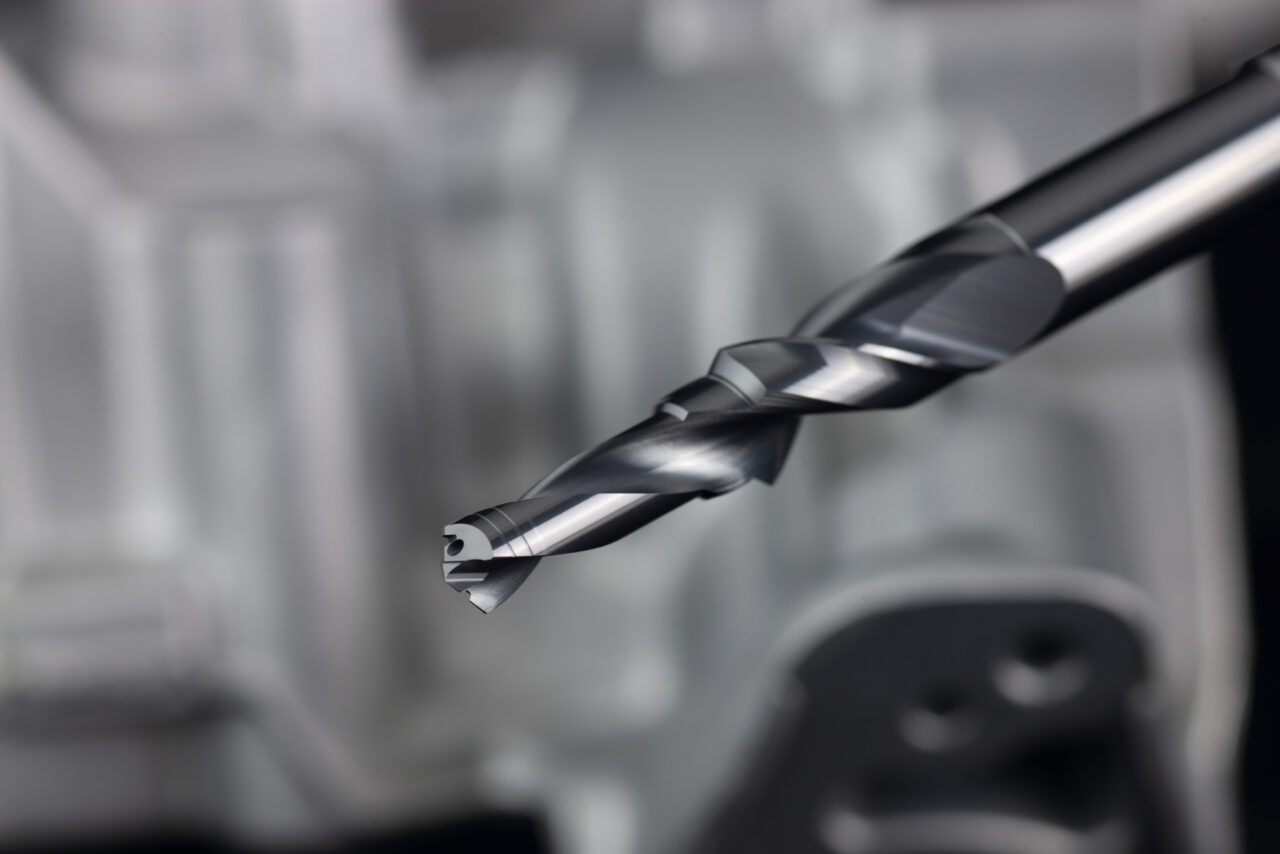
With the high-feed drill, users save 50 per cent of the machining time. Its CO₂ balance is determined on the basis of the PCF standard. Source: Emuge
CO₂ as a Market Differentiator
The shift toward carbon transparency is driven not only by manufacturers but also by customers. “The automotive industry already routinely requests the PCF of delivered tools,” says Thurner. While smaller companies may still be cautious, sustainability metrics are expected to become a standard component in tenders. Regulatory developments at the European level are also moving in this direction. Renner is convinced: “If CO₂ pricing and taxonomy rules continue to evolve, the PCF will become a decisive competitive differentiator.”
Building Knowledge, Raising Awareness
To facilitate widespread adoption of the new methodology, VDMA has already conducted two webinars, including one aimed at an international audience. With around 100 participants each, the events underscored the strong industry interest in standardized PCF calculations. “We have to meet customers with clear, understandable, and comparable data,” says Thurner. A uniform approach is essential, he adds, because “a standard must be transferable across industries if it is to work everywhere.”
Towards an Ecological Industrial Logic
The development of the new VDMA standard demonstrates that climate transparency is achievable even in complex manufacturing sectors such as precision tool production. Achieving this requires harmonized data, unified evaluation rules, and a shared language for emissions reporting. The experience gained so far shows that companies capable of understanding their processes can actively influence them—identifying CO₂ hotspots, reducing emissions, and offering customers validated information. The result is not only improved environmental performance but also a clear competitive edge.
Precision tool manufacturers have taken the lead, but the broader goal is clear: “Ultimately, everyone has to participate,” says Renner. Only through cross-industry standardization can PCF become a reliable indicator and a cornerstone of a climate-conscious industrial landscape.
Exhibition Note
The standardized Product Carbon Footprint methodology for tools, along with practical examples from participating companies, was presented at EMO Hannover 2025, held from 22 to 26 September 2025. Visitors were able to explore the new standard and its applications directly at the exhibitors’ booths.