
 Access
 Login/Register
 Supplier Login












Pneumatic components are widely used in factories for their simplicity and reliability. However, rising demands for speed, cost control, and sustainability are forcing manufacturers to rethink how much energy these systems consume.
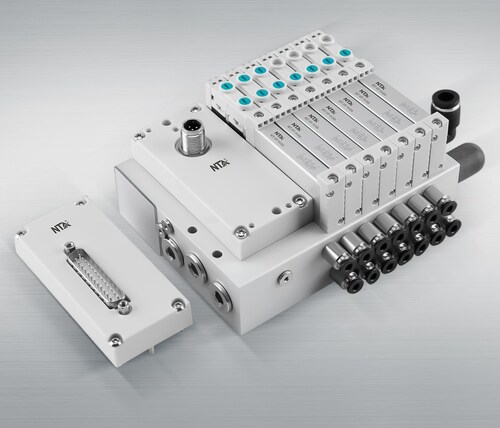
Image: NTA’s latest energy-efficient pneumatic valve, developed to improve automation speed while lowering energy consumption in high-cycle industrial applications.
That's the bigger picture behind Ningbo Titan Industrial Automation Co., Ltd. (NTA)'s latest move. The Chinese specialist has just released a new breed of energy-efficient pneumatic valves built to trim both compressed-air and electricity use without slowing down the fast-paced response that today's automated production lines demand.
It's a telling sign of where manufacturing is heading. With energy prices climbing, environmental rules tightening, and industrial automation equipment evolving at breakneck speed, the pressure is on every part of the system, even the valves. For a lot of operations, tweaking efficiency at this nuts-and-bolts level has turned into the smartest, least disruptive way to shave real money off the monthly bills in pneumatic automation systems.
Addressing a Common Bottleneck in Automation Systems
One of the biggest headaches in automated production lines has long been the inefficiency of standard pneumatic control valves. They tend to leak air and draw more power than necessary, especially when they're switching directions tens of times a second in high-frequency pneumatic applications.
NTA's latest valves were developed specifically to fix that. By redesigning the internal passages and using coils that need far less electricity to operate, the company has managed to cut those losses substantially.
In everyday use, customers can expect energy savings as high as 30% compared to older valve designs—though the exact figure depends on the setup and how heavily the system runs. For plants with lines operating around the clock or at high volume, gains like these at the component level often lead to real, bottom-line differences in energy bills across OEM automation projects.
Built for Speed and Tight Spaces
Speed is non-negotiable in today's automation lines, and NTA hasn't overlooked it while chasing efficiency gains. The new valves are tuned for rapid, high-frequency cycling with near-instant response, keeping things steady even in demanding setups like fast assembly stations, packaging machines, or robotic handling systems.
Just as importantly, they're deliberately compact. That smaller footprint means more valves can fit into already crammed control panels without blocking airflow or making maintenance a nightmare. It's a practical advantage as modern equipment keeps shrinking and packing in more functionality.
Compatibility with Mainstream Industrial Networks
With automation systems growing ever more interconnected, broad protocol support has become essential. NTA's valve solutions are built to work with key industrial standards, including Profinet, EtherCAT, EtherNet/IP, and CC-Link IE Field Basic. This allows straightforward integration into virtually any control platform found in automation projects worldwide.
That versatility proves especially useful for OEMs targeting global markets, where machines frequently have to accommodate varying customer preferences and industrial communication protocols.
Applications Across Multiple Industrial Sectors
These valves are built for real-world punishment across several sectors: packaging lines that never stop, precision medical devices, laboratory equipment, systems on commercial vehicles, and everyday industrial automation setups. In these application environments, both pneumatic directional valves and pneumatic actuators must meet extremely high requirements for high frequency (40 Hz), high precision, and high reliability under ultra-low temperatures (-40°C) and harsh conditions (exposure to rainwater and mud splashing).
Manufacturing Scale and Global Presence
NTA's new valve launch rests on decades of pneumatic component manufacturing experience. The company runs substantial production facilities outfitted with modern machining and testing equipment, allowing it to deliver consistent, high-volume output to customers around the world. Its pneumatic lineup covers pneumatic cylinders, valve terminals, air treatment units, push in fittings, and custom automation components.
Today, NTA supplies customers in over 100 countries and regions. It operates under ISO 9001:2015 and IATF 16949:2016 quality certifications, and its products comply with CE and RoHS standards.
The company is also preparing to expand its manufacturing capacity further. A new 90,000 m2 intelligent manufacturing base is scheduled to begin operations in 2026, reinforcing NTA's ability to support growing international demand for energy-efficient automation components.
Industry Perspective
"Energy efficiency and response speed are no longer optional features—they are baseline expectations in modern automation," said Mr. Zhu Sijie, Founder of NTA. "Our focus has been on practical improvements that engineers can directly apply in real production environments, rather than experimental concepts that are difficult to implement."