
 Access
 Login/Register
 Supplier Login












Engineering plastics are central to modern industrial transformation, facilitating resilient strategies across numerous manufacturing sectors. Their unique capacity to satisfy demanding regulatory, efficiency, and sustainability requirements establishes them as indispensable components for senior decision-makers navigating complex, evolving global landscapes.
This strategic importance is mirrored in the market's rapid expansion and constantly evolving product improvement. The global engineering plastics market grew from US$ 140.16 billion in 2024 to US$ 155.01 billion in 2025 and is projected to continue its robust upward trajectory, according to 360iResearch™. This strong market dynamics signal enduring relevance and substantial growth opportunities for stakeholders focused on implementing innovations and long-term value creation.
Impact-modified and fiber-reinforced thermoplastic materials
Fibre-reinforced thermoplastics are well established for their exceptional balance of mechanical strength, stiffness and reduced weight. However, certain applications are subjected to conditions that require performance beyond what standard grades can offer.
Xenia Materials introduces the new ST Upgrade, a technology designed to enhance the impact resistance of its fibre reinforced materials. The ST (Super Tough) Upgrade delivers a remarkable increase in impact resistance, achieving an average improvement of 60% compared with original formulations and ensuring reliable performance both at room and low temperatures. Simultaneously, it enhances flexibility and elastic behaviour, with elongation at break increased by an average of 40% compared with non-upgraded formulations.
The ST Upgrade can be selected and applied across a defined range of Xenia formulations, including: XECARB® (carbon fibre reinforced thermoplastic composites), XEGLASS® (glass fibre reinforced thermoplastic composites), XEBRID™ (thermoplastic composites engineered by combining carbon and glass fibre reinforcement), and XEGREEN® (sustainable thermoplastic composites combining recycled carbon fibre and recycled polymers).
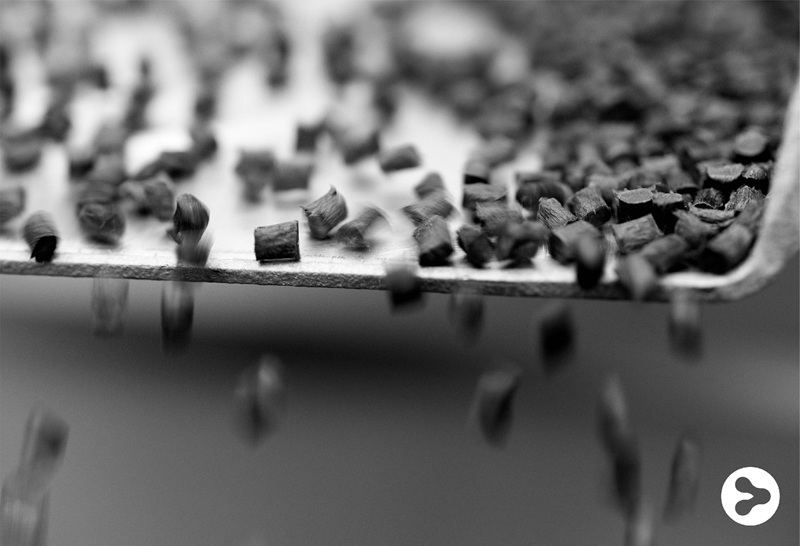
Xenia Materials unveils ST Upgrade, designed to enhance the impact resistance of its fibre reinforced materials.
The ST Upgrade can be applied to applications that demand advanced performance, from aerospace and motorsport, where lightweight and high-stiffness components are essential, to consumer goods requiring structural reliability, such as ski boots, bindings, mountain boots, hockey skates and shoe soles and plates.
Xenia’s portfolio already includes carbon- and glass fibre-reinforced materials based on PA6, PA66, PA11, PA12, PA6.12, PA4.10, PA6.10, and PA10.10 upgraded with ST technology for enhanced performance. Thanks to its versatility, the ST Upgrade can be applied to any polymer base and reinforcement processed by Xenia, offering maximum design freedom and delivering tailored solutions for the most demanding applications.
Metal replacement and high-tech projects developed with customers
At K 2025 in Düsseldorf, RadiciGroup showed off its innovative products and application solutions, and took the opportunity to dialogue with the global market on key issues such as performance, safety, and sustainability.
For Mr. Erico Spini, Global Marketing Manager of RadiciGroup High Performance Polymers, their participation at the K fair highlighted the company’s ability to offer tailor-made materials and services for various industrial sectors, from automotive (focus on e-mobility) to E&E, water management and consumer and industrial goods. In addition to considering the diversity of technical needs and standards related to different contexts, their approach always is to work in close collaboration with their customers until their projects are underway.
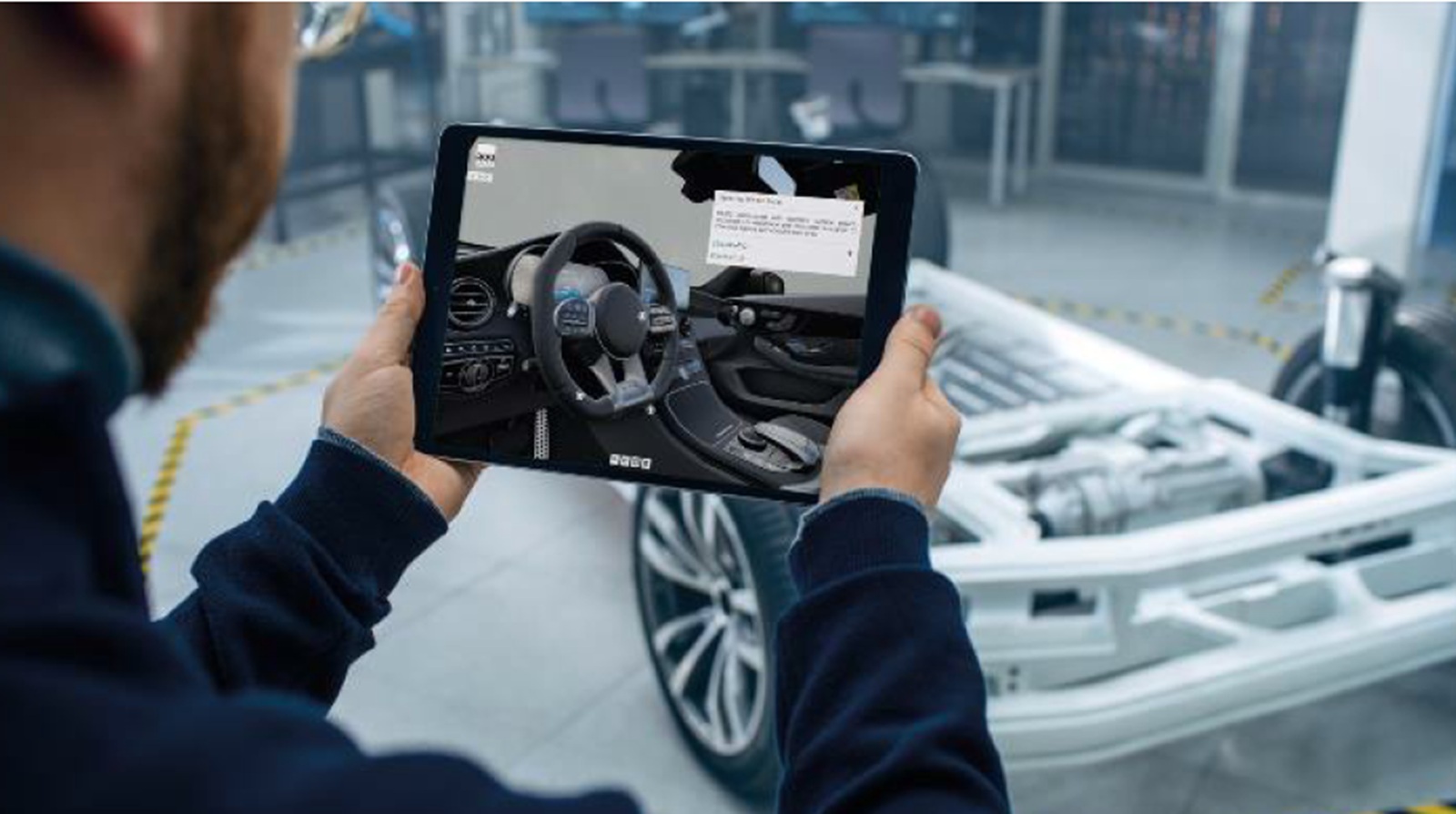
Performance, safety, and sustainability are issues addressed by RadiciGroup when it presented its portfolio at K 2025.
In the e-mobility sector, RadiciGroup plays a key role in the development of innovative and sustainable materials designed to improve electric vehicle performance and safety. There were numerous solutions on display for the continuously evolving market and they showcased their latest developments in orange-coloured materials for high-voltage components, which are required to be identified in this way by safety standards. Moreover, they presented a range of new-generation flame-retardant polyamides that are halogen-and-red-phosphorus free and offer noteworthy processing advantages during injection moulding. They have also expanded their offering of flame-retardant, halogen-free PBT products (Radiflam® B) with a version that adds hydrolysis resistance. Additionally, for the e-mobility sector, they shared the latest data for their new polyamides in the advanced development stage that combine flame retardancy with hydrolysis resistance.
On the sustainability front, Mr. Spini said that they are enhancing both the Bionside® range of materials from renewable sources and the Renycle® range of mechanically recycled materials, to include special and high-performance versions, for example, flame-retardant grades. These products are made possible by their precise selection of feedstock and careful recovery process, as demonstrated by an innovative electric vehicle battery module displayed in their stand.
RadiciGroup makes available its Engineering Service for metal replacement projects. Lightweighting parts means significantly lowering CO₂ emissions during the entire product life cycle. A successful metal replacement application presented at the fair Is Genny Zero, an Innovative self-balancing personal transporter, whose total weight was reduced from 110 to 60 kg by replacing metal with polyamide engineering polymers. The result is a more dynamic, more stable and safer vehicle that is more resistant to multiple stresses.
New standards for meeting the highest fire safety requirements
Effective fire prevention is essential, especially in places where large numbers of people gather in rooms within buildings or on public transport—even more so when escape routes are limited. High safety standards therefore always apply to passenger transport by rail. Particular attention is paid to materials used in the field of energy supply, for example for cable management systems and cable glands or for seals.
 With the FR3 series, KRAIBURG TPE introduced a new generation TPEs that meet special fire protection requirements.
With the FR3 series, KRAIBURG TPE has now launched the third generation of thermoplastic elastomers that meet special fire protection requirements. All specifications of the European standard for railway applications –fire protection in rail vehicles (DIN EN 45545-2, in particular R22 HL3 and R23 HL3) – have been met. In addition to their specific fire protection properties, TPE compounds in the FR3 series have outstanding material properties that make them ideal for applications in this demanding environment, including very good tear resistance values for halogen-free and flame-retardant TPE compounds. The soft and elastic TPE materials of the FR3 series have improved resilience properties compared to their predecessors. Especially in the temperature range between 23°C and 70°C, these materials score highly in comparative tests with predecessor products and are therefore suitable for many sealing applications. Excellent PP adhesion is one of the important requirements for the new FR3 TPE. They can be processed using proven thermoplastic injection moulding and extrusion processes. Due to the thermoplastic material structure, cold runner distributors and 1-component defective parts, for example, can be shredded and added back into the in-process recycling system.
While low smoke density and toxicity can be verified by railway standard tests, the UL94 vertical burning test ensures that the compounds react in a self-extinguishing manner in the event of a fire. The FR3 series guarantees V0 flame retardant classification even with a sample thickness of 1.5 mm. The outstanding test results were confirmed by the UL certification program, which allows these FR3 products to be awarded a Yellow Card, which provides the prerequisite for UL listing and serves as proof that the required safety, quality, and performance requirements for TPE are met.
Another important test requirement for flame retardancy is the glow wire test. Since there is a risk that live cables may ignite even without direct contact with flames because of high temperatures, this test is particularly relevant for materials used in or in the immediate vicinity of power cables. The FR3 series passes the test at 960 degrees Celsius, the glow wire limit temperature, without forming flames. These specially developed compounds therefore meet all railway-related requirements – in all colour and hardness variants