
 Access
 Login/Register
 Supplier Login












The end of a year invites reflection, but 2025 has not been a year that allows for simple headlines. It was a year of regulatory acceleration, shifting customer expectations, geopolitical pressure on supply chains and a rising demand for credible sustainability proof, not just positioning. Yet behind that noise, United Caps spent the year tightening its operational footprint, expanding its leadership bench, progressing Packaging and Packaging Waste Regulation (PPWR) readiness and preparing the product direction for 2026 and beyond. United Caps is a global leader in the design and production of high-performance plastic caps and closures. Headquartered in Luxembourg, it operates manufacturing facilities in various countries, including Belgium, France, Germany, Hungary, Ireland, Malaysia, Spain, and the United Kingdom. United Caps specializes in creating custom-designed specialty closures for a wide range of applications, supporting customers in developing total packaging solutions that enhance product integrity and consumer safety.
United Caps CEO, Jean Benoit Henckes, provides his insights on diverse topics – from regulation, carbon, product design, customer behavior, automation, supply chains to where United Caps is heading next.
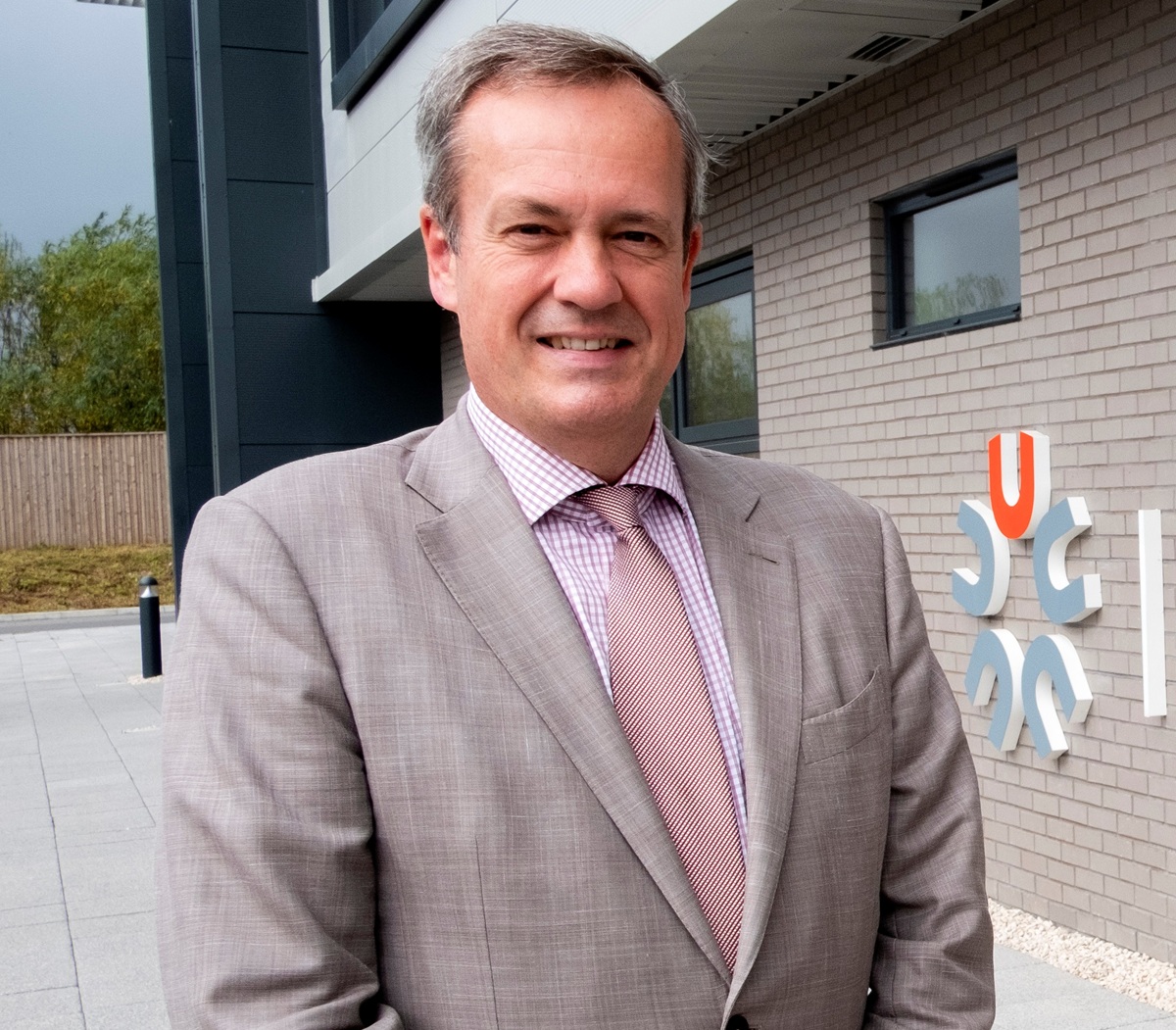
Mr. Jean Benoit Henckes, CEO, United Caps
If you had to describe 2025 in one sentence, what would you say?
Mr. Henckes: It was the year when ambition met reality. Many commitments were made in the last five years, but 2025 exposed who is actually prepared for PPWR, who understands the impact of mass balance, who is ready to secure credible recycled feedstock and who is still hoping the rules will soften. We do not think they will.
Let’s start with that regulation. Is the industry ready for Packaging and Packaging Waste Regulation (PPWR)?
Mr. Henckes: Not uniformly. United Caps is aligned with the direction of PPWR, but the wider ecosystem is uneven. We still do not have harmonized mass balance rules.
Enforcement differs across Europe. And the chemical recycling sector has been unstable, with several European plants closing. There is a clear need for our industry to develop a much stronger voice at this table. But one thing I am certain of, customers who wait will find compliance more difficult. The smart ones are moving now.
One positive development is the stronger collective stance emerging through the European Plastics Converters (EuPC). A coordinated communication effort is being built to defend fair competition and support the shift to a circular, low carbon plastics industry. United Caps intends to contribute actively to that work.
Mass balance became a defining theme of the Sustainability Week that United Caps held in November 2025. Why will it matter even more in 2026?
Mr. Henckes: Because it is the system that allows circular and bio based feedstock to scale without building a parallel chemical infrastructure. Mass balance is not about shortcuts. It is audited accounting with chemistry attached. You match sustainable input with sustainable claims.
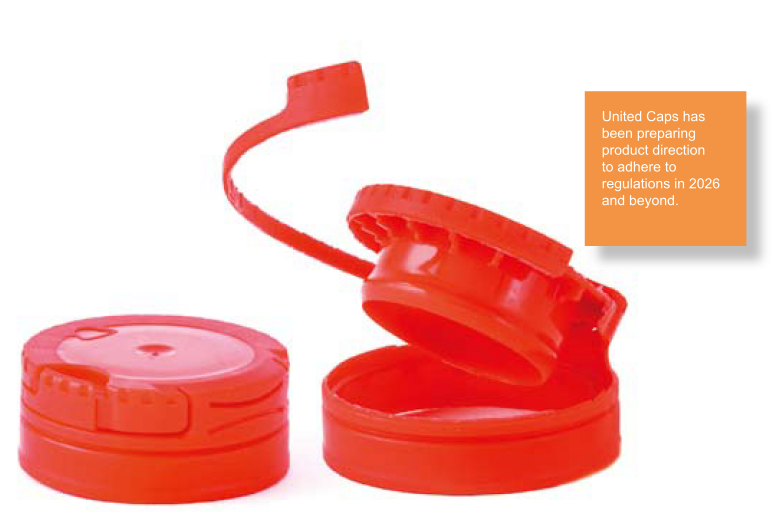
The fuel use exclusion discussions are important here. If part of the feedstock ends up as fuel, it must be subtracted from what can be claimed as recycled or bio based content. This is likely to become the default allocation method for SUPD and PPWR. It will bring clarity, and it will expose overstatement where it exists.
We also increased our engagement with the European Commission this year. The message from Brussels is consistent. Industry needs to provide concrete input if PPWR is to drive real circularity. United Caps will be an active voice in that process.
Also, the work the team presented at Sustainability Week is fundamental. We reduced the carbon footprint of our closures through operational changes that touch every part of production. Switching to one hundred percent green electricity across European plants, modernizing compressors and energy systems, adding solar capacity, improving machinery efficiency, reducing internal scrap, installing LED lighting. These are mostly invisible improvements to customers, but they change the baseline of every closure we make.
We also expanded product level carbon footprint measurement for our closures. That allowed us to reduce the cradle to gate footprint of standard products by more than 12 percent compared to eighteen months ago. Progress is not theory. It is in the numbers.
And most importantly, 2025 made one thing very clear. Recyclability starts at the design table. Most of a cap’s footprint is decided before the tool ever runs. That principle will guide how we design the next generation of products. Beyond our own operations, we are supporting efforts to improve carbon data quality from material producers. Reliable upstream information is essential for real decarbonization, and a collective approach will help the entire value chain move faster.
Where does product innovation sit within this? It has been a demanding year operationally.
Mr. Henckes: Innovation becomes more important, not less. We advanced our lightweighting work, especially in edible oil caps where we will deliver lighter, more recyclable solutions without sacrificing performance. At the same time, our teams are preparing the product platforms we will take to Interpack. Interpack only comes once in a cycle. It’s a great opportunity to show where the company is heading. We intend to use that opportunity fully.
Let’s talk supply chains. Are they any more predictable than last year? What is United Caps’ approach?
Mr. Henckes: Not really. Energy is more stable than 2023 to 2024, but it is still a structural cost risk. The geopolitical picture is fragmented. The US, EU and Asia are moving in different directions on industrial policy. Tariffs are on and off…trade no longer outpaces GDP, which tells you supply chains are shortening. Europe risks becoming less competitive if it does not address carbon competitiveness.
The direction is clear. A BETTER UNITED is a global business with strong regional execution. CLOSE TO YOU guides how we think about footprint, resilience and customer support. Proximity, capability and carbon performance will define competitiveness far more than price alone.
AI has been everywhere this year, but you have kept the topic grounded.
Mr. Henckes: Because AI is not yet the decisive factor on the factory floor. Automation matters more. Predictive maintenance, line modernization, QC technology and skilled labor. These are what change output today. We look at AI in a pragmatic way, but we will not overclaim. Credibility matters.
Let’s finish with customers. Are they really ready to move with urgency on sustainability?
Mr. Henckes: Some are. Many are not. Consumers say they will pay more for sustainable packaging but often do not follow through. Brands behave the same. Commitments are made, but action follows slowly unless cost can be shared. Trust is low. Scrutiny is high. And the rules are tightening.
This is why we ask our sales teams to discuss sustainability in every meeting. Not to pressure customers, but to help them understand what is coming and why waiting is the risky option. Sustainability Week helped here because it provided clarity. It removed the noise and showed the facts.
So what is your outlook for 2026?
Mr. Henckes: Demand will remain cautious at the start of the year. But the regulatory wave is not slowing. Carbon reporting will harden. Mass balance will become central. For United Caps, the priority is clear. Stay credible. Stay science based. Stay ahead of the rules. And help customers move from ambition to action.
If 2025 was the year ambition met reality, what will 2026 be?
Mr. Henckes: The year progress becomes measurable. In 2025 United Caps strengthened its operations, deepened its leadership bench, advanced its sustainability footprint and prepared the product direction that will define the next phase of growth. The work done this year gives us the foundation to move faster in 2026.
The next twelve months will demand more verification, more carbon transparency, more practical circularity and more leadership from manufacturers, not just commitments from brands.