
 Access
 Login/Register
 Supplier Login












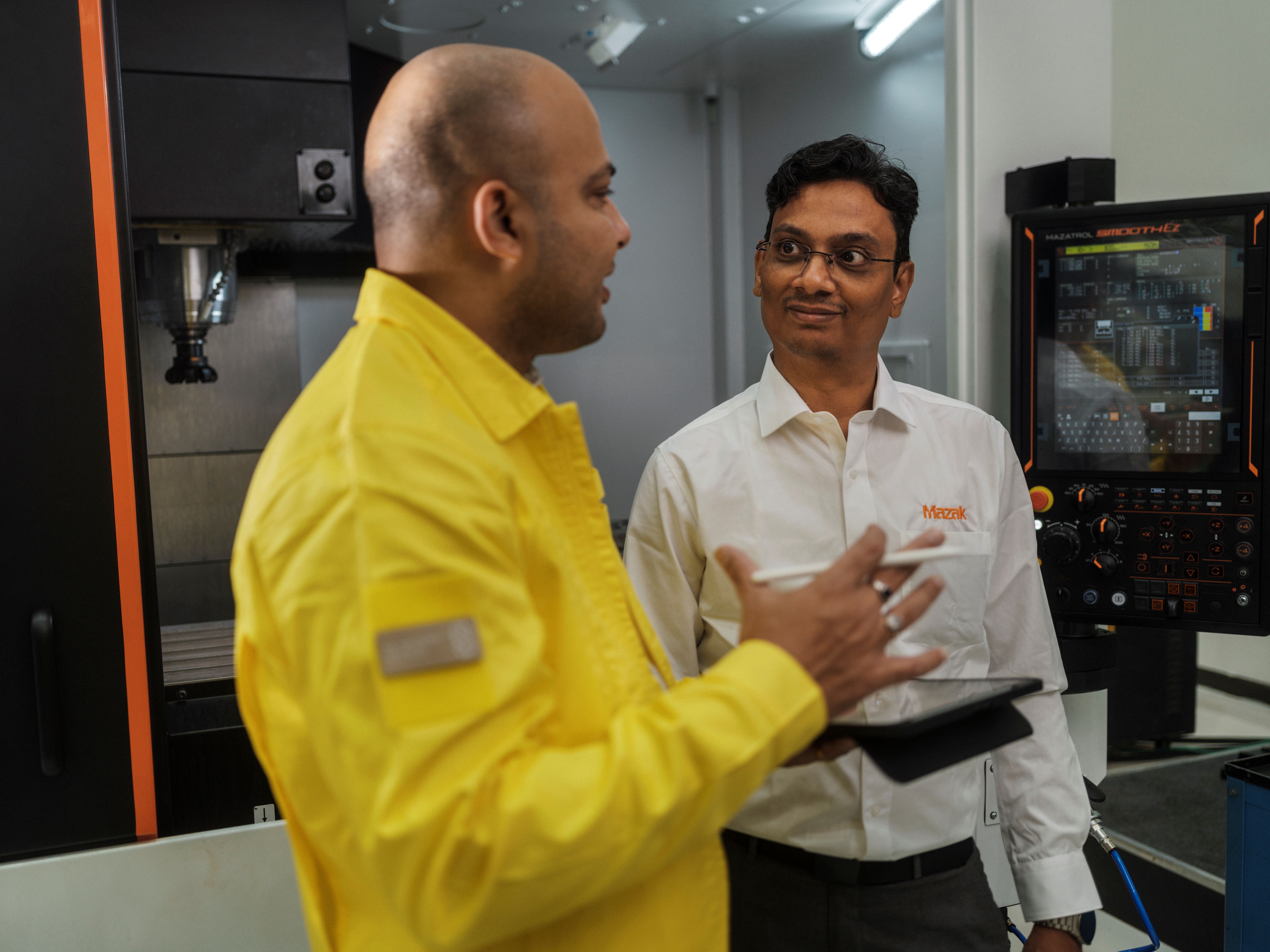
A 2024 study by Deloitte and The Manufacturing Institute predicts that nearly two million manufacturing roles could go unfilled over the next decade if talent shortages are not addressed. While addressing this gap will take time, manufacturers must still presently meet the ever-growing demand for increasingly specialised and complex components. Here, Nicklas Bylund, Head of Engineering Projects at metal cutting solutions expert Sandvik Coromant, introduces Engineering Projects — a structured, component focused approach that helps manufacturers bridge the skills gap while maintaining performance.
Across aerospace, automotive and general engineering, applications are becoming increasingly specialised, placing greater demands on the machined components. From ever more difficult to machine heat resistant alloys in aircraft engines to automotive parts in both steels and aluminium, manufacturers are expected to achieve tighter tolerances, superior surface finishes and consistent quality under increased cost pressure. These demands place a higher pressure on tooling and machining strategies.
With expertise in short supply due to the persistent shortage of skilled machinists, programmers and engineers, many manufacturers have traditionally relied on trial-and-error methods to refine production. However, as complexity grows, these approaches are proving increasingly inadequate, introducing inefficiencies, variability and risk, as well as consuming limited time and resources.
In the face of these industry-wide challenges, Deloitte in its 2025 Manufacturing Industry Outlook stated the need for “new approaches and tools that can be leveraged across the business to maximise efficiency and build resilience, and prepare for a potential new era of industry expansion.” To stay competitive, manufacturers do need approaches that are aligned with the demands of modern production.
In the context of components, this means solutions that align tooling choices, machining strategies and process data, creating a consistent foundation for repeatable, high-quality results. This is where Sandvik Coromant’s Engineering Projects come into play.
Introducing Engineering Projects
Engineering Projects has been developed by Sandvik Coromant to help manufacturers strengthen the capability, stability and performance of their machining processes of critical components.
Designed in response to the growing complexity of components and the shortage of specialist expertise, Engineering Project engineers provide structured, end-to-end support that spans every stage of production. Through close collaboration with customer teams, engineers utilise their knowledge of tooling, machining and CAM programming and parts processing to deliver a complete, production-ready tooling package.
The lifecycle of a Project
Each Project begins with a detailed consultation, where Sandvik Coromant engineers work with customer teams to review component designs, material specifications, tolerances, machining requirements and production targets. In understanding these elements early, engineers can decipher whether it would be best to optimise existing equipment or create a tailored strategy, whilst also factoring in any challenges that they may face in the process.
Following this phase, tooling specialists design or select the optimal combination of standard and special cutting tools, adaptors and work-holding solutions, as well as CAM with tool path optimisation. For advanced applications — such as aerospace components made from difficult materials or automotive parts manufactured in large quantities — this process often results in tooling packages that blend standard solutions with specially designed components. Through Sandvik Coromant’s acquisitions, holding solutions can also be developed and delivered.
With tooling strategy determined, CAM programmers translate the strategy into production-ready programs. Using software such as Mastercam, Siemens NX and Vericut, toolpaths, feed rates and cutting sequences are virtually modelled. This digital verification helps to identify potential collisions, optimise cutting forces, predict cycle times as well as reducing waste from failed tooling trial-and-error stages. This benefits operators by