
 Access
 Login/Register
 Supplier Login












The global plastic additives market continues to exhibit strong growth potential, with projection of reaching US$93.85 billion by 2032 at a CAGR of 5.7% from 2024-2032, based on a report by Fortune Business Insights. The Asia Pacific region dominates this dynamic market, accounting for nearly 40%, since plastic additives are widely used as various function types, including stabilisers, processing aids, modifiers, flame retardants, and plasticizers in industrial applications.
Three industry players are leading offering a new breed of additives to support the quest towards sustainability.
Holland Colours additives for rPET overcome challenges
Beyond the visual aspect, functional colourants and additives serve a purpose – functionality, energy use during production, end-of-life recyclability, taste protection and prolonging shelf-life are all technical aspects to consider during design. Holland Colours offer a range of additives including those for recycled PET (rPET), UV absorbing additives for plastics, slip additives, anti-yellowing additives or biodegradable additives. Recycled PET (rPET) plays an essential role in the shift toward a circular economy, but repeated recycling cycles introduce material performance challenges. With each cycle, rPET deteriorates, resulting in loss of mechanical integrity and colouristic performance, and limiting its use in food-contact applications.
To address these challenges and improve the quality of recycled PET, CircStab® offers advanced stabilisation during the recycling process. It enhances material quality, improves recyclability and preserves the structural integrity of rPET for future applications. CircStab is a next-generation additive designed to prevent PET degradation during the recycling process. By stabilizing rPET, CircStab ensures excellent optical and mechanical properties, maintaining key performance parameters such as preserving the brightness for high-quality, clear rPET; minimising yellowing for better colour consistency; reducing AA (Acetaldehyde) levels to further ensure safe and high-purity applications; and maintaining IV (Intrinsic Viscosity) to prevent molecular degradation, boosting rPET strength and durability.
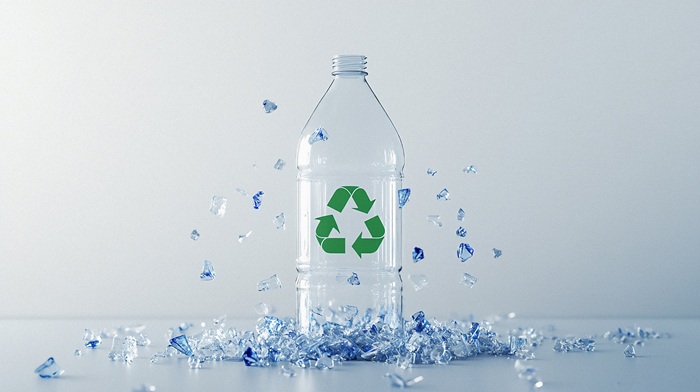
Holland Colours offers a range of additives including those for recycled PET (rPET).
Maintaining intrinsic viscosity is a major concern when it comes to using rPET. The stresses of processing, heat, and shear can cause polymer chains to shorten, changing the integrity of the polymer. But through the addition of Holland Colours’ ViscoBoost, the polymer structure can be rebuilt, enabling it to meet the demands of your application once again. And there's no special equipment required. ViscoBoost works with standard single and twin screw dosing equipment, incorporating at standard processing temperatures. Available in a solid Holcomaster format, ViscoBoost helps improve the intrinsic viscosity of PET. ViscoBoost can be used as a standalone product or combine it with other Holland Colours colourants and additives.
While virgin PET is clear, rPET comes in a variety of coloir grades and corresponding prices. These colour differences are caused by remainders from their first life impacting the recycled material. The clearer the recycled plastic is, the higher the price—to the point where high-quality rPET is often more expensive than virgin PET. TintMask® can neutralise the color cast of discoloured rPET. TintMask® is based on the principle of ‘opposite colours’. Holland Colours use a customised colourant formulation to neutralise or mask the yellow or greenish tint found in discolored rPET and turn it into a higher valued shade more easily accepted by the market. TintMask® colourants will not migrate or sublimate in a high vacuum process, and they are available in liquid and solid formats. TintMask® products have been designed for use in PET and are in regulatory compliance with EU and FDA directives.
Taste consistency can be an issue with PET packaging, which is why Holland Colours offers PET colourants that include TasteGuard® - an all-in-one convenient package. Acetaldehyde (AA) forms in very small quantities during PET production and processing. AA is naturally found in fruits, vegetables, breads, cheeses and other food in amounts that are not harmful to human health. AA is a degradation product of PET that migrates, giving off a fruity flavour that can influence the taste of whatever the PET packaging contains. This is a particular problem for non-sparkling water. Low AA content is therefore a key requirement for PET water bottles which is exactly what TasteGuard® accomplishes. In effect, TasteGuard® AA Scavenger catches the AA so it cannot affect the taste of the non-sparkling water.
TasteGuard®, the ultimate Acetaldehyde Scavenger is based on a renewably sourced, natural carrier. This highly-loaded, bio-based AA scavenger increases recyclability by reducing the use of other, less earth-friendly resins and additives. Recycling is also improved by a low scrap rate and energy consumption. And, TasteGuard® is process neutral.
Holland Colours’ LightGuard offers UV protection for brand owners and converters who are looking for: protection against the degradation of nutrients and vitamins by (ultraviolet) light in packaged food such as juice; and/or protection against flavour degradation for example in beer where light (both UV and visible) will cause the so called “light struck” effect, a bad off-flavour; and/or protection against the degradation of colourants in detergents, dish washing liquid, hair oil etc. Available in solid and liquid formats, LightGuard can be used alone or with other additives or colourants to get the right coverage.
White recycled polyethylene terephthalate (rPET) is a promising material for use in circular white light-blocking applications and to aid in reaching recycling targets. The white rPET stream is becoming more and more available, thereby allowing for full circularity for white PET dairy bottles. However, it faces challenges that hinder its widespread adoption. Holcopearl ReWhite is a mono-material solution for PET bridges the gap between performance, compliance, and circularity. The highly concentrated solid format: Holcopearl ReWhite offers a powerful additive in solid form. Its superior UV and light blocking enable the creation of white dairy bottles that block 100% UV radiation and up to 99.9% of visible light. The flexible dosing levels provides for adjustable dosing ranges from 2% to 15%, depending on application and opacity needs. Moreover, it allows the usage of high levels of white rPET, 50% and above, while providing an attractive colour and high opacity.
BASF unveils sustainable additive solutions
BASF showcased the evolution of its VALERAS portfolio, highlighting how its additive solutions and services are enabling sustainability across the plastic lifecycle. First introduced at K 2022, VALERAS includes BASF’s existing plastic additives that bring a significant sustainability value to plastic applications by improving durability, saving energy, reducing emissions, and promoting biodiversity. The VALERAS portfolio will continuously evolve to support customers from the plastics industry on their sustainability journey. This portfolio has developed into a robust platform that addresses plastic circularity, durability, and carbon transparency, and this was highlighted at K 2025.

BASF added two innovations to the VALERAS additives portfolio.
Two new innovations were added to the VALERAS portfolio. To support organic farming, TINUVIN® NOR®112 enhances greenhouse film performance against harsh agrochemicals, further strengthening BASF's NOR platform for sustainable plasticulture. The latest advancement to expand the NOR portfolio is a new hindered amine light stabiliser (HALS) solution. BASF’s NOR platform sets the benchmark in agricultural plastics by offering customised, high-quality solutions for the changing needs of plasticulture. For instance, Tinuvin NOR 211 AR and 112 AR are cost-effective options that can handle strong sunlight, heat, and chemicals. On the other hand, Tinuvin NOR 356 is known for its excellent durability and performance. These solutions help film manufacturers ensure long-lasting protection, easy processing and compliance with organic farming standards.
BASF also showed how additive technologies are enabling transformation across multiple industry sectors. These include a closed-loop agricultural packaging solution with Cleanfarms and McKenzie/Snyder, showcasing the role of Irgastab® in enhancing recycled content; a partnership with Shouman Group that has helped position the company as a trendsetter in Egypt’s plasticulture market through early adoption of Tinuvin® NOR® 211; and a collaboration with Takazuri Ltd. to deliver climate-resilient roofing solutions in Eastern Africa using post-consumer materials and tailored additive packages.
LANXESS flexes diverse polymer additives for enhanced performance
LANXESS presented its comprehensive product portfolio for the plastics industry at K 2025 that included polymer additives, colourants and heat stable inorganic pigments. As Harald Puetz, Head of Marketing for brominated and phosphorus-based flame retardants at LANXESS, explained: “Polymer additives are key factors in the performance, safety, and sustainability of modern plastics. Our diverse solutions open up new opportunities for manufacturers and end customers to realise the most demanding applications with innovative, durable, and environmentally friendly materials.”
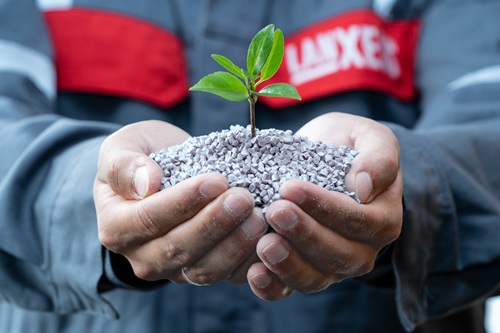
LANXESS offers diverse additive solutions that open up new opportunities for manufacturers and end customers to realise the most demanding applications
With its brominated and phosphorus-based solutions, LANXESS offers one of the most comprehensive ranges of organic flame retardants in the world. The polymeric and reactive flame retardants reduce the release of additives from polymers, thus contributing to environmental and health protection without compromising fire safety. Due to their high efficiency, brominated flame retardants are widely used in the construction and electronics industries. In addition to effective fire protection, phosphorus-based flame retardants offer other advantages such as good processability and high elasticity in polyurethane (PU) and polyvinyl chloride (PVC) systems.
In order to support its customers, LANXESS continuously develops new sustainable solutions. Levagard 2100 for example is a next-generation, reactive flame retardant – safe, efficient, sustainable. With Levagard 2100 LANXESS customers get safer, longer-lasting, and more environmentally friendly flame retardants without compromising on fire performance. The product is specifically designed for rigid polyurethane (PUR), polyisocyanurate (PIR) foams as well as closed cell spray foams used in construction and insulation applications.
Unlike conventional additive flame retardants such as TCPP (tris (1-chloro-2-propyl) phosphate), Levagard 2100 is a low-viscosity reactive phosphonate that chemically bonds into the polymer becoming an integral part of the matrix. This reactive integration offers several key benefits: low volatility, minimal migration, lower VOC emissions and enhanced durability – thus making it a sustainable alternative for modern insulation systems. In addition, due to its low plasticizing effect the product offers improved mechanical properties. Levagard 2100 perfectly fits into the LANXESS value chain due to a full backward integration into the phosphorus-based building block produced in Germany which is used in the product and therefore offers a high supply chain resilience.
Emerald Innovation 5000 is another newly developed sustainable flame retardant designed as an alternative to decabromodiphenyl ethane (DBDPE). The product allows manufacturers and compounders to meet stringent fire safety requirements while fulfilling the latest regulatory demands in traditional and emerging markets as well.
Due to its polymeric, melt blendable characteristics, Emerald Innovation 5000 addresses the fundamental migratory issue of small molecular bromine-based flame retardant products. The product shows high permanence with low mobility when compounded into plastic resins, preventing blooming with the long-life cycle of end use cases. In addition, it enables a broad processing window and tailored physicochemical properties in a variety of engineering plastic resins.
LANXESS also celebrated the 75 years of Mesamoll, the phthalate-free plasticiser that enables the production of flexible, durable, and long-lasting products and has shaped the global plastics industry since its inception in 1949. From textile printing, waterbeds and stand-up paddle boards to automotive applications and sealants, Mesamoll continues to deliver performance and reliability across a wide range of applications. Its high-gelling capacity and exceptional saponification resistance allow customers to manufacture cost-efficient products with a long service-life – ensuring consumer satisfaction over decades.
Mesamoll underwent a major improvement in 2023. LANXESS transitioned to a more sustainable version by using carbon-reduced raw materials, offering its customers a reduced product carbon footprint by approximately 20%. This is done without compromising on quality or performance via the mass balance approach. Alongside to Mesamoll, LANXESS offers multiple other non-phthalate plasticizers in its additive portfolio.
In order to offer more sustainable and less regulatory restrictive solutions to the customers, LANXESS has also expanded its product range of hydrolysis stabilisers for plastics and polyurethanes with the addition of Stabaxol L as monomeric and Stabaxol P LF as polymeric carbodiimide, two products in a new line of innovative, low-emission carbodiimides and with no labeling. With Stabaxol L and Stabaxol P LF, LANXESS is addressing the trend toward customised anti-hydrolysis agents that are tailor-made for use in individual applications and can thus optimally meet requirements with respect to stabilisation performance, toxicology, emissions and handling.
Stabaxol L shows outstanding performance when used in polyester/polylactone polyols, thermoplastic polyurethanes (TPU), other PU elastomers and polyester based polymers. In particular its use in the polyurethane and PET monofilament applications leads to an extension of the service life of the final article under moist and warm operating conditions. Stabaxol P LF on the other hand is a label free sustainable hydrolysis stabiliser providing excellent protection against hydrolysis in ester-based thermoplastic elastomer compounds (TPE) in combination with high thermal stability, lower emission during processing. Typical applications include cable sheathing, filaments and textiles, shoe systems, rollers, engineering injection moldings and electronic housings.
Other products presented by LANXESS include its extensive range of high-performance colourants for the plastics industry. These solutions enable energy-efficient, direct colouration of plastic goods, eliminating the need for subsequent coating and reworking, and include both universal products and specialties tailored to demanding applications. For instance, a durable and highly visible orange marking is essential in many applications and LANXESS addressed this by offering two complementary products that address stringent requirements: Macrolex Orange HT and Bayplast Orange TP LXS 51137. Macrolex Orange HT allows plastics to be permanently coloured in the RAL 2003 orange shade. Macrolex Orange HT is a soluble organic dye that features excellent heat stability, excellent lightfastness and weather resistance, high colour strength, and remarkable brilliance. Macrolex Orange HT ensures that the colouring and thus this critical safety marking is both durable and highly visible, supporting accident prevention and compliance with industry standards. Bayplast Orange TP LXS 51137 (Pigment Orange 68) is also designed for use in high-voltage and other engineering plastic components like housings of outdoor power tools. This pigment solution stands out for its excellent weather resistance and exceptional durability, making it ideally suited for long-lasting outdoor and safety-relevant applications. Bayplast Orange TP LXS 51137 is particularly valued where maximum longevity and colour stability under UV exposure and other extreme environmental conditions are required. Its robust properties ensure that plastic parts maintain their safety-critical orange colouration over many years, further reinforcing accident prevention and compliance in the e-mobility sector.