
 Access
 Login/Register
 Supplier Login












The rapidly falling price of robots and continually increasing labor costs will accelerate manufacturers’ shift toward a lights-out setting, according to a recent analysis by Frost & Sullivan.
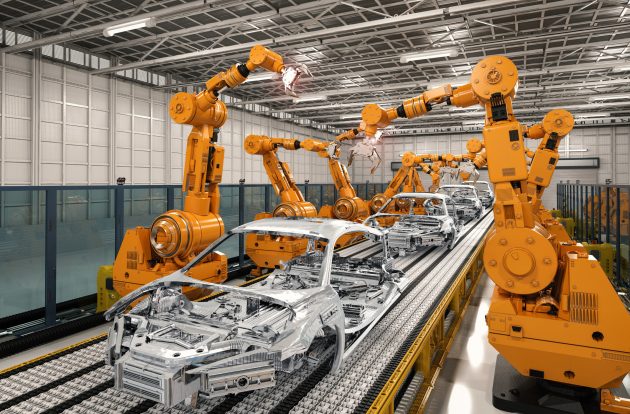
The manufacturing process is fully automated in a lights-out environment, with minimal human intervention required to run day-to-day operations. Companies have an opportunity to optimize their human capital and potentially save up to 20% of labor costs and generate a 30% increase in productivity output by switching to a lights-out operations model. In addition, they can achieve their sustainability and zero-carbon emission goals by saving energy during production hours. Automotive, general manufacturing, electronics and electrical components, and logistics and warehousing are four major industries expected to make rapid advancements toward a fully automated lights-out environment in the short term.
"Globally, the COVID-19 outbreak has further expedited the shift to automated lights-out manufacturing processes. This enables companies to expand their production capacity beyond traditional shift hours and take on additional work orders to ramp up productivity to pre-COVID-19 levels," said Vinay Venkatesan, Program Manager, TechVision at Frost & Sullivan. "Artificial intelligence (AI) will be the most critical tool enabling the lights-out toolkit. It will fuel several key technologies such as robotics, cybersecurity, digital twins, generative design, cloud computing, 5G, and 3D printing, all of which will play a key role in achieving lights-out operations."
"Additionally, the manufacturing industry will increasingly rely upon an ecosystem of technology experts, system integrators, and service enablers to achieve agility and customization. In fact, more than 45% of manufacturing applications are expected to implement robotics-as-a-service (RaaS) by 2030."
With a long-term vision, a digital-first approach, and a highly skilled human workforce, a lights-out manufacturing process can unlock several opportunities, including:
Rise of micro-factories: The shift toward decentralized structures and automated manufacturing processes will drive the demand for microfactories that require a smaller workforce and less space, energy and materials.
Grid manufacturing: Cyber-physical systems and computational advancements driving intelligent automation will allow companies to achieve mass customization by adopting operational customization as a business strategy.
Manufacturing-to-zero-as-a-service: Enabling manufacturing optimization with a zero-based value proposition requires an integrated approach that leverages all core “zero” technologies.
Industrial Internet of Things (IIoT) platform: Ensuring a seamless transfer of information among interconnected stakeholders is important to build a collectively intelligent IIoT platform.