
 Access
 Login/Register
 Supplier Login












By DR. ELAINE BORAZON, SHAPE Asia Project Lead
As the food and beverage manufacturing sector enters 2026, it faces rising costs, shifts in consumer preference, health challenges, and innovations in manufacturing. Operational complexity and cost volatility remain key industry concerns, particularly in Southeast Asia, where inconsistent cold-chain infrastructure and environmental disruptions affect agricultural yields and logistics. These often lead consumers to choose calorie-dense options that are more affordable but less nutritious. The prevalence of health concerns and lifestyle-related diseases is rising.
Yet, the region's diversity also presents opportunities as demand is high for convenient affordable packaged foods as well as functional foods and health products.

(Photo © Yulia Chyshevska I Dreamstime.com)
Directing the future: A vision for transformation
Amid these constraints, the regional initiative and policy lab, SHAPE Asia aims to strengthen food systems across the region by providing a framework for balancing profitability with public health through equitable food policy and transformed retail environments. The industry would benefit from evolving beyond the basic calorie production to innovate systems that deliver healthier, affordable diets to support long-term food security.
If we are to truly reshape the future of food manufacturing, the priority must be a transition from volume to value, from producing cheap calories to delivering health-promoting, culturally appropriate, and sustainable diets.
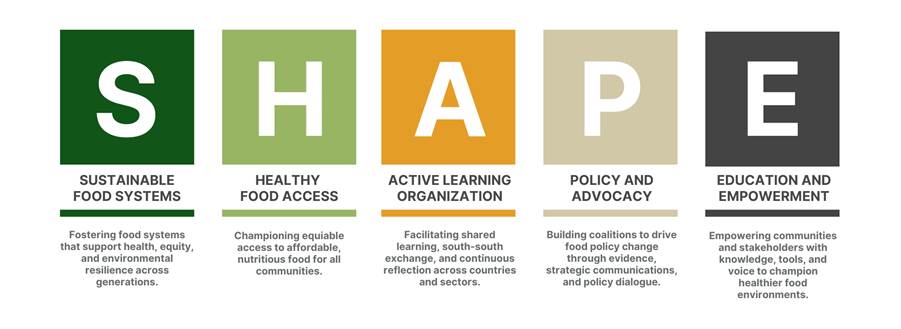
SHAPE Asia advocates for this through:
- Policy alignment: Encouraging double-duty policies that address both undernutrition and obesity, and that provide regulatory clarity for manufacturers looking to invest in healthier portfolios.
- Product reformulation: Supporting companies to reduce harmful ingredients such as sodium, sugar, and saturated fat before regulations mandate it, making nutritious food more accessible rather than premium.
- Regional collaboration: Facilitating knowledge exchange across borders so that Asia’s food environments can be strengthened as a system, not just in isolated markets.
Key influences in the year ahead
Several shifts are likely to reshape the sector in 2026:
- Technology adoption: AI-powered predictive systems for quality control and supply chain management will become essential for manufacturers facing both cost and safety pressures. Precision fermentation may also scale up as a sustainable alternative to animal protein.
- Fiscal and regulatory momentum: From Singapore’s Nutri-Grade to Thailand’s salt tax and Indonesia’s Halal regulations, governments are using fiscal tools to push for healthier production. SHAPE Asia continues to support stronger marketing controls and labelling standards across the region.
- Consumer health convergence: There is rising interest in holistic wellness, mental and cognitive health, functional ingredients, and a return to whole plant-based foods with minimal processing. Manufacturers that anticipate this shift and reduce reliance on over-processed alternatives will gain long-term relevance.
In 2026, food and beverage manufacturing is no longer just a commercial enterprise; it is part of a broader public health and sustainability ecosystem. SHAPE Asia is committed to building coalitions, influencing policy, and accelerating innovations that enable this transformation. For manufacturers across the region, the path to a sustainable future requires aligning profit with purpose. Market leadership will increasingly be defined by the ability and willingness to work for equitable and healthy food systems.
References
Wiwattanakornwong, K. (2025, October 1). Development of Thailand's agricultural logistics systems. Food and Fertilizer Technology Center. https://ap.fftc.org.tw/article/3828
Ludher, E. K. (2025, July 31). The critical impact of extreme heat on rice production in Southeast Asia. Fulcrum. https://fulcrum.sg/the-critical-impact-of-extreme-heat-on-rice-production-in-southeast-asia/
Source of Asia. (2025, November 18). Agriculture in Southeast Asia 2025-2026 - Industry outlook. https://www.sourceofasia.com/agriculture-in-southeast-asia-2025-2026/
Ludher, E. K. (2025, September 18). Outlook for agriculture and ASEAN's role in Southeast Asia's food security. https://fulcrum.sg/outlook-for-agriculture-and-aseans-role-in-southeast-asias-food-security/
Agribusiness Academy. (2025, May 8). Food trends in Southeast Asia – How consumers and retailers are shaping the future. https://learning.agribusiness.academy/food-trends-in-southeast-asia-how-consumers-and-retailers-are-shaping-the-future/
Source One Ltd. (2025, August 27). How Southeast Asia's logistics networks are adapting to new global supply chain demands in 2025. https://sourceoneltd.com/how-southeast-asias-logistics-networks-are-adapting-to-new-global-supply-chain-demands-in-2025/
TMO Group. (2025, October 28). (2024) Trends in Southeast Asia's food & beverage ecommerce market. https://www.tmogroup.asia/insights/southeast-asia-food-beverage-ecommerce-market/
Food & Hotel Asia. (2026, January 20). How predictive AI is reshaping food manufacturing. https://www.foodnhotelasia.com/blog/fnb/predictive-technology-in-food-manufacturing/foodnhotelasia+1
World Bio Market Insights. (2026, January 8). Why Thailand became Asia's rising biobased star. https://worldbiomarketinsights.com/why-thailand-became-asias-rising-biobased-star/
Tee, P. L., et al. (2022). A review of front-of-pack nutrition labelling in Southeast Asia: Progress, challenges and recommendations. Public Health Nutrition. https://pmc.ncbi.nlm.nih.gov/articles/PMC10305914/