
 Access
 Login/Register
 Supplier Login












The 21 APEC member economies posted 3.1% growth in the second quarter of 2015, down from the 3.2% in quarter one and 3.4% a year ago, according to the latest APEC Economic Trends Analysis launched at a news briefing in Manila in conjunction with the APEC Summit scheduled on November 18-19.
Even with the moderate growth pace on account of slowing global trade, Asia-Pacific economies continue to advance, prompting next generation trade and other measures that target the region’s emerging middle class consumers and open up new economic opportunities for more people and businesses.
A separate report on trade and investment trends was submitted to the APEC Ministerial Meeting now underway in Manila. The findings help to set the tone for work by the region’s Leaders and Ministers this week (November 18-19) to support greater trade and inclusive, sustainable growth.
“Economies across the Asia-Pacific continue to grow but find themselves in a holding pattern of lower growth in the absence of high trade volumes,” according to Dr Alan Bollard, Executive Director of the APEC Secretariat. “Private consumption is helping to compensate but must be tapped into more aggressively to keep the regions’ economies on track.”
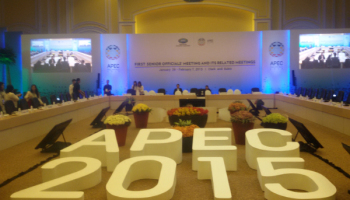
APEC economies are urged to take greater steps to translate trade and economic growth to inclusive growth, defined by improved income growth and distribution, the research goes on to explain. Trade growth over the past quarter century has lifted incomes but it has not significantly contributed to reducing inequalities in the APEC region, it reveals. To combat this trend, it is advised that trade openness be accompanied by policies that enable inclusive growth.
The region’s economic performance is expected to moderate in 2015, growing by 3.1% , and subsequently recover in 2016 on 3.4% growth. This reflects an upward trend in advanced economies and a more upbeat export performance among developing economies next year.