
 Access
 Login/Register
 Supplier Login












2014 is the year of science supporting the benefits of organic food and farming: for human health, pollinator health, and the health of the environment. Here, The Organic Center lists studies that support the benefits of organic to both consumers and environment.
Eat organic. Studies on the effects of organic agriculture and crops on public health found a clear health advantage in consuming organically produced food instead of conventionally produced. Lower pesticide residue levels in organic products were a major factor.
Get pesticides out of your life. Eating an organic diet for just seven days can significantly reduce your exposure to pesticides, according to research which found pesticide metabolite levels in a group of individuals who ate a diet of at least 80% organic for a week were cut by up to 96%.
Load up on antioxidant-rich foods. A key study of 2014 showed organic fruits and vegetables have higher levels of antioxidants. Organic fruits and vegetables can provide up to 20-40% more antioxidants, which rid the body of free radicals that can damage cells and trigger disease.
‘Bee’ concerned. Commercial beekeepers are losing an average of 30% of their colonies each winter. This affects bee-pollinated crops such as almonds, apples, cucumbers, avocados, oranges, and berries. It was discovered that pesticides, particularly neonicotinoids, contributed to bee deaths. In 2014, a study published by Harvard researchers supported research in 2012 that found a link between neonicotinoid use and colony collapse disorder.
Save organic citrus. A disease called citrus greening has devastated thousands of acres of citrus trees in the United States, and may even cause domestic citrus to disappear altogether. Research on controlling this disease focuses on toxic pesticide sprays and the development of GMO citrus varieties. The Organic Center has teamed up with professors at universities, industry members, and organic growers to launch a large-scale study looking at organic solutions to citrus greening. Visit the Organic Center Citrus Greening page.
Help slow down climate change. Research shows good news for climate change mitigation: Organically managed soils could reverse the trend of increasing CO2 in the atmosphere may help reduce climate change.
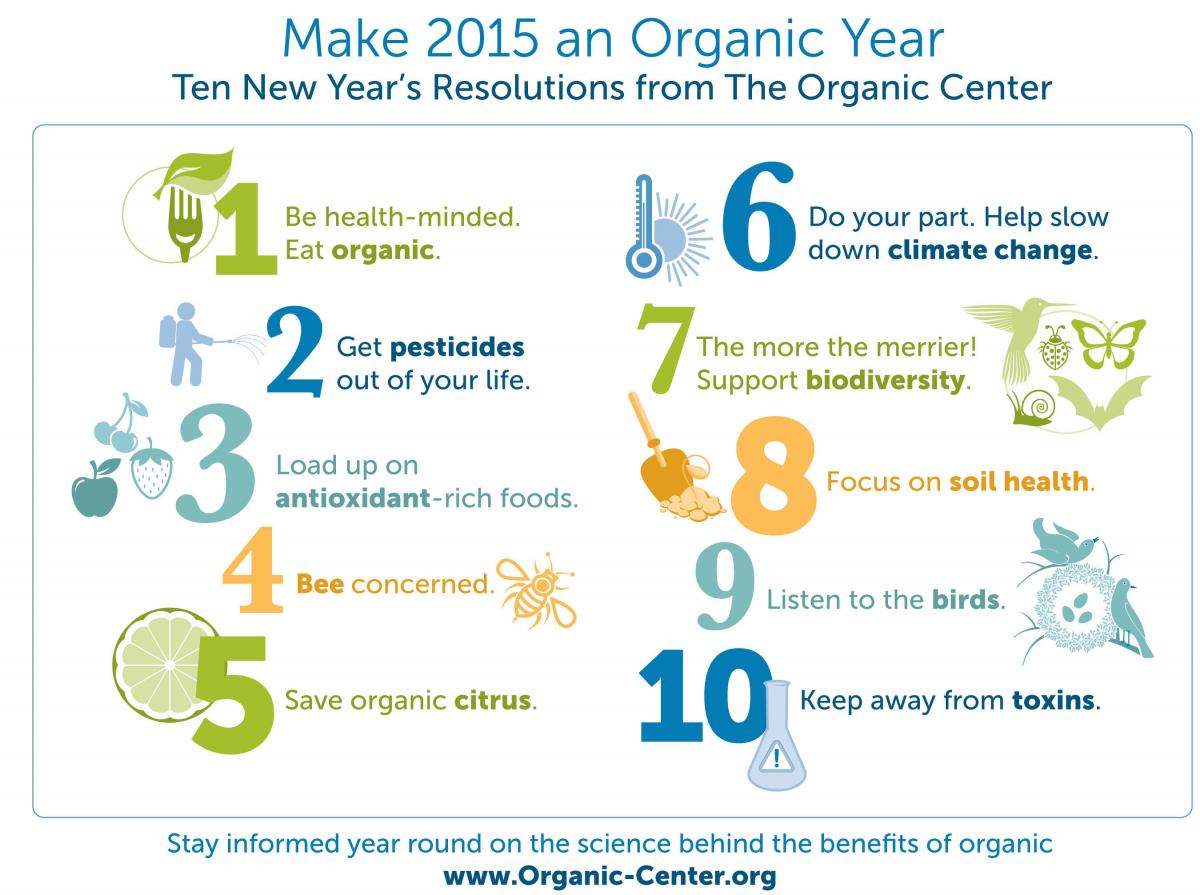
Support biodiversity. A study in the Journal of Applied Ecology found that organic farms support more species than conventional farms. On average, organic farms support 34% more plant, insect, and animal species than conventional farms. When the researchers looked at pollinators such as bees individually, they found that organic farms had 50% higher species diversity.
Focus on soil health. Conservation and organic farming techniques boost the number of soil organisms better than conventional farming. A report published in Agronomy for Sustainable Development, mentions that soil that goes through organic and conservation agriculture systems had 30-70% more microorganisms like earthworms and better bacterial pathways.
Listen to the birds. Research shows that organic farming is healthier for birds. An article in the journal Agriculture, Ecosystems & Environment compared availability of "nestling" food on organic and conventional farms. Because organic farming does not use synthetic pesticides and has longer, more diverse crop rotations, organic farms were found to provide more available nestling food than conventional farms.
Keep away from toxins. Pesticides are more dangerous that previously reported, since they contain a concoction of ‘inert’ ingredients. "Inerts" are not taken into account in safety test trials, and the active ingredients are tested in isolation. This research looked at the toxicity of herbicides, fungicides, and insecticides when all ingredients were included, and found that eight out of nine pesticide formulations were up to one thousand times more toxic than their active ingredients. Read more.
Spread the word. Help make 2015 an organic year for your friends, family, neighbors, and colleagues. Connect via The Organic Center newsletter, and Facebook page for the latest research on the science behind the benefits of organic.
Air Jordan 1