
 Access
 Login/Register
 Supplier Login












SHOCKWAVE Medical, a pioneer in the treatment of advanced peripheral and coronary vascular disease, said it has obtained CE Mark regulatory approval for its Lithoplasty™ balloon catheters for the treatment of peripheral artery disease (PAD).
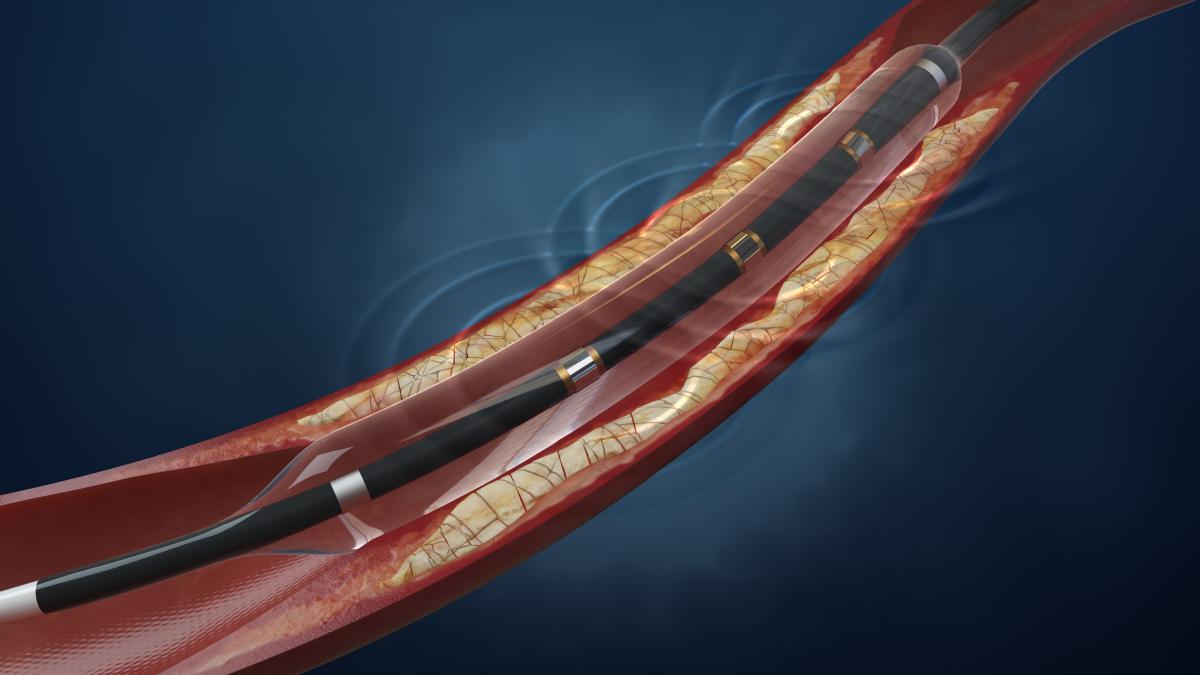
Lithoplasty is designed to be naturally gentle on the soft, healthy, portions of the vessel, while remaining hard on difficult-to-treat calcified tissue. The balloon-based technology utilizes integrated lithotripsy, a pulsatile mechanical energy commonly used to break up kidney stones, to disrupt both superficial and deep calcium.
Unlike current devices that treat only superficial calcium, Shockwave’s Lithoplasty system is designed to be effective on all types of calcium, including the type known to limit vessel expansion. Delivered on a standard balloon catheter platform, the system combines the calcium disrupting power of lithotripsy with the familiarity and simplicity of a balloon in a single enabling device.
.
“Lithoplasty is a breakthrough that could revolutionize the treatment of peripheral artery disease – a common circulatory problem that can lead to serious complications, including amputation,” said Marianne Brodmann, M.D., of the Medical University of Graz, Austria. “With Lithoplasty, even historically very challenging PAD patients with deep calcium can be treated effectively without significant injury to the vessel.”
Current interventions in advanced vascular disease, wherein atherosclerosis becomes calcified deep inside the vessel walls and obstructs blood flow, are challenging and prone to both procedural and long-term failure.
In contrast to current technology, the Shockwave breakthrough normalizes vessel wall compliance prior to low-pressure balloon dilatation, which reduces the potential for soft tissue vascular injury, which is known to occur with current endovascular technologies. After Lithoplasty has applied a brief series of powerful mechanical pulses designed to safely travel through soft tissue, disrupt and pre-treat calcium, the integrated balloon is then dilated at low pressures to expand the lesion evenly, potentially minimizing acute soft tissue injury that could lead to the need for additional interventional treatments or long-term restenosis (re-blockage).
CE Mark for Lithoplasty was supported by safety and utility clinical data from the multicenter DISRUPT PAD study, which was presented in November 2014 at the Vascular Interventional Advances (VIVA) Annual Conference in Las Vegas, Nevada. Early results demonstrated safe and effective dilatation of calcified stenosis with no acute failures, very favorable residual stenosis, no major adverse events and no restenosis out to 30 days.
Shockwave said the CE Mark approval for Lithoplasty in peripheral artery disease sets the stage for regulatory approvals in other geographies. Clinical results to date have demonstrated safety, tolerability, deliverability, and effectiveness of Lithoplasty as a treatment for patients with peripheral artery disease. Investigations to apply this therapy to calcified coronary lesions – another important unmet clinical need – are also being undertaken. Clinical work has also been conducted in coronary vessels, and will begin in aortic valves later this year.
ADIDAS