
 Access
 Login/Register
 Supplier Login












Plastics packaging accounts for more than 30% of the packaging market. With today's growing demand for more advanced packaging, properties such as lightweight, versatile, anti-corrosive, anti-abrasive, and easy to process have been incorporated in latest packaging products. In the next few years, safe, environmentally friendly, lightweighted, multi-functional and intelligent packaging will grow in terms of demand while packaging products featuring multiple characteristics such as anti-microbial, high temperature resistant, UV-ray resistant, high barrier, biodegradable and recyclable will be the market's focus.
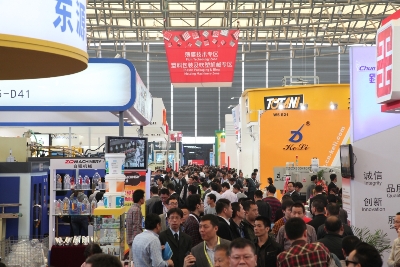
Many of the key players involved in advancing these materials and processing technologies are exhibiting in CHINAPLAS 2016, scheduled to take place on 25-28 April in Shanghai. 3,200 exhibitors will be categorized into 16 theme zones, such as Automation Technology; Plastic Packaging & Blow Molding Machinery; Extrusion Machinery; Film Technology; Recycling Technology; Chemicals & Raw Materials; Color Pigment and Masterbatch, etc.
Leading players in plastics packaging from all over the world are flexing their muscles to push the technologies into limits in order to meet the consumers' needs in this fast changing packaging world. For example, German Kuhne Anlagenbau has partnered with DuPont to launch TripleBubble®1 water quenched and bi-oriented film technology. The new co-extrusion technology can provide up to 11 layers of functional polymers, in 20-110μm thickness and the elasticity up to 60%. It demonstrates a good balance of puncture resistance, flexibility, softness, seal performance, transparency, and shrink behavior while saving raw materials up to 50% over conventional laminate structures.
Typically, cooking pouch is made of heat-resistant plastics with the outer layer of PA/PET high barrier film, the middle layer of aluminum foil for light shielding while the inner one is thermal sealing multi-layer of PE, PP composite films. Recently, the American injection company, Milacron, has presented a cooking can - Klear Can, which can withstand heat up to130°C and its three layer plastic construction (PP-EVOH-PP) allows for a shelf life of 2-5 years. They use a new co-injection system to produce this transparent food can, with which the consumers can see through the food content and in-mold labels with different colors can be applied.
Bosch's D3 robotic packaging solutions use Paloma D3 feed and top-mounted robot to integrate into Module ++ biscuit packaging production line. This enhanced D3 robotic platform handles higher payloads up to three kilograms and ensures faster speeds to increase pick rates. It can be configured to the diverse applications, thanks to the fully modular design. Similarly, Demag's El-Exis SP 200-67 shows off how efficient of injection molding machine can be. The machine is able to produce 4 PP food container injection molding (125ml) with production cycle less than 2 seconds, resulting in 3% - 5% less than the standard production cycle time. The final product is picked up by robotic arm automatically. China contenders also show a great progress on the production technology. For example, Guangdong Guozhu Precision Mold Co., Ltd has developed a high speed injection molding system which can produce 600,000 HDPE bottle caps per day and each cap weighs only at 1.95g. Its full output rate can reach as fast as 28.8 thousand per hour.