
 Access
 Login/Register
 Supplier Login












SHANGHAI – Fiber reinforced polymer composites are increasingly considered for replacing metals in high temperature-resistant components for aircraft and helicopters. With very limited resin options available to manufacture such composite components, Henkel and Quickstep analyzed a Loctite benzoxazine resin, which offers high glass transition temperatures and excellent hot/wet performance, combined with room temperature storage and easy processing to develop an energy efficient and manufacturing friendly Out-of-Autoclave (OoA) process.
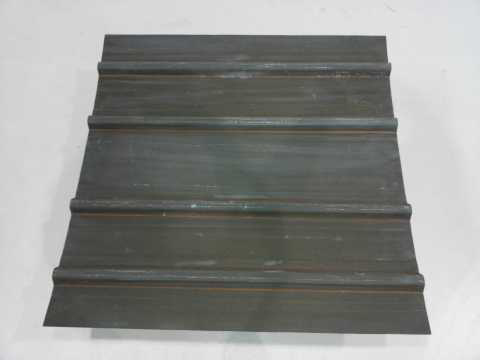
Hat-stiffened curved panel demonstrator produced using BZ 9130 resin (Photo: Business Wire)
The use of liquid resin processes such as resin transfer molding (RTM) and vacuum-assisted RTM (VARTM) had developed rapidly in recent years. There is a strong desire to use these processes more extensively in future aerospace structures because large and complex parts can be manufactured economically, and the costs of autoclave processing of prepreg materials can be avoided.
In the study conducted by Henkel and Quickstep, a benzoxazine resin was combined with a rapid heating and cooling manufacturing approach to produce high temperature resistant composite laminates and parts at significantly lower cycle times. Key mechanical strength properties were measured and are reported. The technique was then applied to a curved, integrally stiffened composite panel to demonstrate the ability of the process to produce complex parts suitable for use in aerospace applications.
Being related to the chemistry of phenolic resins, benzoxazines offer excellent flame retardancy and very low cure shrinkage. In contrast to phenolic resins, they cure without elimination of volatiles and show significantly better properties of the cured material. Henkel has introduced a number of commercial benzoxazine systems suitable for use in prepregs, adhesives and infusion processes.
For this study, Loctite BZ 9130 AERO resin was selected and characterized using the Quickstep process for the infusion processing. Key characteristics of the resin include: room temperature stability, requiring no refrigerated storage; a one-part system, so no mixing required by the processor; broad processing window, suitable for large parts and complex shapes; stable, low viscosity at infusion temperature; low heat release during cure, reducing exotherm risk; high hot/wet property retention for higher service temperature applications; and increased toughness.
The processing of the Loctite BZ 9130 resin proved to be “infusion-friendly” in the Quickstep process, and void-free panels were produced with fiber volumes in the 55 to 57% range, which is considered high for a woven fabric laminate. Mechanical evaluation and quality measurement of the panels confirmed values similar to or higher than those achieved in standard oven-based VARTM processing. The Quickstep process provided a faster heating and cooling of the laminate and uniform temperature during the infusion process. The results demonstrate the synergistic benefits of the Henkel benzoxazine infusion resin and the Quickstep process technology.
Runners Alliance