
 Access
 Login/Register
 Supplier Login












CRANBERRIES, known for their ability to protect against urinary tract infections, could help prevent colon cancer, according to a new study.
The research, which is one of more than 9,000 presentations at the 250th National Meeting & Exposition of the American Chemical Society (ACS), the world’s largest scientific society, shows mice with colon cancer experienced a reduction in the size and number of tumors after several weeks of being fed with cranberry extracts.
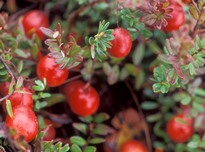
(Photo: USDA)
Catherine Neto, Ph.D., and her colleagues at the University of Massachusetts, Dartmouth, found in previous studies that chemicals derived from cranberry extracts could selectively kill off colon tumor cells in laboratory dishes. They collaborated with Hang Xiao, Ph.D., of the University of Massachusetts, Amherst, whose team developed a mouse model mimicking the type of colon cancer associated with colitis, an inflammatory bowel condition that affects hundreds of thousands of people in the U.S.
According to Dr Neto, “We’ve identified several compounds in cranberry extracts over the years that seemed promising, but we’ve always wanted to look at what happens with the compounds in an animal model of cancer.”
Her team generated three powdered cranberry extracts—a whole fruit powder, an extract containing only the cranberry polyphenols, and another with only the nonpolyphenol components of the fruit. Dr. Neto wanted to evaluate the contribution of polyphenols, which are said to have anti-inflammatory properties, to the cranberry’s overall impact.
The cranberry extracts were mixed into the meals of mice with colon cancer, which did not seem to mind the tart taste of the extracts. The researchers were careful not to give the mice an absurd amount of cranberry and gave only approximately equivalent to a cup a day of cranberries.
Mice fed with whole cranberry extract for 20 weeks had about half the number of tumors as mice not given cranberry. The remaining tumors in the cranberry-fed mice were smaller. Results also show reduced levels of inflammation markers in the mice.
Dr Neto noted the encouraging results of their work. “All preparations were effective to some degree, but the whole cranberry extract was the most effective. There may be some synergy between polyphenol and non-polyphenol constituents,” she stated.
She is not sure, however, if the juice, which lacks some of the components in the skin of the cranberry, could provide the same benefits as the extracts. Dr Neto is currently looking to isolating the individual components responsible for the cranberry’s anti-cancer properties.
Learning more about the therapeutic molecules in the tart fruit could lead to a better understanding of its anti-cancer potential, the researchers said. The team is analyzing the metabolites in the mice that consumed the fruit extracts to better understand what happens after the cranberry components are digested as a result of mouse metabolism.
Dr. Neto said colon cancer may offer a particularly good target for a dietary treatment because of the anatomy of digestion.
“Cranberry extracts may also afford protection toward other cancers, but it seems reasonable to look at colon cancer. Cranberry constituents and metabolites should be bioavailable to the colon as digestion proceeds,” she said.
The study, which also received funding from the UMass President’s Science and Technology Initiative, will be presented by Dr. Neto’s graduate student, Sarah Frade, at the ACS meeting.
Air Max 90 Classic