
 Access
 Login/Register
 Supplier Login












AMONG the many reasons why unsafe food reaches consumers is due to poor hygiene and inadequate conditions at the food production plant and storage facilities.
For manufacturers, one of the considerations at the very outset is the periphery, construction and layout of their production facilities, which have to ensure clean and safe output at all times, and meet the challenges that come uniquely with food production. In the Philippines, manufacturers have to comply with Administrative Order 135, which is benchmarked against the Codex.
“Buildings should be designed, constructed, and maintained in a manner appropriate to the nature of the processing operations to be carried out, the food safety hazards associated with those operations – be they physical, chemical or biological – and the potential sources of contamination from the plant environs,” explains ASEAN Engineer Cyd Aguilera, who has 35 years of quality and productivity and food safety work experience in the food and beverage industry, working in San Miguel Corporation.
Equally important she says is the facility’s internal layout. To facilitate good hygiene and manufacturing practices, it should take into account movement patterns of materials, products and people, as well as where and how equipment are installed to support production flow effectively.
“Cross contamination occurs when microorganisms from one source are transferred to another source, just like when food touches non-food materials like hands, equipment, work surfaces, packaging materials, etc.
“There are three main ways of cross contamination. It can be by food to food, wherein allergens may cross contaminate other ingredients or infected food may contaminate finished goods. Then there are contaminations from people to food and from equipment to food.”
To prevent contamination and to monitor people criss-crossing in between areas, Ms Aguilera suggests, assigning their movements to specific locations within the plant, have them use different uniforms or entrances, or require them to wash before entering another area.
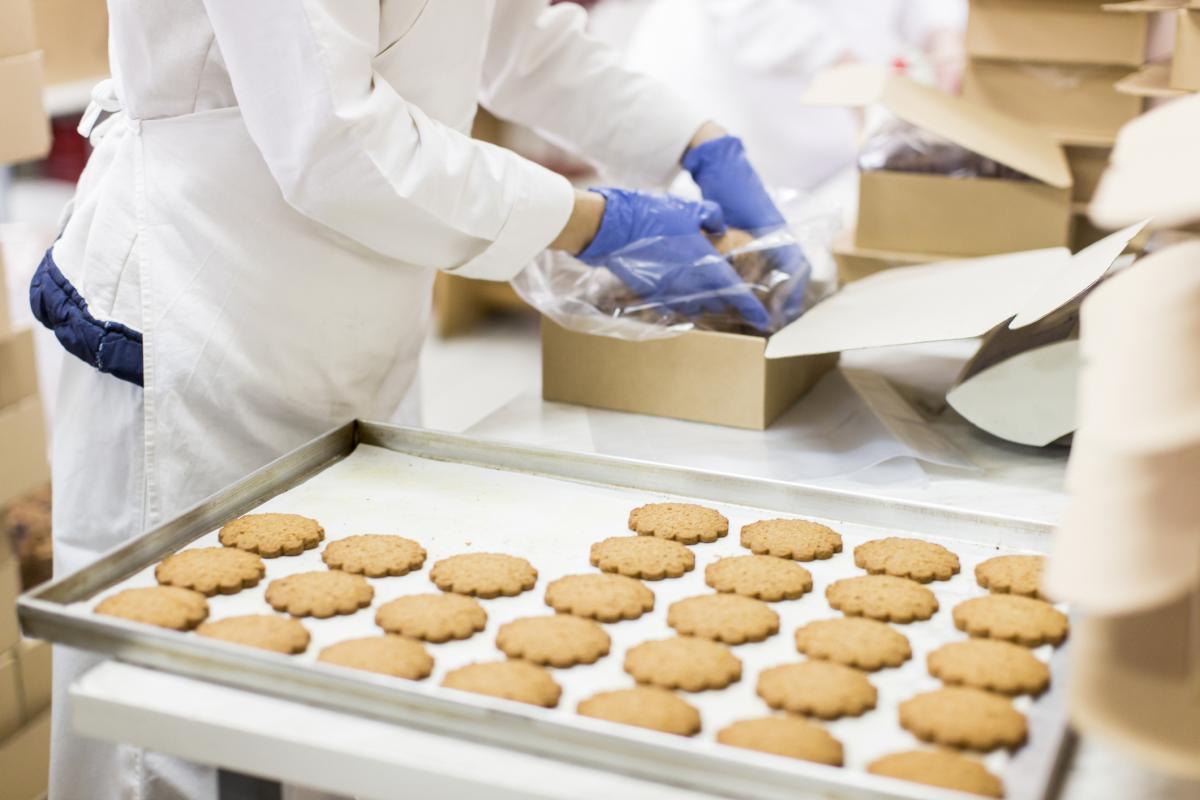
(Photo: Boggy I Dreamstime.com)
In the Philippines, Administrative Order (AO) 153 spells out the revised guidelines in the Current Good Manufacturing Practice (cGMP) for persons and establishments that manufacture, package, repack or hold food products to ensure quality and safety. Among its requirements for plant construction and design is a Master Plan diagram to help predict where routes could lead to cross contamination, where new barriers may be necessary and generally to minimize all circulations – to reduce carriage of dirt and potential contaminants around the factory.
AO 153 requires facilities to have sufficient space to put and operate equipment, and store materials as is necessary to maintain sanitary operations and produce safe food. Adequate food safety controls likewise need to be in place including separating operations in which food contamination is likely to occur, by one or more of the following means: location, time, partition, air flow, enclosed systems, or other effective means. Lighting and ventilation are also considered under AO 135.
Air Zoom Vomero 12