
 Access
 Login/Register
 Supplier Login












THE DRAGON fruit has been a standard part of the Asian diet for many years now. In more recent times the popularity of this sweet bright pink and unusual-looking fruit has also been increasing in the West, which in turn has fuelled a very lucrative export market in a number of ASEAN countries. Although incredibly popular throughout most of Southeast Asia, the fruit has its origins in Southern and Central America, where it goes by the names of pitaya or pitahaya. The fruit grows on a climbing cactus plant, known scientifically as Hylocereus Undatus and requires a tropical or sub-tropical climate to grow. Southern Vietnam has one of the most idyllic climates for the cultivation of the dragon fruit on a commercial scale. Although stories differ somewhat, it is generally believed that the French introduced the plant to Vietnam in the late 1800s as an ornamental plant and grew in popularity among the country’s gentry. In fact Vietnam is one of the largest cultivators and exporters of dragon fruit in the world and the crop represents over 50 percent of the country’s fresh fruit exports. However as with all fruit exported out of Vietnam, the quality has to be of the highest standard, which leaves a lot of fruit left over for consumption and processing in the domestic market. One such company that saw the potential for processing fruit that didn’t make the export quality grade is Dragon Era, manufacturers of dragon fruit concentrate.
In this interview, company director James Wilson talks about Dragon Era’s unique product and the company’s future export plans.

James Wilson, director of Dragon Era
Dragon Era is a relatively new company. How long have you been in operations?
Yes, in its present form we started operations in early 2015, however the company was producing dragon fruit concentrate for around eight years prior to that, but catering only to the local market. Dragon Era was formed to expand on the existing production and to focus primarily on exporting the product, which needed an entirely new strategy and production facility. As I’m sure you can appreciate, exporting of consumable products requires a whole different health and safety certification and supply chain strategy, from raw materials right through to labelling. The company’s operations is located in the Phan Thiet area of Southern Vietnam, about six hours north of HCMC, which is not only a popular tourist resort destination in Vietnam, but one of the country’s largest dragon fruit growing regions as well.
On the subject of raw materials, and being located in a large fruit producing area, I would imagine your ongoing supply of the fruit wouldn’t be an issue. Would that be correct?
When I mentioned before that the Phan Thiet region is one of the largest dragon fruit growing areas in Vietnam, I must admit, I was understating the region a great deal. Phan Thiet is in fact one of the largest dragon fruit growing areas in the world. There are approximately 30,000 hectares producing around 1,000,000 tonnes of fruit annually with three crops harvested per year, so in answer to your question, no, raw material supply is not an issue.
They have three different classifications of fruit, which are; 1st class for export, second class for the domestic market, and the 3rd class fruit, which accounts for around 25 percent of the annual crops, used for processing such as drying, juicing, or concentrate. The overall quality of the fruit is the same for all classes, but differs with regards to appearance and size.
I noticed that your dragon fruit concentrate is red. Is this because of the variety you use?
As you’re probably aware, the dragon fruit varieties we grow in this region are the red or white pulped fruits, and although there’s no real difference in the taste between the varieties, we choose to use the red fruit as we find the deep red color has a lot more product appeal with consumers.
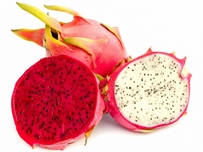
Dragon fruit accounts for some 50 percent of Vietnam’s fresh fruit exports (Dragon fruit © Tropper2000 I Dreamstime.com)
What processes does the dragon fruit go through to become the finished product?
You could say the whole process is quite simple in parts, although the initial stage of stripping the fruit is probably the most labor intensive as it needs to be stripped by hand. The pulp is then put through an extruder which crushes and extracts the juice, then we add some vitamins and natural sugars, then vacuum seal it and then render it down into the desired concentrated consistency. From there we store it in vats until it is ready for bottling, labelling and then distribution. The whole process is fairly streamlined. The company is in the process of expanding our present production capability and will be opening our new plant by May 2016, which will increase our product output to around 70,000 to 80,000 liters per month to start with.
You stated that the company’s growth strategy is focusing predominantly on exports. Could you tell us more about this strategy?
On the domestic front our present marketing and sales of the concentrate has expanded into the broader southern provinces of Vietnam so the local market is growing very well. With regards to developing the overseas markets, we’re still in the process of negotiating with various agents in different countries, which we hope will be finalized when our new production facility comes on line. We’ve had strong interest from Japan and Korea so far, and China is always a desirable market due to its size, so the Asian markets will be our first export destinations, with Australia and other Pacific countries also being considered when our production output is operating at full capacity. At this stage of venturing into new markets we see using agents as our best choice. They already know the consumers and the distribution networks associated with the different countries, and being a small operation, we don’t have the budget to set up overseas representative offices, so finding the right agents is a big part of our export strategy at the moment.
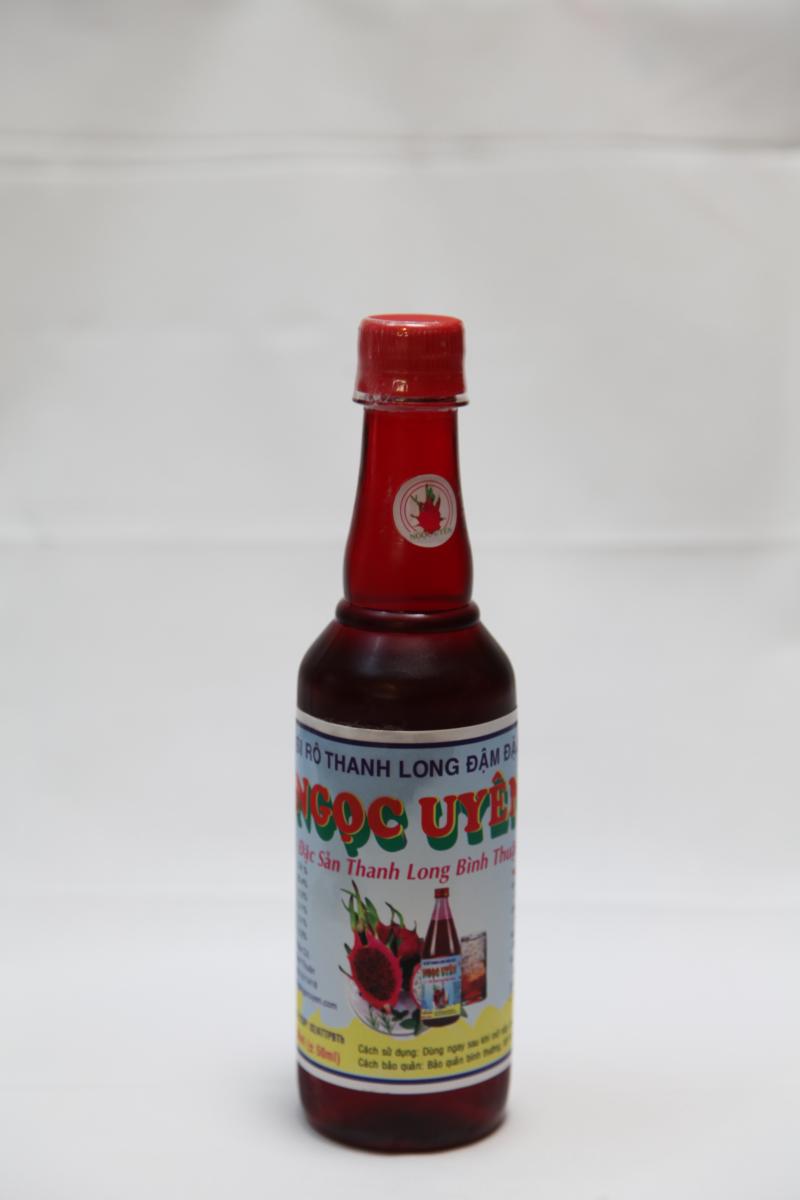
Dragon Era’s dragon fruit concentrate is a popular product in Vietnam, and the company also hopes to expand overseas through agents
With dragon fruit concentrate being a new product on the market, how difficult do you think it will be to get the broader consumer product acceptance?
Launching any new product into the market always has it challenges, which requires an ongoing marketing effort. However, although dragon fruit concentrate is seen as a new product, the concept of fruit juice concentrate is not. Orange, grape and mango fruit juice concentrates have been on the market for many years, so in a sense we’re not launching a new product, but rather a new flavor. I think the Asian markets will be a lot more receptive to the product initially than, let’s say, North America, as Asian cultures use to the more exotic flavours.
Your company only deals with the fruit concentrate. Are there any plans to expand on you product line using dragon fruit?
Initially we’ll be keeping it simple and focus solely on the concentrate; however, we also have a range of dragon fruit wines, a red and white variety that we sell locally. This is a very sweet wine, more along the lines of a sherry or a fortified wine, but very popular with female consumers. We will be considering the possible export of the wine in the future, but at the moment we see the concentrate as being the more marketable product for developing new export markets.
Entrainement Nike