
 Access
 Login/Register
 Supplier Login












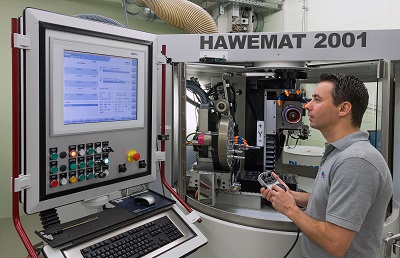
The most common functional safety technique that is used to comply with the basic safe motion requirements of machinery safety standards such as EN ISO 13849-1 is the implementation of 'Safe Torque Off' (STO) on appropriate axes. This function ensures that the drive or drives can no longer command motors to generate torque. The ‘Safely-limited Speed’ (SLS) function is also very useful, especially when manual work needs to be performed on a machine with its doors open.
NUMSafe overcomes these issues by using a dedicated safety PLC and clearly differentiating between standard and safety-related logic. Machine designers only need to implement safety functions that are pertinent to the task in hand, without worrying about extraneous functions for motion axes that are not involved in orderly shutdown routines.
Another key advantage of NUMSafe is that safe devices such as the safety PLC and safety I/O modules can be housed in the same standard terminal as other elements of the control system, further simplifying integration. All communication between the machine’s control system and servo drives is handled via EtherCAT field bus, using a Fail Safe over EtherCAT (FSoE) protocol to ensure the integrity of safety-related data.
The application program for the safety PLC is created using the same suite of software development tools that is used to commission the overall system, including CNC, PLC, drives and I/O modules. This unified development environment minimises learning time and reduces code generation overheads. The logic of the safety application is programmed using function blocks such as ‘E-Stop’, ‘Operation Mode’, ‘AND’, ‘OR’, etc., linked to safety inputs and outputs. Complex safety functions can be set up easily by chaining function blocks.
NUM’s latest NUMDrive X digital servo drives, which are available in single- and dual-axis versions, offer an optional safe motion monitoring module that operates with the safety PLC to oversee and control all safety-related aspects of drive and motor behaviour. This modular approach helps to reduce system costs, by allowing safety functions to be implemented on individual machine axes, and only where required.
There are two versions of safe motion monitoring module, enabling designers to match their application needs very precisely. The basic module provides the STO function. The extended version also offers STO, as well as the additional EN 61800-5-2 compliant functions of Safe Operating Stop (SOS), Safe Stop 1 (SS1), Safe Stop 2 (SS2), SafelyLimited Speed (SLS), Safely-Limited Position (SLP) and Safe Direction Monitoring (SDM). Used singly or in combination, these functions enable designers to embrace a wide range of machine safety concepts. They can all be implemented using either incremental or absolute encoders – apart from SLP, which requires safe homing and incremental encoders, or certified absolute encoders.
NUM also offers an extensive range of compatible brushless servo motors. These include single-cable models developed specifically for use with NUMDrive X servo drives, which use a dedicated two-wire link embedded with the motor’s power cable to carry power, position and redundant position feedback data to/from a safe digital encoder.
Munkaw Chaos Girl