
 Access
 Login/Register
 Supplier Login












SMOKED FISH is a popular protein alternative and is a vital source of food and income for many African coastal communities. In addition to its good taste and nutritional benefits, locals prefer it for its competitive price compared with other protein sources such as milk, meat, and eggs, and its long shelf-life of three to six months. According to FAO data, in Côte d’Ivoire, for example, 20% to 30% of local marine and freshwater catch is consumed in smoked form.
Traditional smoked fish preparation techniques, which involve wood burning, however, pose some concerns. FAO fishery industry expert Yvette Diei-Ouadi said, “For one, an exorbitant amount of CO2 is produced, so the kilns produce more greenhouse gas pollution than they should. Also, traditional smoking releases contaminants known as polycyclic aromatic hydrocarbons (PAHs), which are carcinogenic and hazardous to the human respiratory system.”
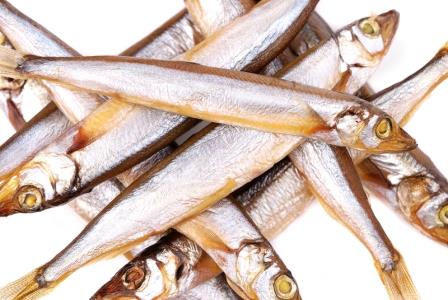
Smoking fish is a source of income and food in many African villages, however conventional methods of smoking can be detrimental to health and environment. A newer method introduced by the Food and Agriculture Organization reduces negative impacts (Smoked fish © Selenka | Dreamstime.com)
Conventional techniques also leave greater amounts of tar particles on the fish. This affects the taste and quality, and subsequently the salability of the smoked fish.
These traditional techniques are likely to be supplanted by a breakthrough technology that is now gaining traction in West African fishing villages.
Pioneered by the Food and Agriculture Organization of the United Nations (FAO), the FTT technology is specially designed to help small-scale fish processors prepare and market safe, high-quality food. A result of five years of design improvements, it consists of a dual-function oven and mechanical drier, which doubles as a storage unit. It can substantially lower the amount of fuel needed and the carcinogenic contaminants produced during smoking. It is capable of five times more capacity than traditional barrel ovens or twice the Chorkor kiln. It also allows for easy upgrade of traditional ovens.
The FTT technology allows for different varieties of vegetable materials instead of just wood or coal to be burned. It can work with coconut shells and husks, maize, or even millet cob, which are found to be just as effective in smoking fish yet place far less pressure on the environment.
Besides eliminating risks to health and environment, the fish drying method helps improve food safety and quality, enhance working conditions, and reduce food losses. The use of this technique is spreading in Senegal, Côte d’Ivoire, Tanzania, and Ghana. Development organizations such as the Netherlands-based SNV are encouraging its adoption in Ghana to enable small-scale producers to gain access to international markets.
According to Ndiaye Oumoulkhaïry, who worked on the FTT design, the new technology addresses many aspects of fish smoking operations. “In the first place stands the safety aspect – to secure consumers’ health and meet international food standards. Then there’s reducing post-harvest losses, and also curbing the drudgery of fish processors who are now least exposed to the heat and smoke,” said Oumoulkhaïry.
In Abobodoumé, a village in Côte d’Ivoire, female fish processors who use the new FTT additions noted far less contaminant-containing smoke. They were also particularly pleased with the collection plate that traps dripping fish oils, which can be re-used as cooking oil or to make soap.
“We are extremely happy, because as of today, with the FTT, our conditions for smoking fish have changed,” stated Deborah Oulou, an Ivorian woman fish processor.
Micheline Dion Somplehi, another woman fish processor in Abobodoumé, said: “We are now working under hygienic conditions. The FTT-Thiaroye ensures less heat, burn, and smoke exposure. Smoking operations do not pose risk anymore to the health of our eyes and of our respiratory system.”
Further, these women can devote more time to being mothers and caretakers as a result of the shorter processing times and lower risk of burns or smoke-inhalation.
Dion Somplehi said, “We have seen the advantage of saving time in fish smoking, and this is really important because in our communities, women are at the same time engaged in household chores – taking care of the children, working in the kitchen – while carrying out fish processing activities. We are even able to smoke in bad weather conditions.
Air Jordan XI 11 Kid