
 Access
 Login/Register
 Supplier Login












TYPICAL food colouring could act as optical probes of the quality of edible goods, according to a study at Rutgers University in New Jersey.
The research titled “Food Colours as Intrinsic Luminescent Sensors in Edible Products” aimed at determining if edible colours added to many food products could serve as fluorescent probes looked into the fluorescent properties of five food colours routinely added to food or pharmaceuticals—Allura Red, Sunset Yellow, Brilliant Blue, Fast Green, and yellow-coloured Tartrazine. Initial findings show an increase in the viscosity of the surrounding fluid boosts the fluorescence, indicating the food dyes could potentially act as embedded sensors for food's physical consistency in products such as yoghurt or strawberry milk.
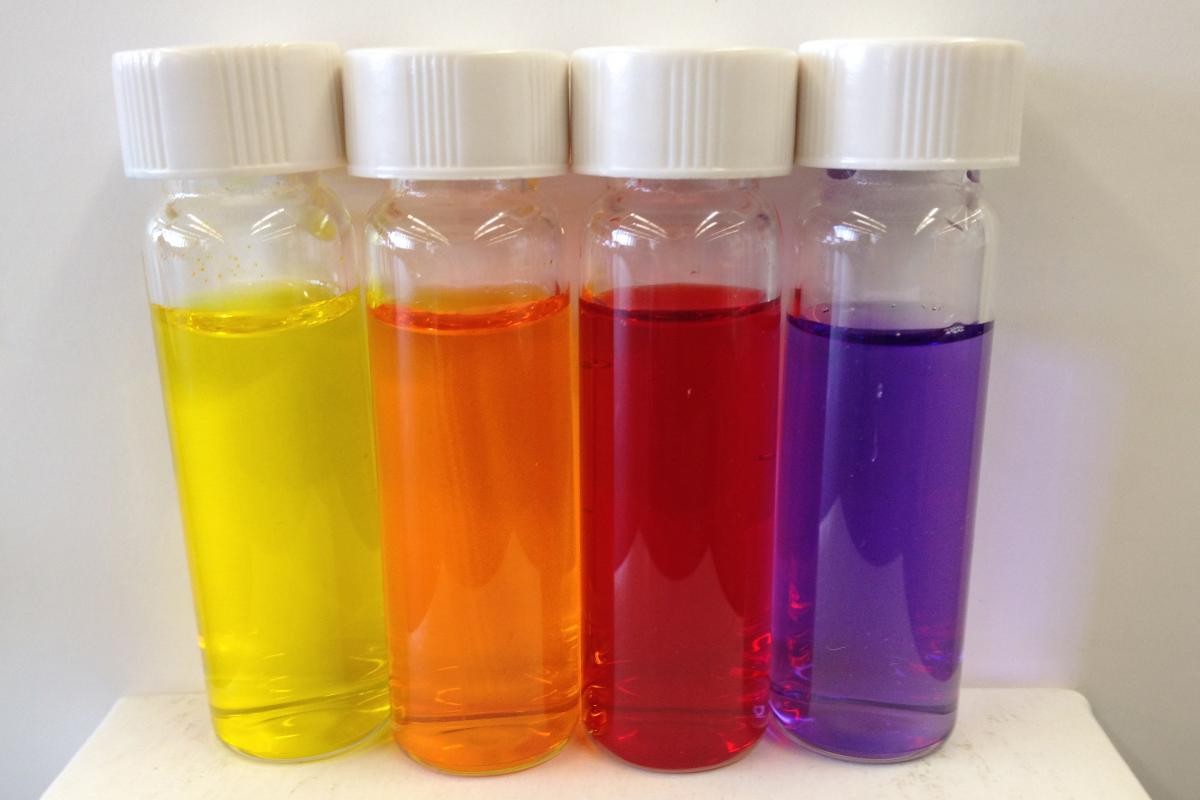
Two study results suggest food colours could potentially work as food quality probes. The researchers found that all five dyes fluoresce at a significantly different colour than the light used to excite them or the fluorescence of other components in the environment. This means the emitted signal could be easily distinguished from the background.
The team also found that although the food colours emitted practically no light when mixed in pure water, the light intensity increased as the solutions thickened.
The increased fluorescence could be a result of the way molecules move differently in different liquids. In pure water, dye molecules are free to twist. In a thicker liquid where the motion of the molecules is constrained, energy cannot escape through as many mechanical pathways. This results in more energy being re-emitted in the form of fluorescent light.
The change in the dyes' fluorescence could give clues about the consistency and molecular arrangement of the fluid surrounding the dye particles, said Sarah Waxman, an undergraduate student working on a research project to study the fluorescent properties of food dyes in the lab of Rutgers food scientist Richard Ludescher.
"A viscometer, which is a typical instrument to test the thickness of food, requires separating and ultimately discarding a large sample size and could report distorted numbers due to factors like the slippage of layers in the fluid. Using food dyes, which are already present in many food products, as probes could be a less invasive and more accurate way to test food's physical properties. Fluorescent probes have been used in many applications, but the idea of using food colours for this purpose is new," said Ms Waxman.
The study involved mixing the dyes in solutions of varying consistencies. The team, consisting of Waxman, Ariella Kashi, Adam Karami, Meera Patel, Maria G. Corradini, and Ludescher, used solutions made with pure water, and solutions with components such as sugar or glycerol, a viscous liquid often used in pharmaceuticals. The thickness of the solutions was changed by altering their temperature and composition. The team measured the fluorescent characteristics of the dyes under varying conditions.
Food consistency tests are important to meet consumers’ demands. Changes in physical consistency could indicate bigger problems, including spoilage.
The research, which explored the possibility of using food dyes as quality probes, was presented at the 59th annual meeting of the Biophysical Society held from 7 -11 February in Baltimore, Md. It was funded by the USDA National Institute of Food and Agriculture, Improving Food Quality Program–A1361.
Nike Zoom Kobe Shoes