
 Access
 Login/Register
 Supplier Login












SOUTH Australia based Greenwheat Freekeh is expanding capacity to meet future demand, and along with it the company is working on the license for a technology used in the production of freekeh.
The company is expecting the completion of a new facility located in the outskirts of Adelaide, which will increase its production up to seven-fold by 2018.
“We were able to produce 500 tonnes this year using our existing plant and next year we are expecting to produce between 1,500 and 2,000 tonnes and the year after between 3000 and 3500,” said managing director Tony Lufti. “We are a technology company and we are now negotiating the licensing of our technology for production of freekeh around the world.”
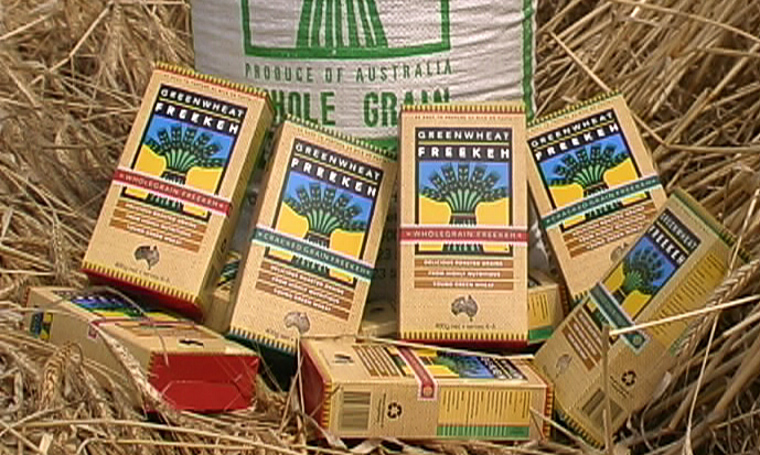
Greenwheat Freekah is a great example of an Australian food manufacturing company thinking global and not just local,” said Patrick Robinson from Invest Adelaide. “Our reputation for high quality, safe and environmentally friendly food in overseas markets that will require a lot of food imports in the future makes investment in food manufacturing here in Adelaide a very viable proposition.”
Mr Lufti said, “The company exports to and have significant activities both on-going and planned in the ASEAN region. ASEAN figures highly in the company’s activities for the future.”
Transcending time
Freekeh, which is young greenwheat that has been roasted and cracked, is food that has been consumed in the Middle East since 2300 BC. The term also refers to the process of heating the green grain to inhibit maturation without cooking. Back then, freekeh might not have been considered a superfood like it is today. It is cooked and served in the same way as rice and it can also be added to salads, breakfast cereals, soups, breads and cakes. It boasts calcium, zinc, potassium, protein and fiber.
Greenwheat has been producing freekeh since 1997, three years after its Mr Lufti tasted it for the first time in Jordan. “It’s a product that’s been around for 4300 years and processed by very primitive means,” Mr Lufti said. “I started examining the process and experimenting in 1995, then in 1996 developed the process and in 1997 built the company in Adelaide and started exporting it to the rest of the world.
The green grains are sourced from South Australian farmers as far as 300km away. “We capture the grain at peak taste and nutrition when it’s young and green and we put it through a natural process to lock in the nutritional value of that grain so you can have it a year or two later and still enjoy the health benefits,” Mr Lutfi said.
Kosher product
At present Greenwheat Freekeh is Kosher certified, according to Mr Luft. “Kosher certification requires similar standards to Halal plus more. Therefore Halal certification will be easy. Indeed, Greenwheat has recently signed an agreement seeking to produce freekeh from green rice in the ASEAN area. Our partner in this agreement is the chairperson of the Global Halal Forum.
According to US website Health Status, freekeh has four times more fiber than brown rice, provides more protein than almost any other grain and is excellent for digestion because it is rich in prebiotics and probiotics. It is also very low on the Glycemic Index, which means that it might decrease the risk of lifestyle diseases.
Air Jordan