
 Access
 Login/Register
 Supplier Login












Asia Pacific and North America are premier regions driving the demand for glass reinforced fiber plastics on account of growing infrastructure activities and rebounded economic recovery. In its research report, BCC Research suggested that glass fiber reinforced plastics (GFRP) is growing globally due to rising demand from the developing and emerging regions despite challenges of climbing raw material and energy prices. Though this fiber has demand emanating from many industries, automotive, wind blades, aerospace and defense, pipes and tanks being a few, 67 percent of the global market for GFRP is accounted for by construction and infrastructure, aerospace and defense and automotive sectors.
BCC Research projects that the global market for GFRP will increase from $31.4 billion in 2014 to nearly $44.4 billion in 2019 at a five-year compound annual growth rate (CAGR) of 7.1 percent from 2014-2019. Global economic resurgence, growing construction and infrastructure efforts, growing disposable income and subsequently, higher vehicles sales and growing demand for renewable sources of energy with the resurgence of the aerospace and defense industry are all factors fostering the demand for GFRPs. China and India are two major countries whose economies and populations both have played a significant role in developing the demand for fiber plastics over the past few years, further augmented by new industry and manufacturing facilities being built. As the consumers turn toward greater convenience and comfort in their products, the developments and growth patterns of fiber plastics grow ensuring that local products meet global standards.
Marketsandmarkets.com in their report corroborated the dominance of Asia-Pacific and North American regions while suggesting that the U.S and European countries were leading in research and development of high-performance glass fiber products, some member EU countries being key markets in the European composites market and constituting majority market size.
Properties versus carbon fiber
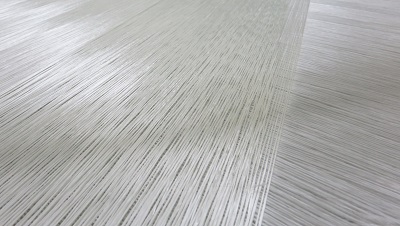
Glass fiber is made from extremely fine fibers of glass and is lightweight albeit strong and robust substance though in strength, ranks slightly lower than carbon fiber. It is less stiff; the material far less brittle and its raw materials much less expensive. Meanwhile, carbon fiber is inorganic, consisting of very thin filament of carbon atoms and are deployed in multiple applications in the industrial, wind energy, automotive, sporting goods, aerospace and defense, and other industries.
Serving wider markets
Reportlinker in its various reports had predicted Asia-Pacific’s markets to account for more than 50 percent of the global automotive fiber glass demand by 2015-end, with China at the helm as having the biggest market share, generating the highest revenues for this industry. Given the increase in demand for lightweight automotive vehicles and technological developments in the manufacturing process of fiber glass, China’s automotive industry has a huge growth potential for fiber glass. Japan is the second largest automotive fiberglass market in Asia Pacific and was touted to be the third-largest automobile manufacturer in the world by the end of 2015. The market serves a huge demand of economical, small and lightweight passenger cars which directly affects the demand for automotive fiberglass.
Multiple factors will help continue the growth trend in both these markets. Availability of quality raw materials at easy rates and growing demand for lightweight fiber glass would propel the automotive fiber glass demand though the material does face a serious challenge from substitutes such as carbon fiber, aramid and urethane. Automobile part producers are collaborating with fiber glass manufacturers to produce durable, heat-resistance and lightweight components. BrajBinani Group, Saint GobainVetrotex, Jushi group, Chengdu Chang Yuan Shun Co. Ltd, PPG industries, Nanjing Fiberglass Research Institute are some of the key players in the China market.
India’s automotive industry is one of the fastest growing sectors globally as it is the fourth largest exporter and sixth largest producer of passenger cars in the world and is primarily driving the demand for fiber glass and its applications due to regulatory demand for lightweight vehicles. The need to push for fuel efficiency and emission norm compliances is compelling regulatory authorities to use more and more fiber glass though growing insulation and raw material costs are posing serious challenges to the use of these composites in the automotive market. BrajBinani Group, Fiber Glass Industries, Jiangsu Changhai Composite Materials Co. Ltd, Kemrock Industries and Exports Limited are some of the key players in this market.
Lucintel, a leading global strategic consulting and market research firm, suggests that the Indian government uses glass fiber in their defense segments and some projects may use more than 50 percent of glass fiber materials in them. Market forecasts suggest that the Indian glass fiber market is expected to reach 754 million pounds in 2018. Challenges exist in the form of raw materials being highly priced in India than the international market adversely affecting the cost competitiveness of composite products despite the increased demand of glass fiber due to its versatility and high construction activities.
Lucintel, in its new market report corroborated the future of the glass fiber market, stating it looks promising, with good opportunities in many industries, such as construction, transportation, marine, and consumer goods.The global glass fiber market is forecasted to grow at a CAGR of 5.4 per cent from 2015 to 2020, with major drivers for market growth such as increased demand for glass composite-made products, such as bathtubs, pipe & tank, printed circuit boards, wind blades, and auto body panels. The report suggests that construction is likely to remain the largest segment with demand for corrosion resistant, light weight, flexible, and durable FRP products acting as the major reason for glass fibers in the construction sector. Transportation is a close second by value and third largest by volume after the pipe and tank industry. Government restrictions such as CAFÉ Standards in the US and carbon emission targets in Europe are compelling OEMs to incorporate light-weight materials to keep a close check on the total automobile weight, which is innocently fostering the demand for glass fiber in the transportation industry.
The report added that during the forecasted period of 2015 to 2020, Asia Pacific is expected to remain the largest market due to growth in demand, a propelling construction and transportation sector. Markets such as China and India are driven by thriving economies, growing population and urbanizations trends. Other emerging trends are cost and performance efficiency and optimization, new application development and deployment of high-quality glass cloth. Owens Corning, PPG, Johns Manville, Jushi, CPIC, and Taishan Fiberglass are among the major suppliers of glass fiber.