
 Access
 Login/Register
 Supplier Login












Tear-resistant fibers, unbreakable components, polyamides are among the most versatile plastics, with polyamide 6 and polyamide 66 being the most in demand.
"In 2014, global revenues of $24.4 billion were achieved with these two polyamide types", says Oliver Kutsch, CEO of the market research institute Ceresana. A new study by Ceresana expects sales growth for polyamides at 3.1% per year to around $31.2 billion by 2022.
Polyamide 6 and polyamide 66 are mainly used for the production of textile and industrial filaments, e.g. continuous filaments as well as carpet and staple fibers. A smaller part of around 43% of polyamide production is processed for technical plastics. Polyamide 6 and polyamide 66 are used for many different applications - especially for unbreakable pieces and pieces that have to be abrasion-resistant.
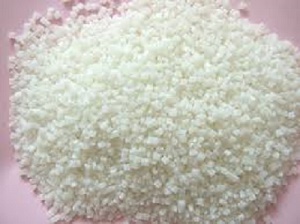
Since polyamides are also resistant to lubricants and fuels, they are often used in the transportation sector especially for brake hoses, plug connectors, battery cases, oil sumps, switches and handles. Electrical applications and electronics are the second largest application area. For this segment, Ceresana expects the highest percentage growth of average rates of 4.3% per year until 2022.
A major market for polyamide 6, which is mainly used for textile and industrial filaments, is the Asia-Pacific region, accounting for about 68% of global demand in 2014. Asia converted nearly 1.5 billion tons of the light, well dyed polyamide 6 into fibers. For polyamide 66, technical applications account for almost 56% of global demand - in Western Europe even 71%.
Air Jordan 1