
 Access
 Login/Register
 Supplier Login












WITH about 475 billion manufactured every year, aluminum cans have become one of the most ubiquitous packaging for drinks, food, aerosols and other industrial products. Environmental concerns, however, are pushing for ways to reduce waste and increase recycling efforts. Jozef Salaerts, president of Crown Asia Pacific Holdings Ltd. in Singapore, speaks about how lighweighting addresses such concerns but at the same time providing companies packaging solutions that differentiate themselves from competition.

Jozef Salaerts, president of Crown Asia Pacific Holdings Ltd
Over the years, innovation marked the beverage can packaging industry. Now, it is becoming imperative for companies to seek ways to cut waste and recycle more to protect our environment. How has your company responded to trends such as lightweighting?
That is an accurate observation – today’s technology has allowed can makers to reduce the thickness of can walls while still providing a high-performance container that retains the critical barrier and strength properties that our customers need. As an industry leader, Crown has made steady contributions towards lightweighting, and we will continue to introduce innovations that contribute to the advancement of the industry as a whole, such as our patented SuperEnd® beverage ends, which have now become an industry standard in North America and Europe. These 202 neck diameter can ends were designed to reduce metal use by 10% and make beverage cans even more environmentally friendly. To date, over 450 billion SuperEnd® beverage ends have been produced, saving an estimated 117,000 metric tons of aluminum, 2,000 metric tons of coatings, and 900,000 metric tons of greenhouse gases.
What is the current standard weight in the industry compared to say five years ago? How far do you think lightweighting can go and at what rate?
From a packaging perspective, metal containers for the beer/beverage industry and the food market have become 5-10% lighter in the past 10 years. Compared to 30 years ago, the beverage can today is 30% lighter, while the food can’s weight has been reduced by 20-25%.
A specific transition within the Asian market is the move from the 206 neck diameter cans traditionally used to package beverages to 202 neck diameter cans. The smaller diameter reduces metal use during the production process, thus contributing towards environmental efforts.
Apart from environmental management and sustainability, how does lightweighting benefit manufacturers?
One of the major drivers for lightweighting in the industry is the cost. Demand to reduce the total cost of ownership is pushing the industry as a whole to adopt lightweighting.
Besides the fact that the aluminum can has become significantly lighter, industry bodies such as the European Metal Packaging (Empac) and can manufacturers such as Crown need to continue to educate consumers and brand owners on the benefits of metal packaging. For instance, I think that Empac’s new website (www.whymetalpackaging.com) is a good effort that will contribute to the advancement of our industry.
Are there challenges to achieving lightweighting, or repercussions to existing production processes?
Challenges do still exist with regards to achieving lightweighting. The state of the infrastructure, for example, can be an issue in developing markets – transporting cans long distances over bad roads can make it difficult to ensure the quality of lightweighted cans. In facilities themselves, existing filling lines may also not be up-to-date, which can prevent brands from accommodating new innovations in lightweighting.
Is innovation being driven largely by clients’ requirements or does Crown take a more proactive stand?
At Crown, any new product development or innovation begins with a thorough understanding of consumer trends and desires – both globally and regionally for individual markets and consumer groups. It is this approach that enables us to develop advanced solutions that not only help brands grow and enhance their product offerings but also that fulfill identified market needs.
Innovation comes about both because of our clients’ requirements as well as our own proactive efforts. One of our recent examples in the beverage sector is the 360 End™, which was originally developed for the 2010 FIFA World Cup and was introduced into China in 2012. An advanced technology that allows the entire can lid to be removed, turning the can itself into a drinking cup, the 360 End™ was launched in conjunction with Anheuser-Busch InBev's (AB InBev) Budweiser brand with a limited release in China on a 150ml can. The 360 End™ also formally debuted in 2013 in the United States for Sly Fox’s Brewing Company’s Helles Golden Lager, a craft beer, demonstrating the popularity of Crown’s innovations across regions and continents.
Innovation comes at different speeds, however, in different markets. For established markets where growth is slow, there is a bigger demand for innovative packaging solutions that will allow brands to differentiate themselves require significant capital investment. In regions such as Asia, however, the market is still growing and thus the need for that same differentiation through innovation is not as pronounced for national and regional brands.
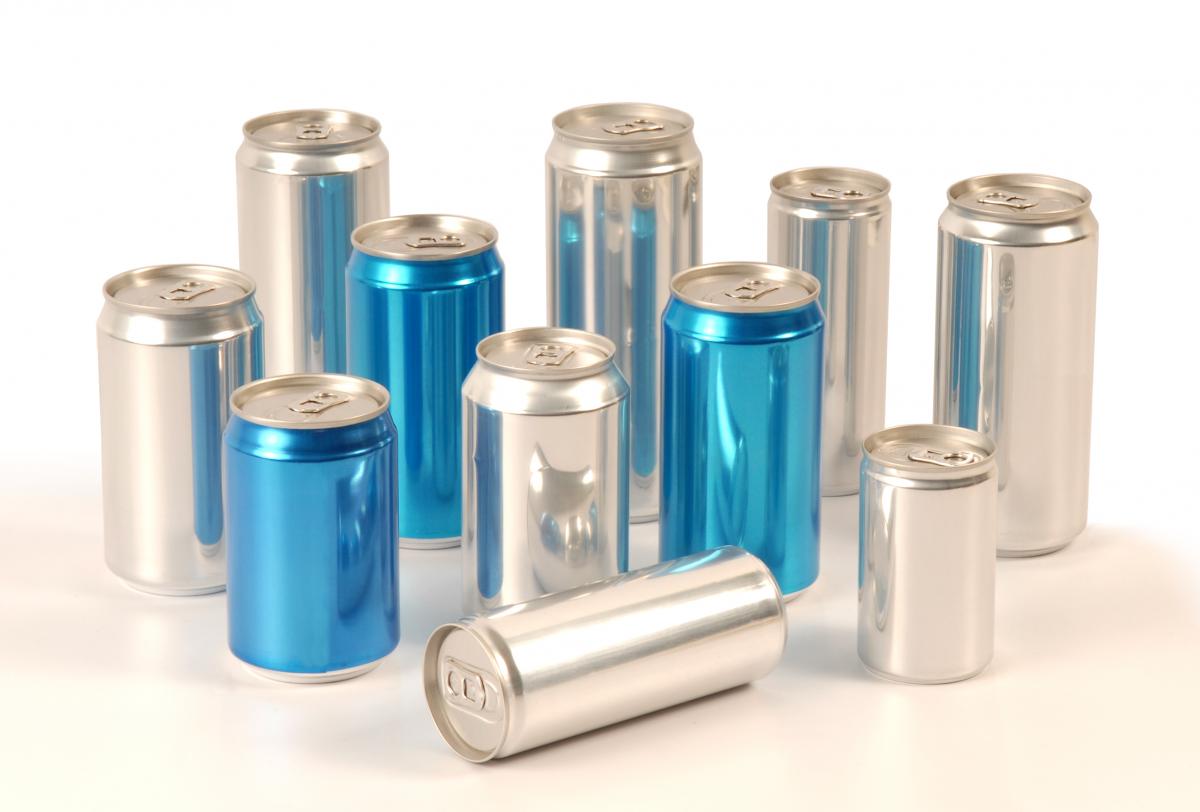
In the past 10 years, the metal containers for the beer/beverage industry and the food market have become 5-10% lighter
How would you differentiate your products from other metal packaging?
No other metal packaging company offers the same breadth and depth of product lines that Crown does. Our technology portfolio includes aluminum and steel beverage cans and ends, aluminum and steel food cans and ends, steel aerosol cans, metal vacuum closures and caps, and decorative and industrial steel packaging. We also have a broad geographic reach, with 149 plants in 40 countries. With this footprint, Crown is able to support our regional and international customers in more mature markets as well as the growing economies of Asia, Eastern Europe, South America, the Middle East and North Africa. This broad base of technologies and geographic reach allows us to apply knowledge and ideas from one market to another and even one region to another.
Please tell us about market expansion particularly in Asia Pacific.
The Asia Pacific Division of Crown is a leading supplier of brand-building packaging for companies in the Far East and Pacific Rim. The Division includes beverage can operations in Cambodia, China, Malaysia, Singapore, Thailand and Viet Nam, and non-beverage can operations, primarily food cans and specialty packaging, in China, Singapore, Thailand, and Viet Nam.
As the region’s beverage industry continues to experience rapid growth, we are committed to expanding our capabilities and geographic coverage to support the needs of customers and help them build their brands. Asia continues to be an important region for Crown, and our growth plans as a company align directly with those of our customers in order to ensure that we have the capacity when and where they need it. We are committed not only to meeting the market’s needs but also consumer demand for increased product variety.
Air Maxs