
 Access
 Login/Register
 Supplier Login










TOP-QUALITY water is the basis for making foods and beverages. The way the water is going to be used in each case – whether as a constituent part of the product itself or as process water – determines the measures to be taken for preparing the water available. With its Hydronomic water treatment systems, Krones offers a broad range of kit suitable for selectively treating any kind of mains water. The mains-water quality available to the client will in each case be determinant in selecting the processes suitable for achieving the water quality being targeted. Ultra-stringent quality standards govern manufacture of the Hydronomic modules, thus producing durable, long-lived technology ensuring high-performance, reliable operation.
The modularised Hydronomic water treatment system provides an option for producing consistently high-quality final water from well-nigh any mains-water quality, using an individually configurable range of building blocks for expansion at will. The following core components are available from Krones: media filtration (Hydronomic MF), ultra-filtration (Hydronomic UF) and reverse osmosis (Hydronomic RO), with a higher-order control system ensuring optimum operative efficacy. With this technology, Krones AG is purposefully progressing its “one-stop-shop” philosophy for the field of process engineering in the beverage industry.
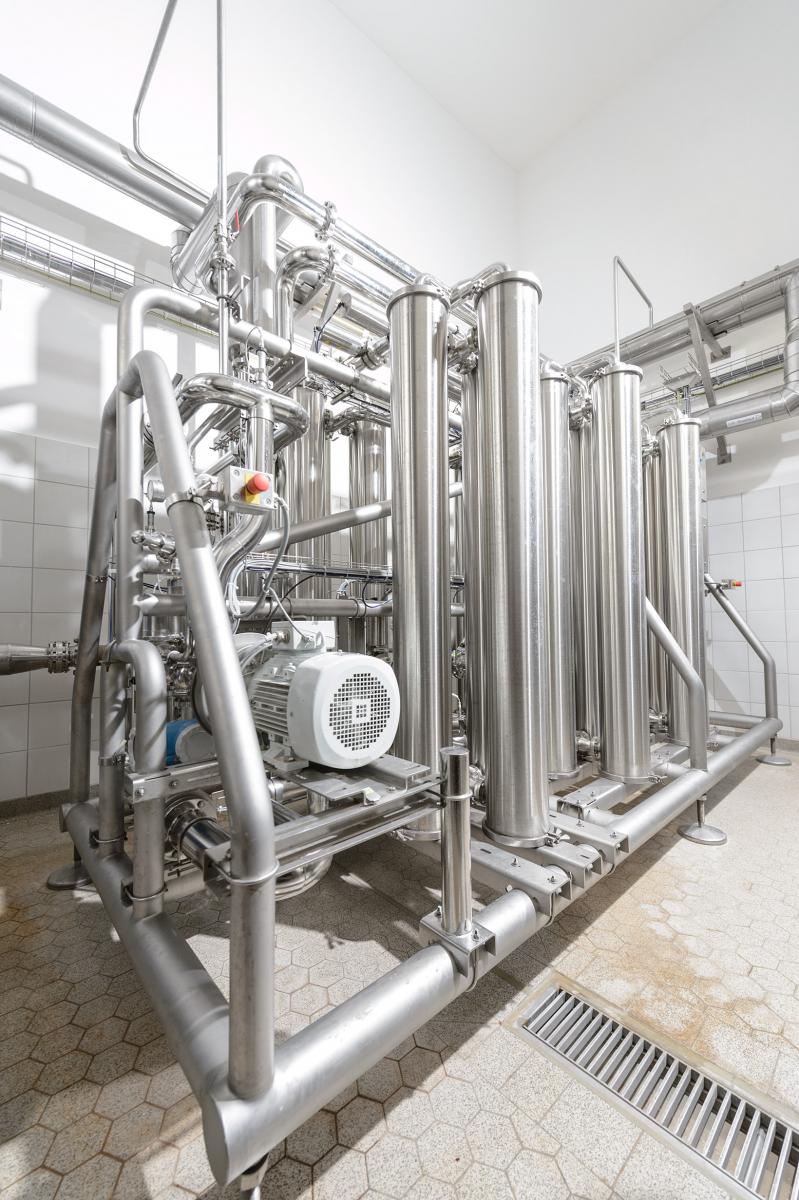
Hydronomic UF membrane technology in the shape of ultra-filtration with hollow fibres is used if it’s only undissolved constituents that are to be removed by filtration
The Hydronomic modules’ special characteristics include a high level of quality and hard-wearing durability for all components. The Hydronomic is in hygienic design throughout, including the piping, pumps, valves, connections, weld seams, and all other parts. Stainless-steel tanks and components are used in these systems, which guarantee quality-assuring, trouble-free and long-lived operation. Further factors providing significant advantages for the user in daily operation are the system’s demand-driven controllability for rinsing or cleaning circuits, and flexibly responsive flow control. All Hydronomic systems are subjected to an exhaustive in-house start-up procedure for each individual module in the Neutraubling plant before they are cleared for dispatch to the client. This subsequently guarantees fast and reliable commissioning on site.
Hydronomic MF ‒ media filtration
Media filtration, with a variety of individually defined filtration aids, is focused on removing and/or adsorbing from the water special substances or contaminants, such as dirt, foreign flavours, odours, iron, manganese, fluoride, uranium, organics, chlorine, arsenic, etc.
Hydronomic UF ‒ ultra-filtration
Membrane technology as ultra-filtration with hollow fibres is used when the composition of the substances dissolved in the water is to be retained and only undissolved constituents are to be filtered out. With ultra-filtration, any particles bigger than 0.02 micrometres are reliably removed from the water, also including elimination of well-nigh all bacteria and viruses at a reduction rate of 10-6 (log 6).
The ultra-filtration process used in the Hydronomic UF is performed in a membrane module with hollow-fibre membranes working on the dead-end-filtration principle. Hollow-fibre ultra-filtration offers a high surface area for the filtering function at only a low pressure, which makes for reduced energy consumption.
With the in/out method employed here, the mains water flows into the hollow fibres, and the filtered water exits via the hollow fibre’s PES membrane. The outflowing ultra-filtrate is collected in a central pipe inside the membrane module, and discharged. The hollow-fibre elements are cleaned by back-washing with ultra-filtrate in the opposite direction to that of filtration. In this procedure, individual filter elements are switched off while the others keep on producing ultra-filtrate both for back-washing and for continuous supply to the application concerned. Thanks to this separate switching for the filter units, the filter modules can be flushed with ultra-filtrate directly (without intermediate storage in a batch tank), which is supplied straight from the still-operating filter modules, without a back-washing pump being needed. Not only does this avoid any possible contamination of the ultra-filtrate, it also guarantees full production mode while the back-washing routine is running. This in/out concept offers optimum conditions for effective and dependable cleaning of the hollow-fibre membranes. In the CIP process, the chemicals required are dosed into the mains-water flow upstream of the ultra-filtration system, which means they are likewise ultra-filtered before use. If necessary, the system can be fitted with hot-water sanitisation (85 °C), which makes for reliable operation and enables a sanitising routine to be performed without the use of chemicals.
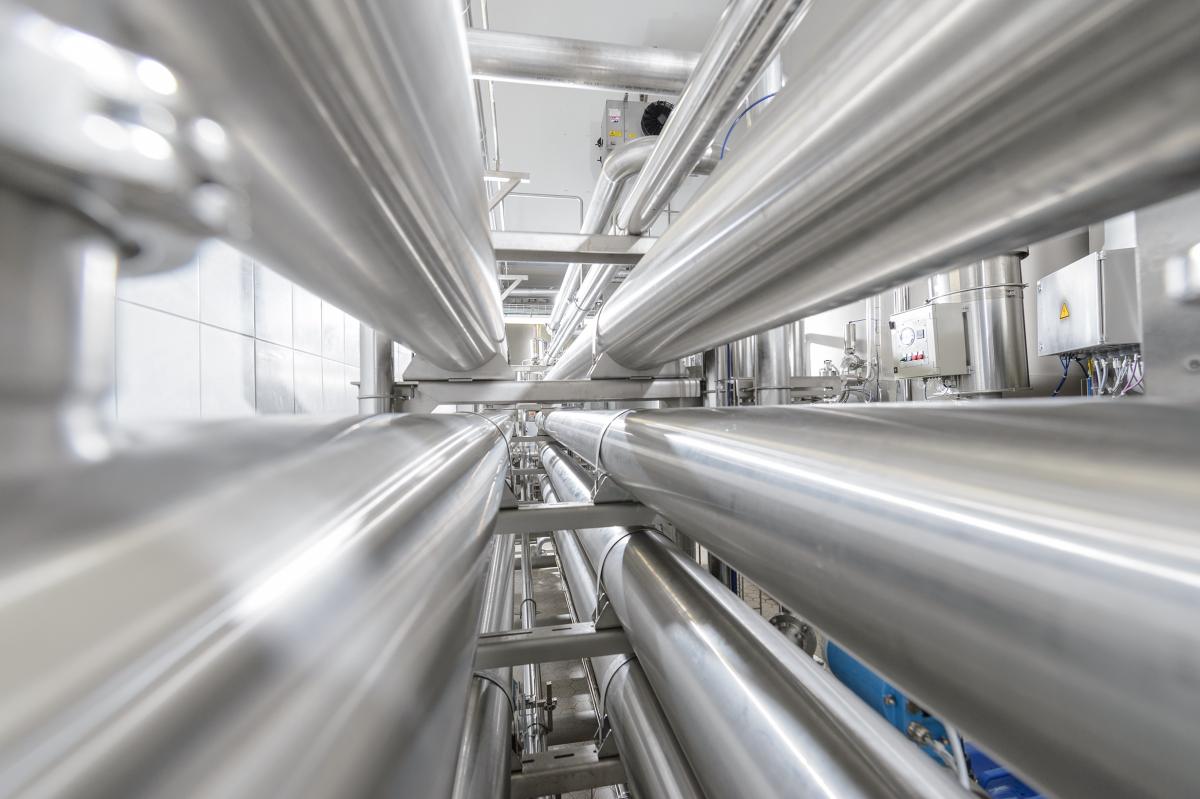
The downstream Hydronomic RO module serves for demineralising the water, with a retention rate of no less than 99.5 percent
Hydronomic RO ‒ reverse osmosis
The Hydronomic RO module serves to demineralise water, with an arrestance capability of at least 99.5 per cent. For this purpose, the system uses membrane technology operating on the principle of reverse osmosis, and nanofiltration, where the water flows onto the membrane surface (wound around the permeate-collecting pipe) in a tangential configuration. The permeate thus produced, after controlled blending with mains water, can be used as mash liquor, for redilution with fruit-juice or near-water drinks, for soft drinks or as process water. Pure permeate can be directly utilised as boiler feedwater. The Hydronomic RO provides a consistently high quality and yield of the product water, irrespective of fluctuations in the mains-water quality. One special feature in the stainless-steel-pressure-pipe version is the option for hot-water sanitisation, which invariably ensures consistently high microbiological safety, thus avoiding bio-fouling, so the client always keeps on top of the microbiological conditions prevailing.
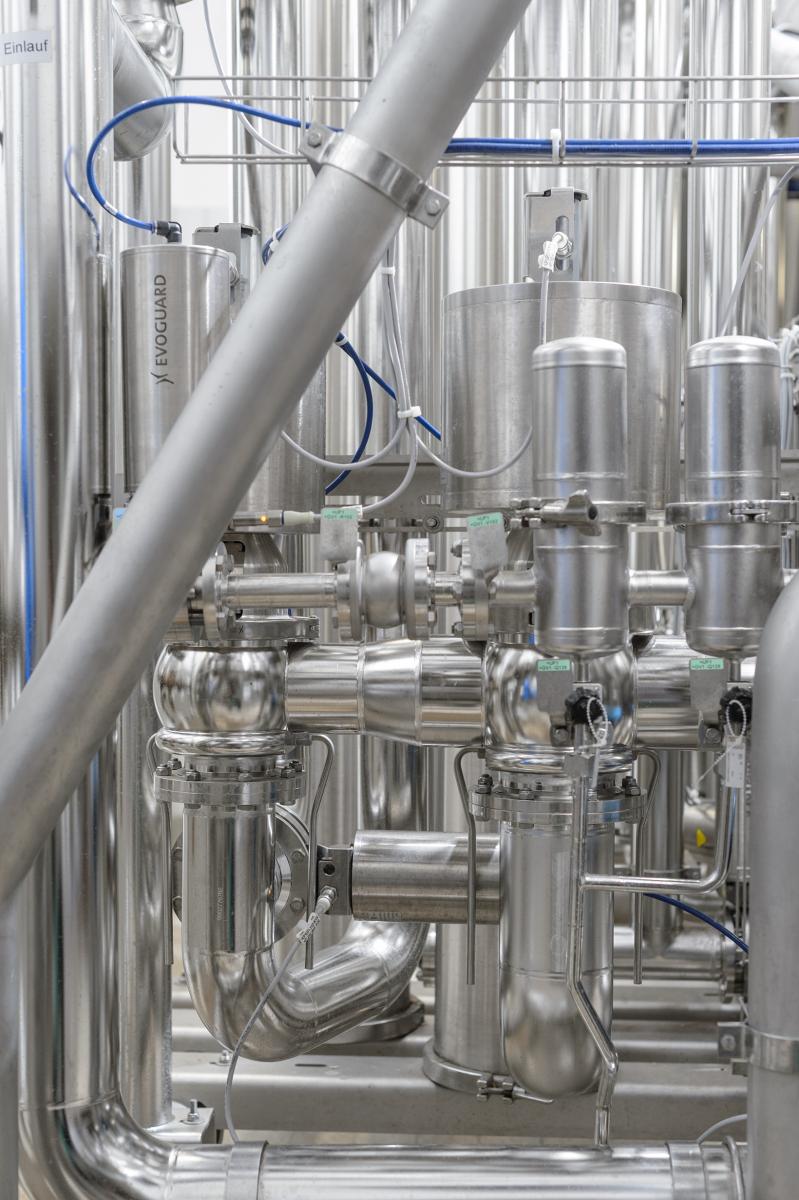
All system components, including the piping, can be thoroughly cleaned, using the internal CIP system, and be sanitised with hot water at about 85 degrees Celsius
Control and visualisation
The Hydronomic is operated through an integrated Krones iPanel with functions for trend analysis and malfunction diagnostics, and an option for linking it up to higher-order control and evaluation systems. Hydronomic water treatment systems are rated at 5 to 100 cubic metres an hour, with the product volume amenable to variation within certain limits.
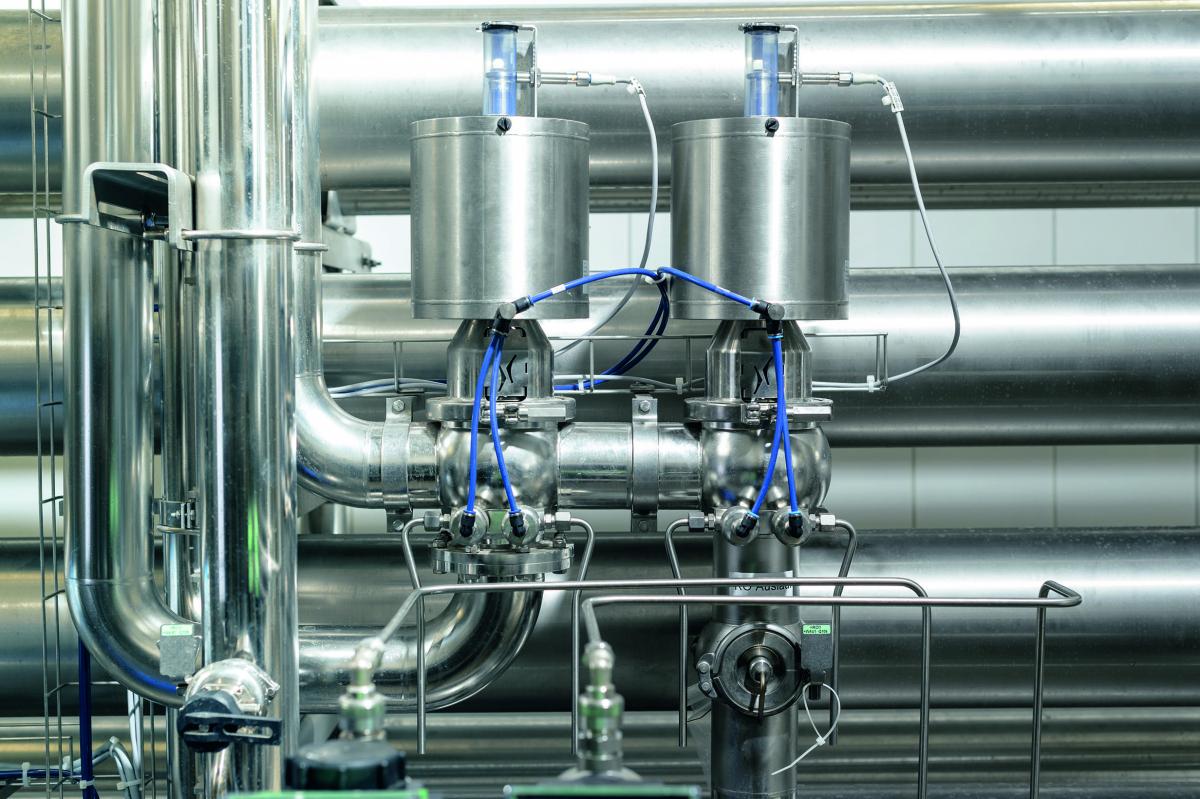
The use of leakproof valve technology, especially of double-seat valves, guarantees immixture-free separation of the media involved
enviro seal of approval
The Hydronomic was awarded the enviro seal of approval by the TÜV SÜD technical inspectorate for its resource-economical design concept. For example, a rinsing or CIP cleaning routine will only ever be run if the continuous filtrate/permeate monitor detects altered values. What’s more, the system is gentle on the membranes, with concomitantly extended useful lifetimes and longer replacement intervals. Its ability to adapt to changes in the mains-water quality makes for automatic quality assurance. Environmental impact with concentrate is minimised, thanks to intelligent control system queries. The pump has been optimally matched to the output involved. With its enviro certification for the Hydronomic design, Krones is evidencing the water treatment system’s media-/energy efficiency and its rigorous weco-compatibility.
Nike Sportswear