
 Access
 Login/Register
 Supplier Login












Life Science Nutritionals released their new infographic highlighting the best sources of Omega 3. Omega 3 is an essential fatty acid, meaning the body is unable to produce it on its own and must obtain it from dietary sources or vitamin supplementation. Omega 3 consists of alphalinolenic acid (ALA), eicosapentaenoic acid (EPA) and docosahexaenoic acid (DHA).

Click infographic
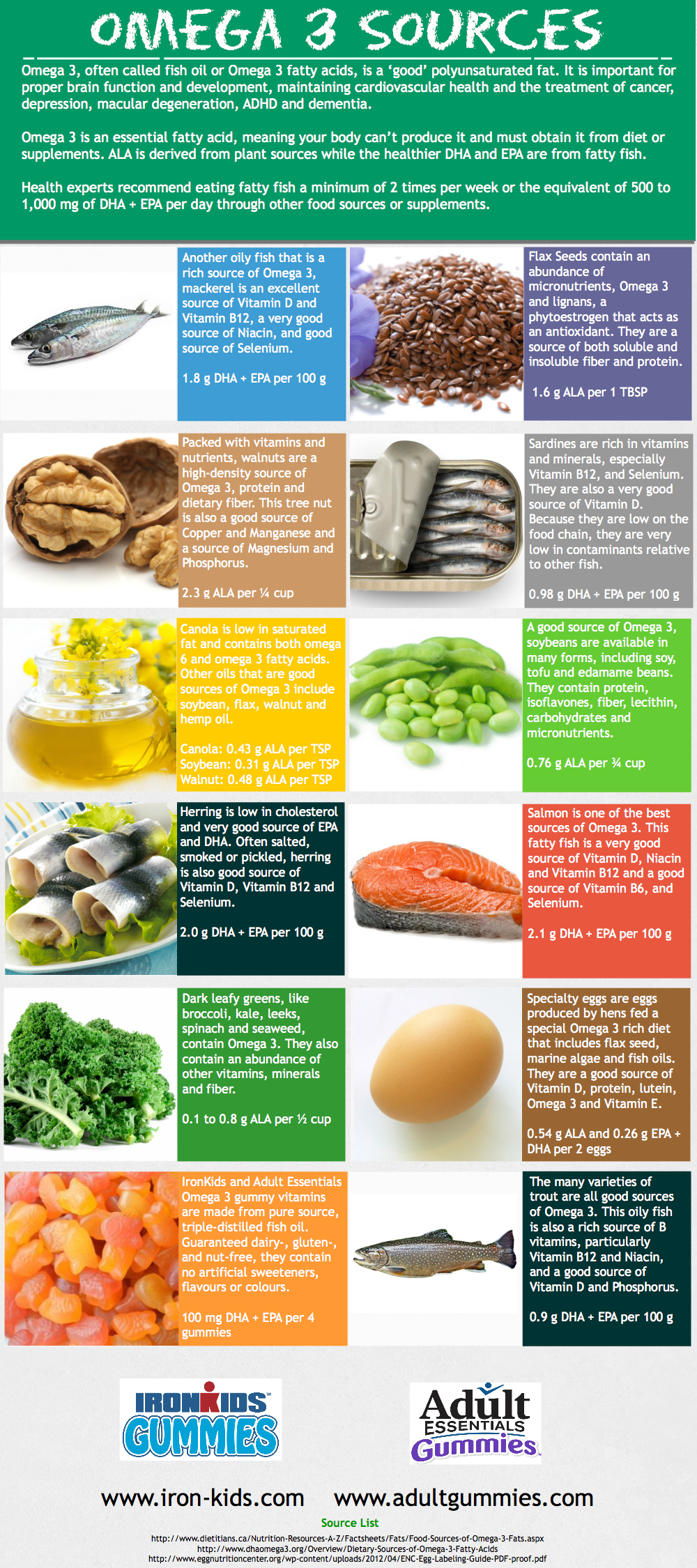
“If there was one vitamin supplement that I would recommend everyone take, it would be an Omega 3 supplement,” says Stuart Lowther, founder and CEO of Life Science Nutrionals, the maker of IronKids and Adult Essentials Omega 3 gummy vitamins. “Omega 3 is vital to maintaining proper health at every stage of life.”
Of the types of Omega 3 available through dietary sources, the DHA + EPA found in fatty fish and fish oil supplements have far greater health benefits than the ALA found in plants. That’s bad news for the picky eaters who dread seeing fish on their dinner plate.
Recent research shows that children between the ages of 4 and 8 were only getting 22% of the recommended 90 mg of DHA + EPA per day and 61% of the recommended ALA. This is especially alarming because many of the key benefits are during these critical developmental years.
“We understand that getting kids to eat enough fatty fish to meet the recommended Omega 3 levels is difficult,” says Mr Lowther. “It’s the taste that makes our IronKids Omega 3 gummy vitamins so popular. Kids get all the benefits of taking fish oil supplements without the fishy taste.”