
 Access
 Login/Register
 Supplier Login












The packaging industry is constantly growing and developing; creating new, effective, and innovative solutions. Consumer preferences for packaging are also changing as they come to understand that quality, taste and personal enjoyment are not compromised in quality plastics packaging. New packaging formats are being accepted as consumers understand the reasons which have a positive impact on the environment compared to other packaging materials. Growth in demand of processed and packaged food is helping the flexible packaging industry flourish in the Middle East and Africa region.
Smithers Pira, global expert on the packaging, paper and print industry supply chains projected in its reports that the global packaging market is expected to reach $975 billion by 2018. In a separate report, it suggested that the MENA packaging market will grow from $35.4 billion to $45.2 billion in 2014 to 2019 at a CAGR rate of 5%, higher than the global growth rate of 4%.
The traditional "PET" way
Restrictions of packaging materials are very limited nowadays with all the flexibility and safety that PET solutions provide. Global confidence in the hygienic and chemical safety of PET comes from the fact that the PET polymer is very stable and inert. Like glass, it is strong, resistant to attack by micro-organisms, does not react with foods, and will not biologically degrade. But unlike glass and other traditional packaging materials, PET is extremely lightweight, simple to transport and won't break. That's why it’s the preferred choice for packaging many foods and beverages.
A study in 2010 proved that producing one tonne of recycled PET in place of virgin PET saved an additional 14,067 kWh of energy. It is safe to say that PET is one of the most widely used consumer plastics and its importance to the beverage industry is highlighted by the fact that bottle production represents about 30% of its total use. The convenience of resealable packaging combined with the durable and preservative nature of PET makes it the perfect fit for protecting the quality and shelf life of beverage products, and protects food and beverages from contamination without leeching any toxic material. Reduced usage of PET raw materials allow manufacturers to cut down on both, the amount of energy and resources, needed while packaging, resulting in fewer greenhouse emissions and a lower carbon footprint.
Sidel has introduced RightWeight(TM), a new concept bottle which weighs just 7.95 grams (the average weight for a commercial 0.5 litre water bottle is 12 grams), yet maintains bottle quality and performance. By reducing the packaging content, it offers environmental advantages on two fronts: firstly, the savings achieved in the PET resin raw material itself and secondly, further reducing the impact of transporting the bottles throughout the supply chain.
Mr. Harbinder Kathuria, Regional Commercial Director, Greater Middle East at Sidel said: "Maintaining a bottle’s resistance and sustainability so that it can survive the challenges of the supply chain, ensure product quality, and provide a good experience for the consumer when they handle the bottle and consume its contents, must always be the primary factors when producing bottles. Sustainability considerations include how the environmental footprint of the package can be minimized through reducing the use of raw materials and other resources; reducing energy use or employing renewable energy sources, and adopting end-of-life options, including recycling."

Mr. Harbinder Kathuria
Innovation is key
Tetra Pak recently announced the launch of its first carton made entirely from plant-based renewable packaging materials. The new Tetra Rex® carton is the first to have bio-based low-density polyethylene (LDPE) films and bio-based high-density polyethylene (HDPE) caps, both derived from sugar cane, in addition to Forest Stewardship Council (FSC™)-certified paperboard. Last year, Tetra Pak US and Canada launched "Moving To The Front," campaign focused on white paper, reflecting issues of resource limitations, encourage all stakeholders to widen their focuses from mid and end of the packaging life cycle to the beginning. It also encouraged the importance of sustainable material sourcing and renewable resources to protect our limited natural endowments.
Sidel has been working towards providing equipment to its customers that will help them cater to the growing consumer and market demands. It has created several types of innovative equipment such as the Sidel StarLite™ Base, which is a new design to the base of standard PET bottles. With a slightly altered design from the standard base, StarLite gives added durability, stability, and overall resistance to the bottles.
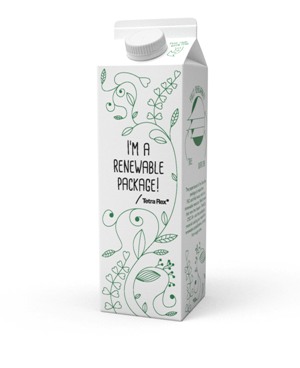
Tetra Pak launched its first carton made from plant-based renewable materials.
Aseptic packaging
ReportsnReports.com, an online market research reports library, in its reports suggested that the global aseptic packaging market is forecasted to grow at a CAGR of 9.33% over 2014 to 2019. It further added that an effective supply chain is imperative through which food and beverage items reach the consumers and is one of the primary reasons of growth of the aseptic packaging industry. From the time a perishable item commutes from the manufacturing site to the final distribution points via transportation and warehousing processes, its quality and nutritional value takes a toll.
The report added that key customers of aseptic packaging products belong to the Dairy, F&B, Pharmaceutical and Healthcare sectors while it is estimated that Asia-Pacific will be the fastest growing market with Latin American and the Middle East & African countries growing quick, too.
Global companies are deploying resources in researching and developing new techniques and materials to grow aseptic packaging. IMA DAIRY & FOOD, a developer and manufacturer of machines and packaging lines for dairy and food industries offers specific procedures for active sterilisation of packaging materials (Dry heat: infrared, Radiation: Ultra-violet light, Moist heat: saturated steam, Chemical: hydrogen peroxide).
IPI, provider of solutions for aseptic packaging of liquids introduced Caliz, the latest package innovation in the aseptic carton market. Caliz, with its ergonomic shape and attractive design, is targeting to achieve superior and functional packaging requirements.
Flexible packaging
Flexible packaging combines the best of plastic, film, paper and aluminum foil to offer multiple protective properties while consuming minimum materials, touting it as one of the fastest evolving segments of the industry. Starting off with minimum waste, it reduces discards and consumes fewer natural resources such water and energy, ensures lesser emissions and volatile organic compounds.
According to PCI Films Consulting, the Middle East flexible packaging market is set to grow by 5% annually, over the next five years, owed to growing investment in food production and processing, growing packaging production capacity and penetration of pre-packed food.
“The flexible packaging market is growing more quickly than traditional rigid packaging markets. There are several factors that underpin the growth of flexible packaging in the region, including a rapidly growing young population, economic growth, continued urbanisation, and a changing consumer lifestyle that calls for new convenient products,” Mr. Harish Dharamsi, Chairman of Plastivision Arabia organizing committee, 2016 was quoted as saying.
Mr. Kathuria of Sidel concluded: "Ultimately, it is the brand that achieves a positive experience for the consumer that thrives and grows through repeat purchases. The design of any bottle is an integral part of that experience. Consumers also expect packaging to reflect their changing lifestyles. Smaller, individual ‘on-the-go’ formats are better suited to the lifestyles of today’s more mobile generation, while larger ‘multi-pack’ formats are ideal for the separate habits of today’s bigger families."
Adidas