
 Access
 Login/Register
 Supplier Login












ALTHOUGH Singapore imports 90% of its food sources, it holds one of the lowest incidences of foodborne disease outbreaks in the world. A feat it attributes to stringent food safety standards, which ride on effective lead agencies, law enforcement as well as industry and public engagement.
The Agri-Food and Veterinary Authority (AVA) for one ensures the adequate supply of locally produced and imported food in the city state. The national agency enforces safety standards from farm to fork using a risk-based approach and guided by a comprehensive and integrated food safety system, which covers regulations, source accreditation, routine inspection and surveillance, as well as laboratory analysis.
While screening and diversifying overseas supply, AVA helps bolster local farm productivity through R&D and capability development. It is in charge of licensing local poultry and pig slaughter-houses, food processing establishments, cold-stores and farms and conducts regular inspection of these premises. Issuing export health certificates for local food processing firms to export their products also falls under AVA’s jurisdiction.
At the food retail level, the National Environment Agency (NEA) monitors hygiene for products. Licensing of restaurants, cafes, snack bars, supermarkets, mobile food wagons and food caterers is part of NEA’s role, as is registering food handlers and engaging Food Hygiene Officers to help oversee and maintain high standards of hygiene and sanitation in business establishments. Through its Code of Practice on Environmental Health, NEA lays down the guidelines pertinent to environmental health concerns that should be factored in the design of food establishments.
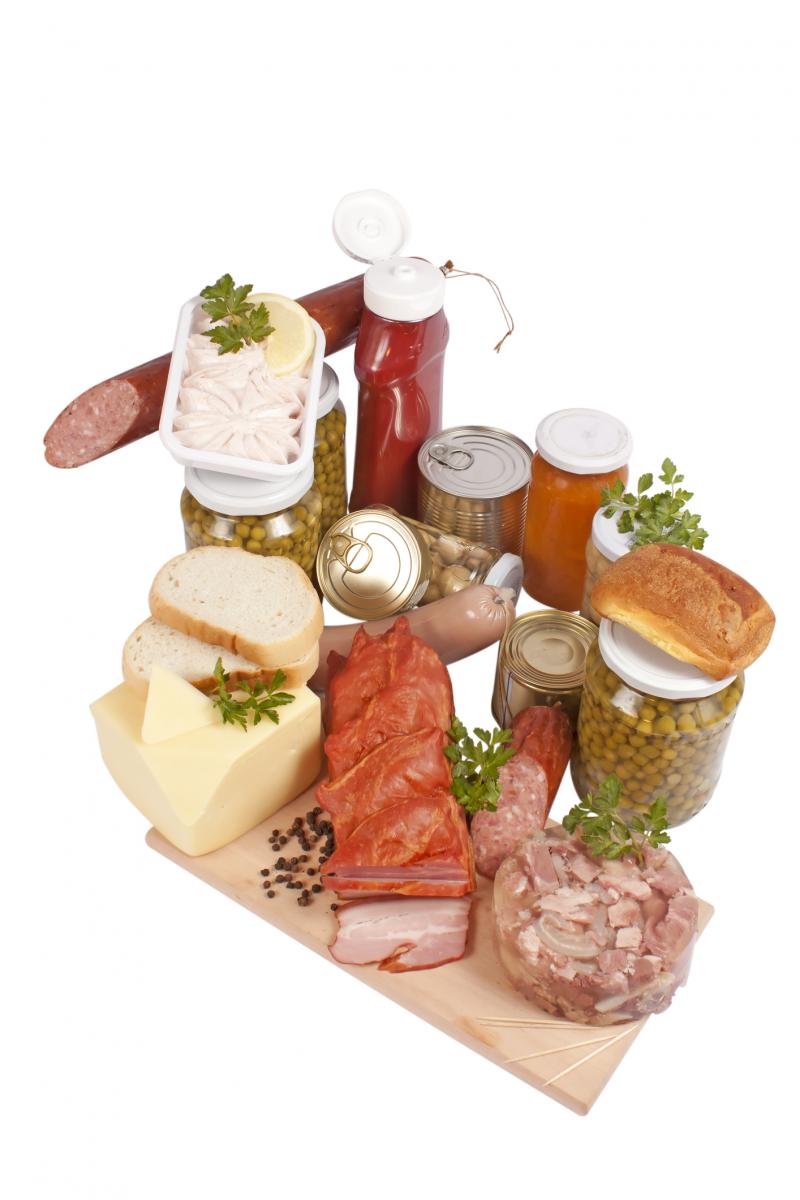
Facilitating greater partnership
Singapore’s food safety rests on a tripartite partnership among the government, food industry and the public. Hence, AVA and NEA increasingly reach out to industry players and consumers.
AVA works with the industry to implement Hazard Analysis Critical Control Point (HACCP) systems and local farms to adopt Good Agricultural Practices. Through its Food Safety Partnership, the agency recognizes food industry players with commendable food safety assurance and food safety consumer education. Its own Food Safety Awareness Program educates consumers through road shows and the distribution of food safety information.
NEA for its part holds regular dialogues, seminars and participates in committee workgroups of partner hotel, restaurant and coffee shop associations to upgrade the hygiene and sanitation of food establishments.
It implements a grading system from A to D, with A being the highest, for eating establishments and food stalls. This is based on the overall hygiene, cleanliness and housekeeping standards of the premises.
The Points Demerit System (PDS) is used in dealing with the suspension or revocation of licenses. NEA issues demerit points for each public health offense that is convicted in court or compounded. Revised in 2014, the PDS now issues more demerit points to offenses assessed to be of high-risk and impact to food safety, while those assessed to be of lower risk or are administrative in nature are given lower or no demerit points. If a licensee accumulates 12 demerit points or more within 12 months, his license will either be suspended for two weeks or four weeks, or be revoked, depending on past suspension records.
The NEA’s Food Safety Management System (FSMS) has a preventative approach to identify, prevent and reduce foodborne hazards to minimize the risk of food poisoning and to ensure food is safe for consumption. Since 2014, all caterers have been required to submit a proper HACCP-based FSMS with reference to the Singapore Standard SS583:2013 as a basic guide. This is in line with the revised Code of Practice on Environmental Health (COPEH), which requires all new and existing caterers to implement a HACCP-based FSMS.
Laws bolster effectivity
To a large extent, Singapore’s success of ensuring high standards of food safety and hygiene hinges on its laws and efficient enforcement thereof. They spell out clear parameters and penalties for noncompliance and allow AVA and NEA to carry out their functions and powers. Legislations in place include the Sale of Food Act, Food Regulations, the Environmental Public Health Act, the Environmental Public Health (Food Hygiene) Regulations; the Animals and Birds Act; the Slaughter-houses and Meat Processing Factories Act; the Control of Plants Act; the Wholesome Meat and Fish Act; the Fisheries Act; the Endangered Species (Import and Export) Act; the Feeding Stuffs Act; and the Agri-Food and Veterinary Authority Act.
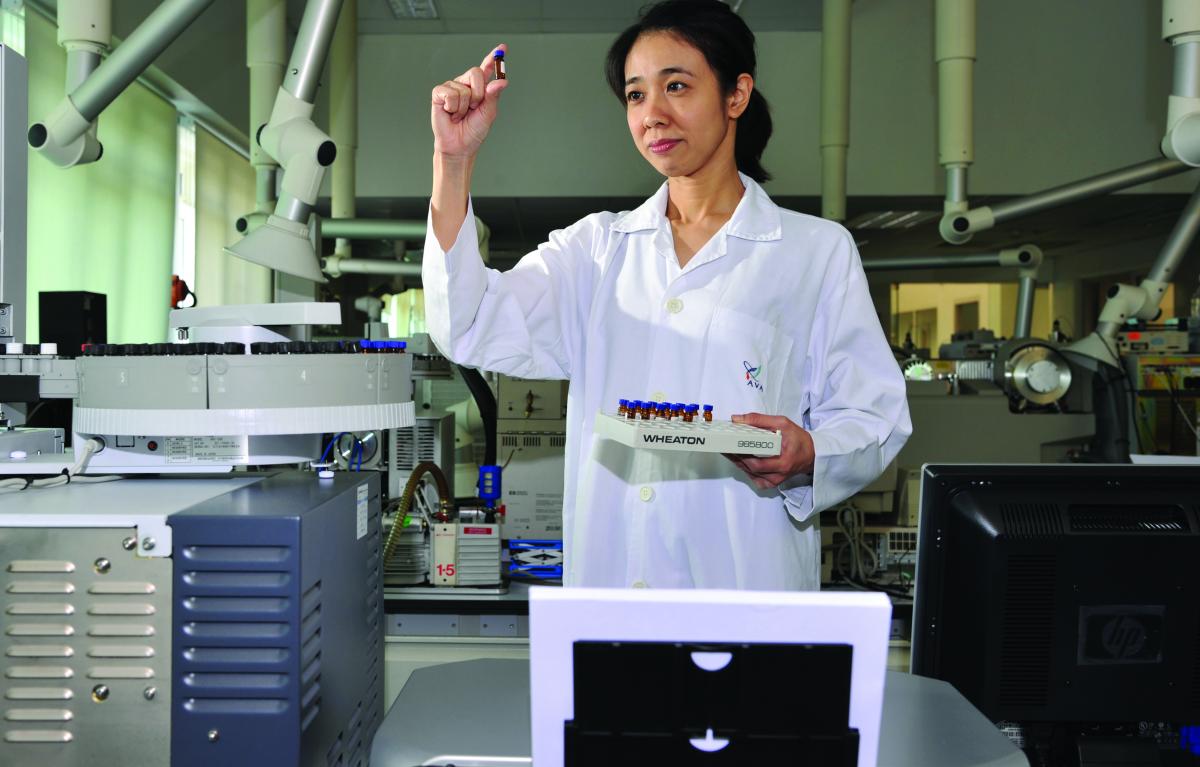
AVA’s Veterinary Public Health Laboratory is Asia’s first OIE Collaborating Center for food safety. Its technical expertise, comprehensive laboratory testing services and training program are expected to enhance the region’s overall food safety
Source accreditation for imports
Accreditation is an upstream measure in Singapore’s food safety system. Only meat and eggs, and their products are required to be accredited.
AVA works with overseas counterparts and the private sector in organizing sourcing trips to expand food sources and encourage them to get accreditation on two levels: the country level and the establishment level. On the former, AVA assesses the exporting country’s veterinary services, legislation, animal disease status and control measures, national residue and microbiological monitoring program, as well as the regulatory system for the production of the export products to Singapore.
On the export establishment level, which includes processing/manufacturing plant, farm, etc., AVA assesses farms and processing establishments on its bio security, sanitation, hygiene, health management and diseases surveillance programs to ensure that they meet AVA’s standards. Once this is done, an inspection to the country and the export establishments may also be conducted. The agency also works with the exporting country’s competent authority to require veterinary health certificates issued by the competent authority of the exporting country to accompany every consignment of food products exported to Singapore.
There are 36 countries with more than a thousand establishments accredited to export meat products to Singapore. Of this, 10 are from the Asia Pacific: Australia, China, India, Japan, Malaysia, New Zealand, Philippines, Malaysia, Taiwan and Thailand. In addition, 46 layer farms, 133 broiler farms and 55 duck farms from the authorized export countries are accredited to supply Singapore live poultry and eggs.
“We monitor the performance of the consignments from these approved establishments and take into account the track record when considering whether an audit is required,” explains an AVA spokesperson. “In the event of a compromise in food safety or animal health standards in the approved establishment/country, AVA will assess and evaluate the situation before taking the necessary enforcement action such as suspension of import.”
Conducting routine checks
Imported live poultry, eggs and pigs that pass through the borders are checked for animal health and food safety reasons. “For live poultry, we look for signs of ill health and mortality,” the spokesperson said. “If we observe that there are any clinical signs of disease or there is mortality and concurrent symptoms of avian influenza, we will detain and investigate the reasons behind the mortality. So far, animal diseases, such as bird flu, have not been detected in our supply of live animals.”
The consignment’s documentation should indicate that imports come from an approved farm and licensed importer and the paperwork is complete, including health certificate and cargo clearance permit.
The routine inspection and surveillance on food are done based on science and risk analysis.
Imports go through regular inspections and sampling. “Tests cover a wide range of chemical contaminants, such as pesticide residues, drug residues (e.g. antibiotics and hormones), as well as microbial hazards (e.g. Salmonella).”
Checks are done on packaging labels. “This information is important for traceability of the food product’s source should there be any food safety hazard,” the spokesperson added.
Food products are likewise checked for mislabeling and adulteration.
Visual checks are conducted on the physical consignment for superficially recognizable symptoms of microbial spoilage such as slime on meat surfaces, off-odors, and growth of colonies of colored organisms.
Food products that fail inspections and tests will not be allowed for sale and are subject to enforcement action, such as destruction of the food product and suspension of license. First-time offenders may be fined up to $5,000 and in the case of a second or subsequent conviction, face a fine of up to $10,000 or imprisonment of up to 3 months, or both.
Screening imported livestock
As part of routine surveillance and inspection program, AVA conducts ante-mortem inspection of the imported livestock and post-mortem inspection of the carcasses/viscera to prevent disease incursion from the import of livestock and to ensure that the slaughtered animals are safe and wholesome for public consumption.
AVA also checks the premises for compliance to conditions of licensing, observation of good manufacturing practices and cold chain requirements. Daily inspections are carried out at the pig and chicken slaughterhouses. Samples are taken for lab tests for foodborne disease agents, zoonotic diseases and veterinary drugs.
Laboratory analysis
AVA’s Veterinary Public Health Laboratory (VPHL) is the cornerstone of its integrated food safety system. Its capabilities cover tests for food poisoning and spoilage organisms, harmful chemicals and foodborne toxins. It conducts tests on more than 60,000 samples yearly. In general, tests may take from less than three days to 10 working days to complete.
In 2014, the World Organisation for Animal Health (OIE) endorsed VPHL as Southeast Asia’s first OIE Collaborating Center for Food Safety, serving the Asia and Oceania regions. As such it will have the opportunity to extend its technical expertise, comprehensive laboratory testing services and training programmes to the region, enhancing its overall food safety. -JEAN-ALINGOD GUITTAP
adidas superstar damen glitzer silber