
 Access
 Login/Register
 Supplier Login












THE South African ready-to-drink beverage market has seen dynamic changes in the past year with energy drinks by the dozen making an entrance, tried-and-tested flavors being challenged by interesting additions and the emergence of a preference for non-carbonated beverages. According to experts speaking at this year’s DrinkTech Africa Conference, the need to keep the customer interested is all important to maintain brand presence or grow market share.
“Innovation is the way we live our brand,” said Mynhardt Oosthuizen, CEO Oasis Water. It’s important to keep the brand relevant, and to do this brand owners need to ask the customer what they want and conduct field trips. Industry is moving towards emotional branding. The motivation to purchase is based on an emotional decision, Mr Oosthuizen said.
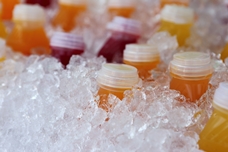
Convenience, healthy and interesting flavors attract buyers to new RTD beverages (Colorful juice on ice for drink © Wittybear | Dreamstime.com)
“We have changed our advertising from a technical message to an emotional message,” he said. In addition we have added an energy drink. We’ve been in the health and fitness drinks sector with our water. We’ve now added an energy drink. We still deliver on our brand value and that is truth.”
Meenal Harry, global marketing manager Savanna at Distell, said customers are seeking indulgences. “One of the ways to meet this expectation is by offering limited edition products – something with relevance. A limited edition has a tendency to stimulate “talkability” and even go viral on social media.
“Consider adding a new intrinsic such as the liquid by changing its color. When making a change it is necessary to consider the overall profile of the drink’s qualities such as mouth feel, depth of flavor, sweetness.” Ms Harry added that brand owners and product developers need to be asking: Is it a pleasant experience for the consumer? Can the consumer drink more than one? “If there is no depth of flavor the product might be thought of as lacking quality,” she explained.
Innovation applies to taste of course. “For example brothers coconut and lime over a pear cider base is something new and a clear indication of different flavors entering the market. She stressed, “Keep it relevant.”
Dave Evans, CEO BOS Brands, owner of the BOS Ice Tea brand, agrees wholeheartedly with innovation as the most important element of strategy and comments: “In Europe as in South Africa, our BOS rooibos iced teas with all natural flavors have been heralded as a fantastic, innovative combination delighting the palates of consumers. Our lime and ginger flavor has been particularly well-received along with our staples (a lemon flavor, peach flavor and berry flavor).
“One example of further innovative flavor combinations was our design-a-can competition. Consumers got to enter designs for a mystery flavor. A design panel adjudicated the designs and selected a winner, whose design was printed as our new promotional flavor. This was revealed earlier this year as a Green Rooibos iced tea, with Yuzu flavor. A fantastic, innovative citrus-style flavor, packed with all the anti-oxidants of Green Rooibos and Yuzu fruit.
Rina Wulfsohn, CEO of Versachem Chemicals, says manufacturers of new beverage flavors have to take into account more than just taste. Health and products that promote wellness with healthful benefits are in high demand. This demand comes on the back of “bad” words such as tartrazine and MSG. Now sugar is the major threat.
It’s not easy to speculate the future, Ms Wulfsohn said, thus it’s important to understand how new ingredient solutions or flavor combinations that will be the latest innovations, influence consumer purchasing behavior. “The aim is to identify key market trends. It’s essential to look at the whole market. A flavor that works in the West may not work in Africa. Know your market,” she reminds producers.
According to Ms Wulfsohn, current trends suggest that consumers are looking for beverages that offer convenience, health and energy boosting properties. She says brand owners should “aim to provide the most convenient food and beverage the market has to offer. Put out something new and novel. Frankies did this with its cream soda flavor – it was both unusual and nostalgic.”

When changing colors, one has to consider the overall profile of the drink’s qualities such as mouth feel, depth of flavor, sweetness, according to Meenal Harry, global marketing manager Savanna at Distell (Photo © Michael Shake | Dreamstime Stock Photos)
Consumers are looking for new taste experiences. Innovation is around healthier ingredients and interesting taste combinations. “Aloe has become a popular ingredient. But you need to know how to add the health benefits of aloe without the bitter taste,” she said.
“With a massive global focus on the ills of sugar and media that perpetuate this view, the focus on sugar and how bad it is for you has created opportunities for innovation among manufacturers to provide sufficient alternatives. There are many opportunities for the development of effective natural or chemical ingredients.
“Versachem has developed SureSweet. It is a product innovation and is an effective sugar replacer at three times the sweetness,” she added.
With sugar reduction ingredients there have been formatting challenges such as inherent flavor issues, bitterness, and metallic after taste, no mouth feel. SureSweet has 200 times the sweetness of sugar. Its two ingredients are telin (Thaumatin) and Neotame which are both FDA-approved, safe for diabetics and during pregnancy. It can replace 30% of sugar without influencing the taste. It provides an innovative solution in line with the expectations of the WHO. There is no adverse reaction with other ingredients or processes and it is heat stable.
Estimating a cost of R8 million for 1,000 tons of sugar per month, there will be a saving of R1.35 million by replacing 30% of sugar with SureSweet, Ms Wulfsohn said.
Consumers want health and wellness benefits, low calorie alternatives. There is a trend of new flavors coupled with a willingness of consumers to experiment. She challenged: Interesting taste combinations may differentiate a brand but will it offer the functional benefits consumers are looking for?
Among the interesting flavors entering the market are avocado with cocoa and coconut with citrus.
Premium brand Appletiser launched two new flavors towards the end of last year, in the Appletiser Colors range – Pink (apple and strawberry) and Amber (apple and peach). Appletiser Colours Pink fuses the apple flavor of the original Appletiser with strawberry juice. Amber is a combination of the original apple flavor and peach juice. Both flavors are made with 80% real fruit juice and 20% water.
“Appletiser has always tried to be innovative when it comes to bringing out different flavor combinations and Appletiser Colours is no different. The unique pairing of Amber as well Pink offers customers a different and new taste experience that they are sure to enjoy,” said Appletiser’s marketing manager, Andrea Shuttleworth. Appletiser Colours is available in 1.25 liter bottles and 330ml cans.
Ms Wulfsohn said that flavor profiles should vary according to demographics – region, religion, social factors, seasonal influences, functionality, comfort levels, naming considerations, packaging and design.
She said it’s essential to balance innovation with consumerism. Beverage producers must innovate according to their respective target markets and create marketing campaigns that highlight the innovation.
Ms Wulfsohn pointed out that in West Africa the most popular flavors are orange, pineapple, mango, banana and apple. The market likes purity – a label showing ‘100% apple’ for example, conveys the quality of health. The other important objective is that it should meet the target market’s affordability levels in terms of disposable income. “Be clear about what you are offering, call an orange an orange.”
The Euromonitor report on Beverages published in 2014 indicates that packaging design remains vital to the success of soft drinks in an increasingly competitive market. Last year the ready-to-drink market saw a number of new entrants across a variety of categories. The key strategy for most new entrants was to introduce their products at relatively low unit prices in order to encourage volume sales.
“Packaging design also stood out as one of the key drivers of success in categories where value addition is limited, with a typical example being bottled water, where competition is stiff in terms of both quality and pricing,” stated the report.
Between 1997 and 2010 non-carbonated beverages saw a major increase. “It looks like the demand for non-carbonated is here to stay,” said Ms Wulfsohn. According to Euromonitor, carbonates are a mature category with narrow margins and this has given rise to the growth in the number of new players in the energy drinks category. “In 2014 more manufacturers recognized the potential of the category where profit margins are much higher than in more mature categories where competition is also rife.
Euromonitor stated: “Up-and-coming soft drinks manufacturer Little Green Beverages introduced an energy drink in late 2014 under the Refreshhh brand. The average unit price of existing brands is expected to take a dip as the leading players try to fight off price competition from up-and-coming small brands.”
However, for Coca Cola, which continued to set the pace for soft drinks in South Africa in 2014, carbonates remained a major contributor to the company’s overall success in the country. Nonetheless, with the growth in private label soft drinks and the number of small players entering the market, Coca Cola is feeling pressure in its previously dominated categories, the report said.
CAMPO