
 Access
 Login/Register
 Supplier Login












THAILAND’s food industry is upbeat, posting record export sales in 2014, and should continue to perform well with government encouraging its growth, said a market analyst.
The country’s exports surged to record 1.1 trillion baht in sales last year, in part because of growing demand from the Asian market.
Rapeeporn Suthatham, vice-president for research and information at the National Food Institute (NFI), attributed the industry’s strength to government support of food manufacturers, both in terms of policies and technical assistance, as well as the flexibility of producers to adapt to market conditions.

Ms Rapeeporn Suthatham, vice-president for research and information at the National Food Institute
“The government provides many training courses and offers consultancy for farmers to solve their problems,” she said. “Government research has uncovered new strains of rice for farming here that are resistant to pests and tolerant of colder weather, which should increase output. But the government also realizes the focus in Thailand needs to be on adding value and not just raising production.”
The NFI, which is an independent organization under the Ministry of Industry providing laboratory proficiency testing services to assess the performance of food, feed and water, predicts the rice, cassava, chicken and canned pineapple markets will continue to expand this year, driving income from food shipments to surge to 1.08 trillion baht, a gain of 6.9%.
The ASEAN was the largest market for Thai food exports last year, taking in 187 billion baht, an estimated 22% of total revenue, reported NFI in the Bangkok Post in December 2014. Japan clocked in with 110 billion baht worth of exports, some 13% of the total, followed by China with 99 billion, or 11.7%.
Despite Europe’s sluggish economy, the bloc imported 93 billion baht worth of food from Thailand last year, while exports to the US accounted for 90 billion.
The NFI estimated high demand from these markets would push food exports to grow by 15% last year from 907 billion baht in 2013. The institute also attributed the gain to the weak baht making Thai products more competitive overseas.
Thai food imports gained 4.6% to reach 160 billion baht last year, according to the Bank of Thailand, and look to continue their relatively steady growth in 2015.
Enhanced supply chain management
Ms Rapeeporn hailed the agility of Thai farmers in conforming to market demands. “Food safety is now very important to our customers, so our suppliers have adapted and learned good supply chain management, with traceability in the rice industry from farmer to miller to trader,” she said.
“Thai Hom Mali [jasmine] rice is not cheap, so our farmers know they have to pay attention to consumer expectations. But one of the reasons Thailand’s customers are willing to pay for it is they now trust the quality we can provide. They have tasted and smelled the quality, and the government continues to promote the industry with initiatives like ‘Kitchen of the World.’
“The strengths of Thailand’s food industry are the high quality of the raw materials, as exemplified by Thung Kula Rong Hai Hom Mali rice being certified with a geographical indication label, as well as the tropical climate that allows many crops to be grown year-round,” she said.
Farmers rotate crops to help keep the nutrients in soil, and the government continues to promote new technologies to keep the country competitive.
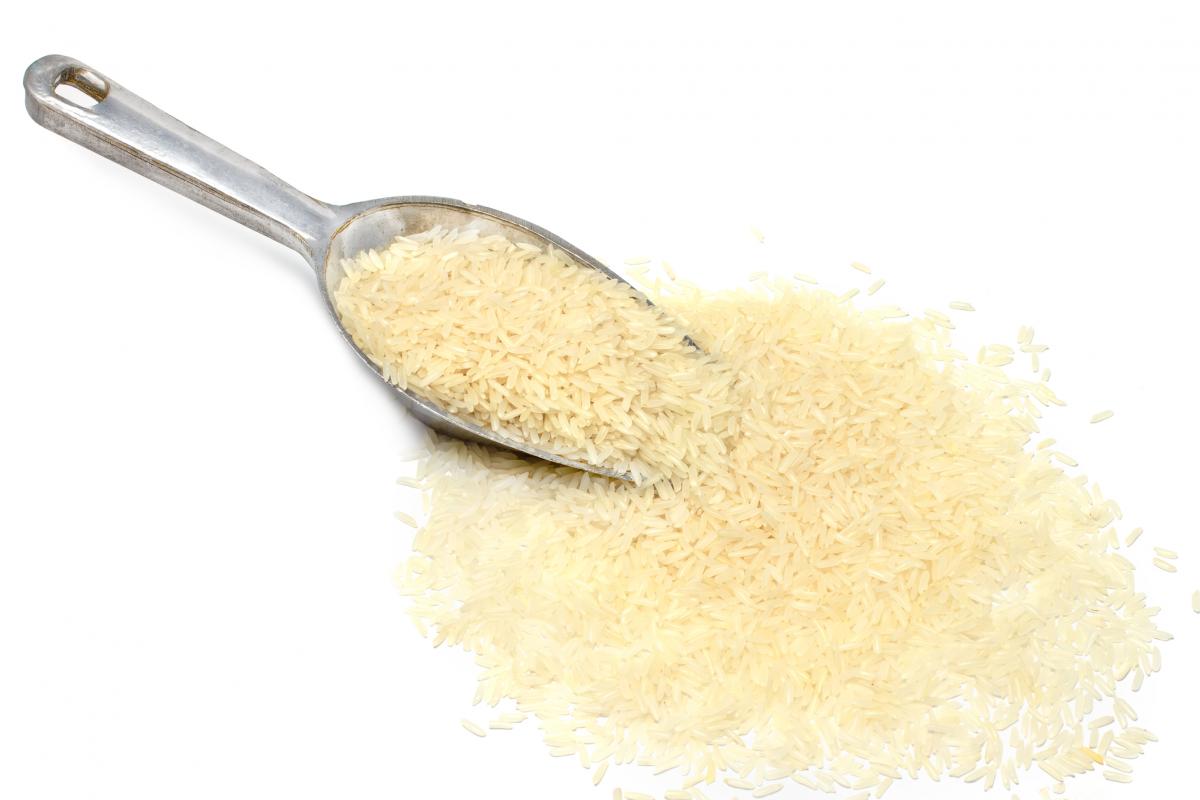
Photo: Thai jasmine rice © Pleprakaymas| Dreamstime.com
Building up SMEs
Part of the government’s strategy to focus on value-added products is its Food Valley program, mirrored on an initiative in the Netherlands. Food Valley Thailand is a public-private partnership where three areas of the country try to build clusters of excellence in sectors of the food industry to develop a productivity advantage once the ASEAN Economic Community (AEC) begins in late 2015.
Chiang Mai in the north is to be the center for vegetables and processed fruit, Nakhon Ratchasima in the northeast will focus on meat production, while Prachuap Khiri Khan in the south will be the hub for fisheries products, pineapples and coconuts. The scheme was established two years ago and the majority of the target companies are to be small and medium-sized enterprises (SMEs). Some of the methods to add value are developing packaging, using organic, sustainable methods, increasing the shelf life and promoting the health benefits of the products.
“SMEs must be able to adapt with the start of the AEC because they cannot continue to rely on low prices with the flood of new products coming in from ASEAN,” said Ms Rapeeporn. “The goal for SMEs should be to focus on quality.”
Farming initiatives
“The AEC will bring some challenges, but the NFI is optimistic it might help address some of Thailand’s weaknesses, too. The food industry has a labor shortage now and it’s likely to worsen as most of the new generation growing up in the provinces do not want to be farmers. Hopefully the agreement will allow for a freer flow of labor so the country can fill some of its positions, but companies also need to invest in machinery to deal with the shortfall in manpower.
“Thai farmers have also been criticized as inefficient, so better use of technology should improve productivity. We are already seeing signs of Thai companies investing in other countries in ASEAN to produce raw materials with the goal of importing them back into Thailand for processing because of the excellent supply chain and logistics here.”
Another government/royal initiative is the Royal Project in Chiang Mai. Started as a program to get hill tribes to grow alternative crops to poppies used to make opium, it is now cultivating some of the finest produce available in the kingdom, rendering imports obsolete for some of the finest restaurants in Thailand. Research has shown several non-native vegetables, fruits and animals can be grown in Northern Thailand’s relatively cooler climate, and test farms have produced sweet corn, tomatoes and even river trout drawing praise.
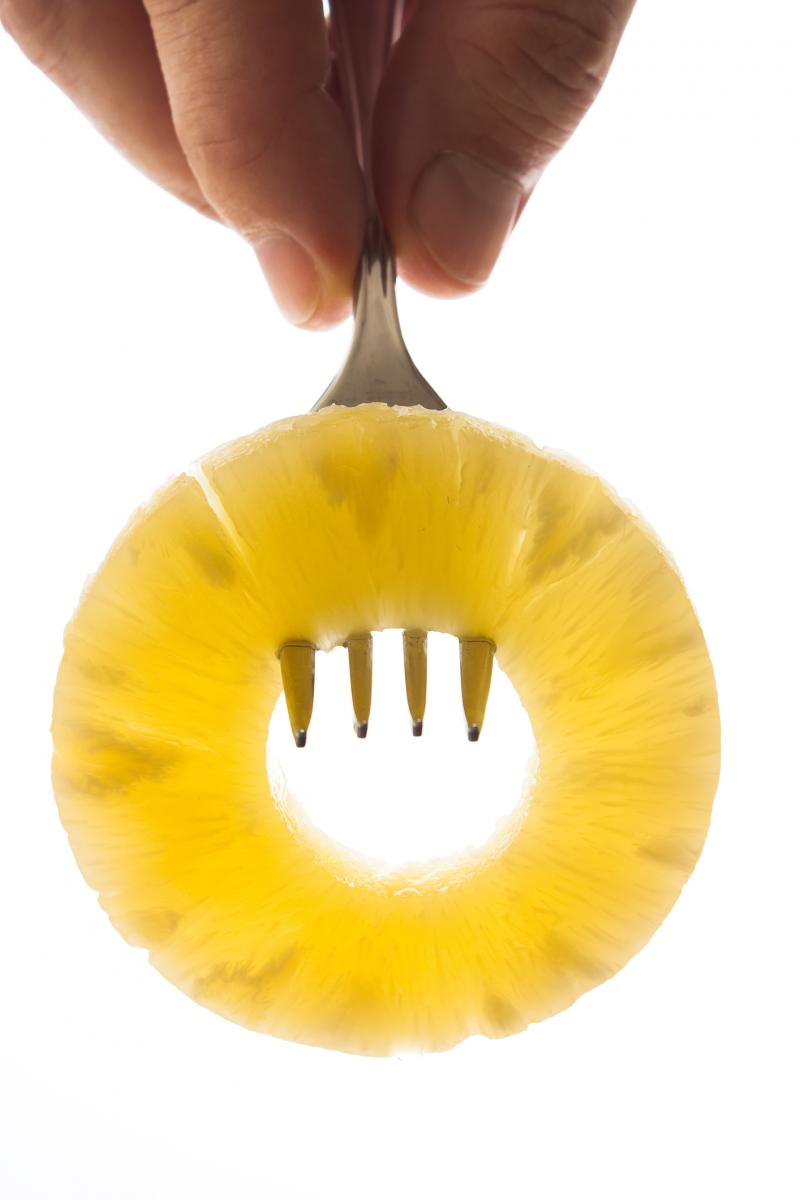
Thailand’s National Food Institute expects further growth in the canned pineapples market (Photo: Pineapple ring on a fork © Alan64 | Dreamstime.com)
Halal center in the horizon
Other government strategies include a five-year plan to promote Halal products, of which food is a major contributor. Thailand has a large Muslim population in the South and the country ranks 13th among global Halal producers with an estimated value of US$5 billion, and exports making up $4 billion of that total. The plan involves the development of a Halal industrial estate in Pattani province to promote investment, with the goals to improve Halal standards and enhance product quality. The scheme aims to increase the value of Thai Halal products to $15 billion by 2020.
Thailand only has one laboratory for Halal food testing, so the government should invest more for testing because importers will never accept products without certification, said the National Economic and Social Development Board, the country’s economic think tank.
The Thai government sees Halal food as a growth sector, projecting the market at $1.6 trillion by 2019.
Weak spots
The Thai food industry is not without its weaknesses. In addition to the labor shortage and inefficient production, the seafood and pineapple industries have taken their lumps in the international media recently for employing slave labor tactics among their employees. The AP reported in March this year fishermen were trapped on remote Indonesian islands and made to work for little or no pay up to 20 hours per day. The seafood they caught was tracked to Thai exporters who sell to global markets.
While this is a black eye for the industry’s reputation, most of the Thais to comment on the situation feel it will not affect the country’s exports. Prime Minister Prayut Chan-o-cha has insisted he will take legal action against companies using forced labor. And Thai Union Frozen Products, one of the world’s largest seafood companies, announced it had severed ties with the supplier named in the report.
Previous investigative journalism pieces that named Thai companies as using migrant slave labor for production led in part to the country being downgraded to the lowest level in the US’s 2014 Trafficking in Persons Report. For its part, the government said it opened a one-stop center in southern Thailand where each fisheries employee, whether foreign or native, must be registered. The center will also provide information to employees on their rights when working for seafood companies.
“I believe this was just a misunderstanding,” said Ms Rapeeporn. “The press do not understand what happened, but still spread the story around.”
For the time being, the country will continue to trade on its food’s reputation for having a high brand image for quality and safety. The country is the world leader in exports for rice, canned and frozen seafood, processed shrimp, cassava, canned pineapple, pineapple juice, and processed chicken, and is second in sugar exports.
Thailand hosts over 10,000 food processing companies and 2,000 Halal food processing facilities. The food industry has 800,000 employees, and it is the leading halal food exporter in ASEAN.
The Federation of Thai Industries ranks the country 15th in terms of food exports and 10th in terms of ready-to-eat products. Among the positive factors in 2014 were rice exports rising by 24% and a boost in chicken exports to Russia, as several countries ended their 10-year ban on Thai poultry based on worries over the bird flu subsided.
CAMPO