
 Access
 Login/Register
 Supplier Login












ASIA is at the forefront of the world’s urbanization trend. Tokyo, Delhi and Shanghai currently count as the three largest urban agglomerations in the world, while Southeast Asian cities are similarly experiencing rapid population growth. By 2030, the sub-region is expected to be home to four megacities (with populations exceeding 10 million), namely Jakarta, Manila, Bangkok and Ho Chi Minh City.
Widespread urbanization presents vast economic and environmental implications in this region. The future of sustainable development, notably, is increasingly dependent on how these cities are managed. In the key area of logistics, specifically, sustainable mobility innovations that are adapted to urban conditions have been implemented to better deal with cities’ high levels of congestion, air pollution and noise. As delivering essential supplies to crowded populations becomes more challenging, companies are racing to develop multi-modal distribution systems that seek to reduce inefficiencies while minimising negative impacts on traffic safety, quality of life and urban economic competitiveness.
“The revolution that has taken hold of global logistics is transforming how, when, and where things are produced and transported. Consumers expect speed, cross-channel access and expanded services, and logistics providers are working to meet these demands with cost- and energy-efficient delivery methods,” says Adeline Tan, Country Manager of the Netherlands Foreign Investment Agency (NFIA), based in Singapore. The NFIA provides complimentary consultancy services to foreign companies planning to establish, diversify or expand their business operations in the Netherlands and Europe. Agri-food is one of the Agency’s top focus areas, aimed at sharing innovative technologies and forging global partnerships in the food sector.

Ms Adeline Tan, Country Manager of the Netherlands Foreign Investment Agency (NFIA)
Rise of e-commerce
Gaining significant attention of late is last-mile fulfilment, that is, the transport of goods from production sites and warehouses to multiple end-recipients. Worldwide demographic trends and marked increases in online retail – spurred by upsurges in mobile ownership and use – have not only changed consumer buying patterns, but have also disrupted traditional final-mile delivery services.
In Europe, robust logistics infrastructure, high internet penetration and inter-country legal harmonization have allowed cross-border online retail to thrive, seeing more than two thirds of Europeans shopping online and spending approximately €150 billion in 2015. The mobile commerce forecast for Europe is projected to increase from €14.6 billion in 2016 to €19.2 billion in 2017.
With an internet penetration of 91 percent and 11.5 million mobile users, the Netherlands is similarly expecting a steady rise in online sales as more tech-savvy shoppers go global. The country’s proximity to three of the biggest e-commerce markets in the EU – Germany, the UK and France – translates to a reach of 244 million customers within a 1000-kilometre radius.
In Asia, the pool of smartphone users is projected to soar to 1.48 billion by 2019. And with Southeast Asia poised to become the third-largest e-commerce market in the world, effective last-mile solutions are imperative in averting industry-wide bottlenecks that could potentially impede the market’s growth.
Riding on the e-commerce wave is the food and beverage sector, with healthy prospects in sight for food and grocery retail, meal delivery services and niche consumer segments (e.g. healthy foods). As more and more consumers take to food-related mobile apps and make food purchases online, specialized, direct-to-doorstep deliveries become a big part of the shopping experience for today’s consumers.
Delivering zero emissions
With food supply chains being all the more complicated, issues of time constraints and appropriate handling have to be taken into consideration while better investments in greener and more economical final-mile deliveries increasingly demand attention.
To manage the large quantities of food deliveries made daily, European cities are tapping on under-utilized transport channels and integrating transport modes to optimize the use of resources. Here, urbanizing technology is the focal point, where efficient, flexible and resilient logistics options are introduced to shorten the supply chain between local food producers, sellers and consumers.
In the Netherlands, for example, mobility and food have become important pillars in the country’s pursuit for smart mobility. Ms Tan explains, “The Green Deal Zero Emission Urban Logistics Initiative, represented by Dutch stakeholder organizations, local and regional government ministries, and research institutes is currently studying how zero-emission deliveries in city centers can be implemented in practice, with fewer journeys and lower emissions in city environments.”
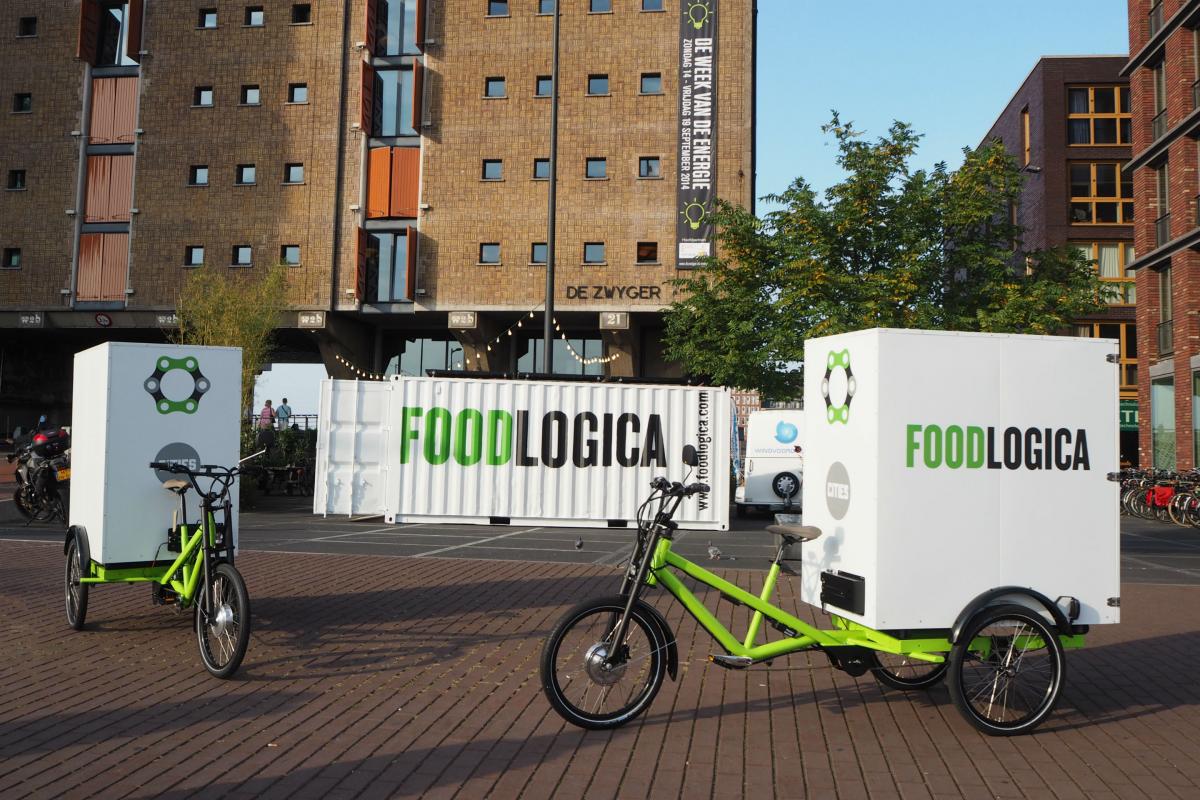
Foodlogica’s zero-emission tricycles are charged in stations equipped with solar panels before making food deliveries all across Amsterdam
Of the many Dutch companies active in the country’s green urbanism movement, Amsterdam-based Foodlogica stands out in its endeavor to link local food, consumers and businesses solely through human and solar energy. Collaborating with other environmentally-conscious food businesses, the company makes deliveries to supermarkets, workplaces and households with the help of zero-emission electric tricycles. These e-trikes work out of several food distribution nodes in the city, transferring incoming food products to the urban center.
Making low-impact and cost-efficient deliveries is central to this system. Recycled shipping containers retrofitted with solar panels function as charging stations for these e-trikes, and are found at each of Foodlogica’s strategically located transport hubs. The charging docks can simply be reproduced or relocated as the business expands, ensuring a continuous and self-sufficient distribution model. The flexibility of deliveries using e-trikes enables multiple drop-offs and pick-ups, and allows delivery riders to plan their routes more effectively, thus saving costs for customers.
“If this proves possible in Amsterdam’s constricted urban environment, the system could easily be replicated in other cities around the world,” Francesca Miazzo, founder of Foodlogica reiterates.
Connecting with waterways
Efforts to reduce road occupancy and expedite deliveries have resulted in the Dutch city of Utrecht to build on its existing water transport so as to bolster its urban logistics system. Introduced in 1996, the municipality-owned Beer Boat brings food and beverage directly to local clients, shops and restaurants situated along the city’s canals. Running on electricity, the zero-emission vessel can be driven up to nine hours on one charge and is able to carry up to 18 tonnes of cargo.
Operating six times a week, the Beer Boat ensures that food supplies are sufficiently and quickly replenished, all the while keeping to time and loading restrictions that have been put in place so as to minimise congestion on the city’s roads. Apart from reducing emissions and truck-based freight distribution, which are major concerns in Utrecht’s city center, these deliveries also support the preservation of local historical infrastructure by removing cargo from roads and bridges and taking them to the waters instead.
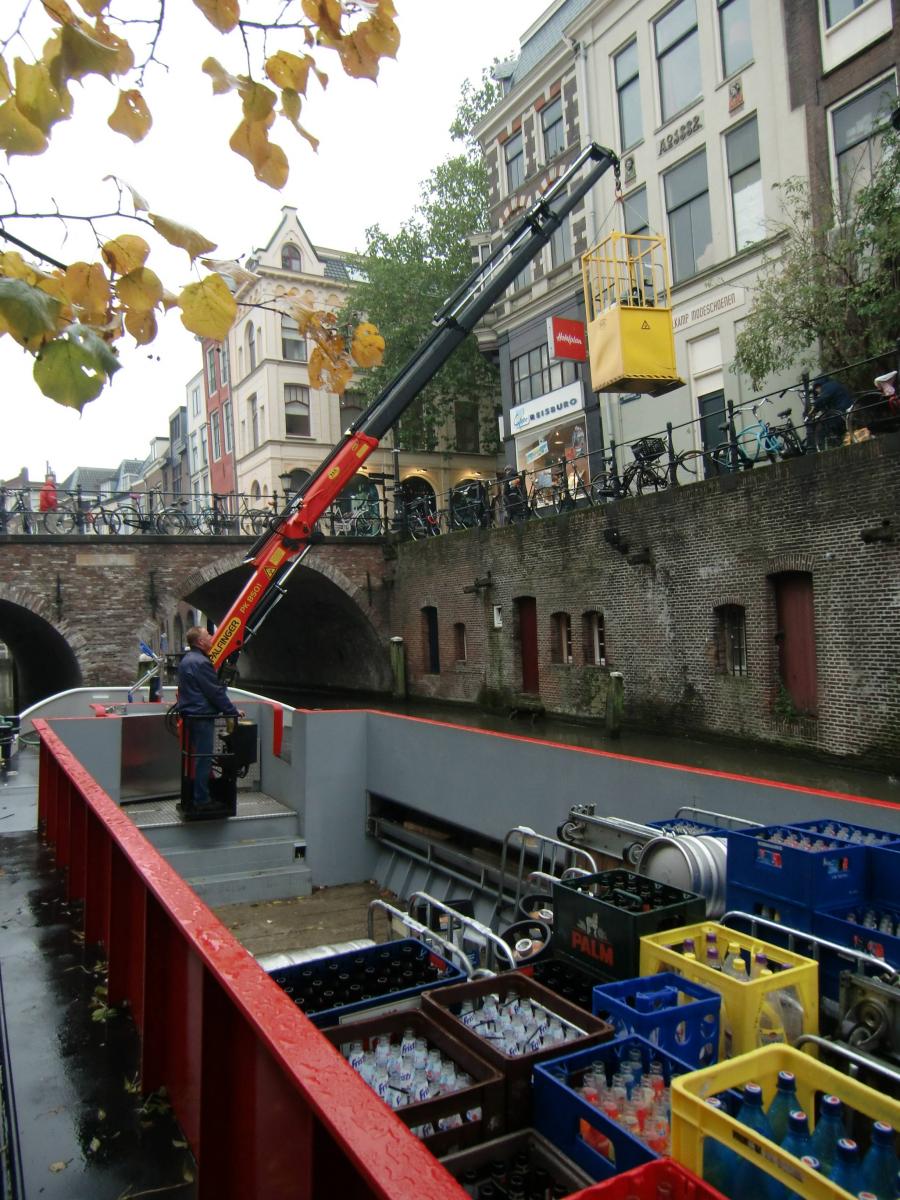
The electricity-run Beer Boat plies Utrecht’s canals, bringing food and beverage to local waterfront businesses six times a week
Water can also serve as a means of transport for efficient last-mile operations in Asian cities where waterfront living is becoming popular. In Thailand, Myanmar, Vietnam and Hong Kong, overhauling under-used water channels can help improve the transport of goods to local businesses, such as riverside restaurants, grocery stores and retail outlets. Bangkok’s large canals and the taxi boats that ply the route, for instance, can be better utilized as a sustainable food transport system.
Going under and over ground
Another innovative solution that is veering from traditional last-mile transportation is the CargoCap. A product of German engineering, the fully automated vehicle travels through underground pipelines while carrying goods that are loaded onto its two euro-pallets. The Caps work round the clock to make timely and direct deliveries to recipients, or to the immediate vicinity of a distribution hub by means of smaller delivery vehicles. Being transported underground means that supplies such as food and beverage products are neither affected by urban congestion nor bad weather, but can be brought to manufacturers and consumers with minimal yield loss or spoilage, in a shortened time.
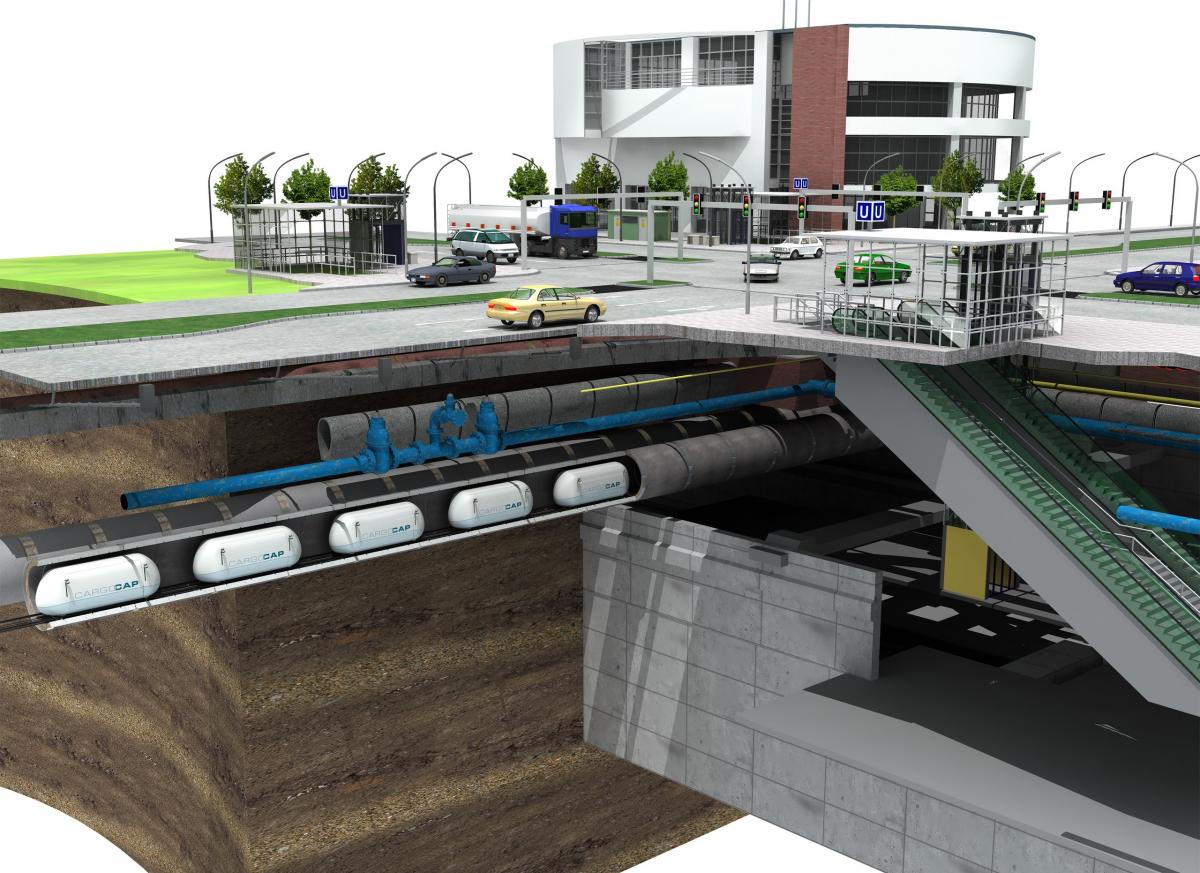
Operating through underground pipelines, CargoCaps transport goods directly to end-recipients or local couriers and small delivery vehicles
Other companies have looked to the skies instead to avoid navigating the heavy traffic that plagues urban areas and slows down distribution processes. Recently, German global food ordering app Foodpanda started testing the delivery of meals in Singapore via drones, and if the results prove successful, the company plans to implement a country-wide roll-out in the near future. With drones, deliveries are expected to go under 30 minutes, adding to the convenience and speed that customers ordering food online get to enjoy. As drone start-ups take flight in Asia, this option, as a last-mile solution may come sooner than we think, possibly beginning with Foodpanda’s meal delivery services to all its markets, including Hong Kong, India, Thailand and Malaysia.
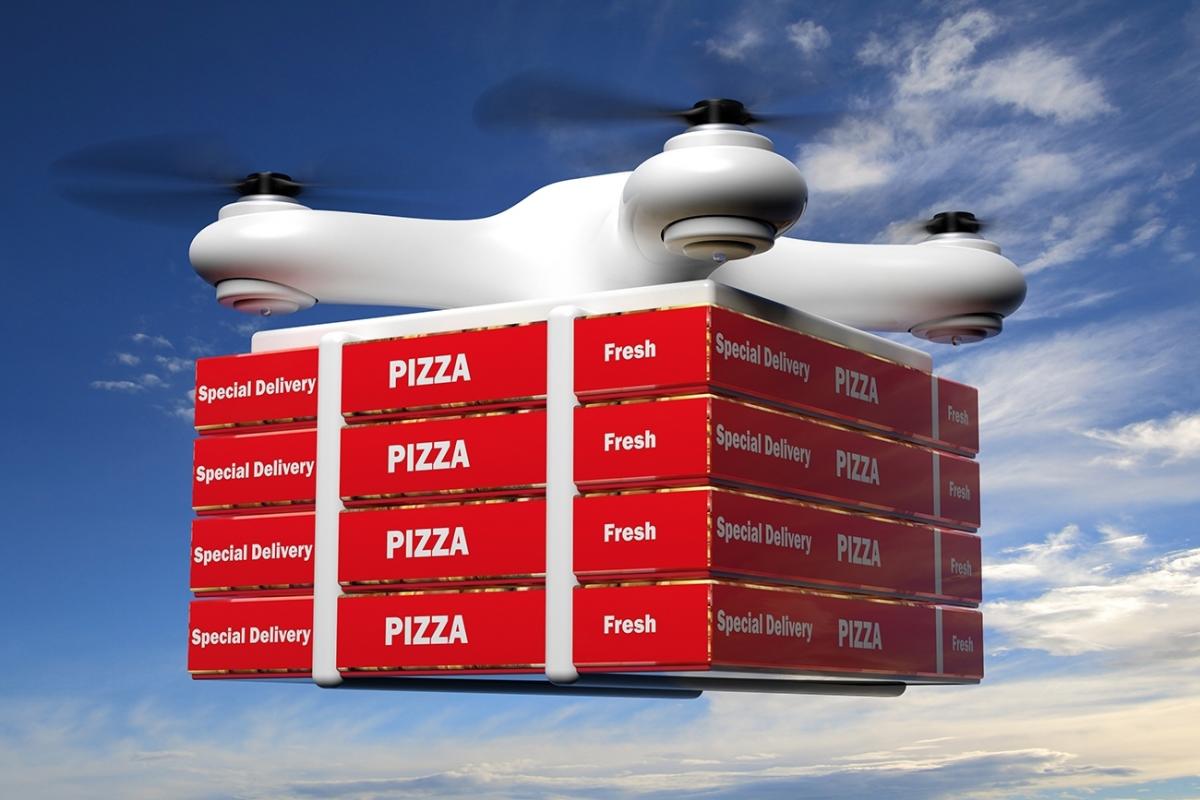
Food deliveries via drones are presently being tested and are expected to cut delivery times by more than 50 percent
Rethinking food logistics
Urban logistics is an exciting terrain for innovation and development. The electrified 21st century city is beginning to create great new options for urban areas that will require an entire re-think of how things get around the city. This ranges from vehicles, to distribution networks and shopping conditions.
As Southeast Asia races towards a more urbanized future, the region needs to look at transforming its cities into generative areas, where infrastructure and transport models for industries like food and logistics can contribute towards economic growth while keeping distribution inefficiencies and environmental costs to a minimum. In building sustainable cities, the final-mile fulfilment must progressively include low-carbon, resource-efficient and resilient solutions.
“The challenge is not to find more effective ways to move more things around, but to get the most value out of the things that we do distribute within urban areas while having the lowest possible impact on inhabitants – this is what the Netherlands does best,” Ms Tan says.
For more information on innovative logistics solutions or investment opportunities in the Netherlands, contact: Ms Adeline Tan, Country Manager, Netherlands Foreign Investment Agency (NFIA), Tel: +65 6739 1137, Email: tan@nfia-singapore.com or visit www.investinholland.com.
Adidas Falcon