
 Access
 Login/Register
 Supplier Login












Nylon 6/6 is perhaps one of the most multi-faceted engineering thermoplastics due to its superlative traits of strength, ductility and heat resistance, not to mention its simplicity in processing; allowing it to be used for thin walled components to thick wall housings. Nylon comes in many forms and types, the most common ones are nylon 6 and nylon 6/6 for textiles and plastics industries. The primary reason of textile usage is its high melting point of 265 degree Celsius, relatively high for a synthetic fibre making it heat and friction resistant. Its long molecular chain results in more sites for hydrogen bonds, making it resilient. Nylon 6/6 is difficult to dye but is less susceptible to fading and yellowing once done. Nylon was the first engineering resin and has been used in applications ranging from electronics, marine, and automotive, to fibre used to make carpet. Nylon 6/6 being waterproof in nature is used to make machine parts as well as for airbags, carpets, ropes,hoses, etc.
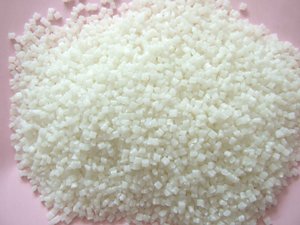
Acmite Market Intelligence in its review of the global thermoplastic polyamide market suggests that polyamides or nylons continue to be one of the largest polymer families with global demand for resins and compounds barring fibres approximately $20.5 billion in 2013, expecting to grow to $25.4 billion by 2017. PA6 and PA66 remain the high volume products though the polyamide fibre market is quite saturated and witnesses slow growth. Automotive industry presents the largest market for thermoplastic polyamides following by packaging/film and consumer goods. North America and Western Europe remain key leaders with China presenting fastest growth demand. Strong downstream demand, advanced material sciences and process technologies are all spurring the demand for nylon expecting new opportunities to surface in both traditional and novel applications.
New resins with improved properties
Many global brands offer nylon 6 resins to provide manufacturing ease. A leading producer of nylon 6/6 polymer and intermediates producer, INVISTA’s engineering polymer solutions business works on the mission that a portfolio of nylon 6/6 products can deliver high efficiencies and better costs.
The company launched Novadyn™ polyamides – transparent polymers that can also be used as differentiated blend additives to improve traditional nylon performance. Novadyn polyamides are highly versatile semi-aromatic polyamides with a unique combination of performance, cost effectiveness and recycled content. Novadyn DT/DI polyamide brings value to customers who require parts that are both transparent and chemically-resistant.
“We designed Novadyn™ DT/DI polyamide for transparent applications where polycarbonate struggles with chemical resistance or where more costly transparent polymers may be over-specified,” said Allen Reihman, director of new business development for INVISTA.
As a blend additive for traditional nylons, Novadyn DT/DI polyamide significantly improves conditioned mechanical properties for nylon 6,6 and nylon 6, including up to 43% improvement in conditioned flexural strength and stiffness. In humid environments, Novadyn polyamides can boost traditional nylon properties, enable thinner parts and enhance light-weighting initiatives.
Novadyn DT/DI and Novadyn™ DT polyamides can also be used to modify crystallinity, boost glass transition temperature and reduce costs. These products can be considered for moulding, film, filament and fibre processing applications. Novadyn polyamides can be used in a variety of applications including automotive, electrical, industrial and consumer products.
Novadyn polyamides is a new breed of transparent polymers from INVISTA.
Lightweigting with nylon
DuPont Zytel nylon resin products offer innovation and other performance needs across automotive to consumer electronics. Zytel PLUS polyamides resin resists aging in high-heat automotive engine parts while for hand-held consumer electronics, Zytel HTN is available. Honeywell Aegis Nylon 6 resins offered in a range of viscosities and additive packages are used in a great deal of manufacturing applications from food and consumer packaging to fishing nets, carpet fibres and moulded plastics for automotives.
For instance, Ford 3.5L and 3.7L engine manifold uses a cross-over coolant component made of DuPont Zytel HTN PPA resin instead of brazed metal, shaving one pound to improve fuel economy. Behind the scenes, the running change illustrates the trend towards using high performance thermoplastic where it is essential. And it shows how collaboration in the value chain continues to drive cost and weight saving by developing and investing in innovative techniques to help the industry meet new fuel and emissions regulations.
The crossover coolant component is a hollow port that allows engine coolant to bypass the manifold as it circulates through the engine. Traditional nylon 6 polymer doesn’t withstand long-term exposure to heat and long-life coolant, so the ITW team was receiving the component made of brazed metal, which was heavy and expensive.
While DuPont Zytel HTN PPA is frequently used in engine cooling components because it can withstand the long term exposure to heat and long life coolant, the intense pressure of the overmoulding process needed to integrate the component into the manifold system was damaging the hollow component.