
 Access
 Login/Register
 Supplier Login












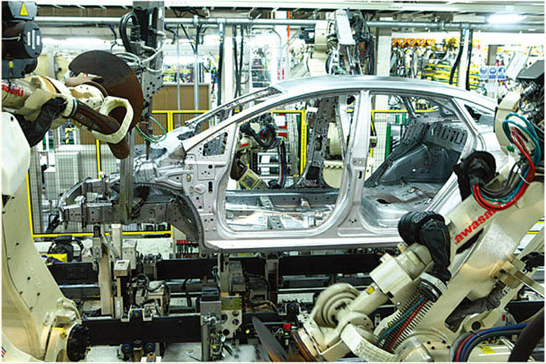
Malaysia's Energy Efficient Vehicles (EEV) policy covers a wide range of vehicle segments and powertrain technologies. Vehicle segments covered includes A to J segment of passenger vehicles as well as two wheelers. Powertrain technologies include internal combustion (IC) engines, hybrids, electric vehicles, LNG, CNG, LPG, biodiesel as well as fuel cells. Indonesia and Thailand's green vehicle policy focusses only on internal combustion (IC) engines of smaller cc with stringent price, production, investment and export conditions. The incentives, available in both Thailand and Indonesia, are clear and transparent.
On the other hand, the EEV policy puts no investment conditions. As such, it offers a great degree of flexibility for a potential automaker interested in investing in Malaysia. It is likely that the extent of incentives will depend on the automakers level of investment and localisation commitment. However, from an automaker's standpoint, their commitments will depend on the extent of incentives available. So, there could be a high degree of interdependency. The customised incentive approach could work if a clear methodology is in place on the factors determining the extent of incentives. However, if the incentives are purely on a case by case iterative process, then it could lead to prolonged negotiations and some degree of policy uncertainty for the automakers.
Apart from incentives, automakers interested in the EEV program will also consider other market demand and supply chain strength factors. The potential EEV market needs to be large enough for the investments to be economically viable. At the same time, Malaysia needs to develop a strong ecosystem of suppliers that feeds into the EEV supply chain. Automakers that are yet to commit substantial investments in the region or would like to diversify geographic risk will be the high potential prospects for investments. Obviously, global automotive investors do have several options. If Malaysia offers a clear and attractive package, then there is a possibility of attracting some part of the next wave of investments. Frost & Sullivan believes the success or failure of this program will depend on the speed and clarity with which it is implemented.
Development of globally competitive automotive vendors
The Malaysian automotive parts industry faces several structural issues like lack of economies of scale, productivity, quality issues, overdependence on national automakers. Except for a few companies, design and development capabilities are not yet at world class levels. Urgent efforts need to be made to build these capabilities in right earnest. Auto part vendors also need to realise that the market is being liberalised and they cannot depend on past relationships to secure their future. Market forces should be allowed to play out. By all means, some auto part vendors may perish. A pragmatic strategy for the Government will be to focus on building the capabilities of the best among the auto part vendors. Consolidation of capabilities should be encouraged so that Malaysia can develop a group of globally competitive part vendors that can grow regionally. Capability development grants should be linked to a transparent approach to continuously monitor the progress of the vendors towards competitiveness.
Car prices will see a gradual decline
Due to various constraints, Malaysia has chosen the path of progressive liberalisation. Accordingly, car prices will go down gradually through a structured push under MITI's Car Price Reduction (CPR) framework. Frost & Sullivan believes that the approach of intensified market competition driving price reduction will soft land the average price in the marketplace over the next 4 to 5 years. However, we believe this is likely to have an impact only on newly launched models or variants. With the current fiscal constraints, we do not expect a review in taxes in the immediate future. Thus, prices will go through a process of incremental downward adjustment rather than a sharp decline. The push to energy efficient vehicles will also focus on bringing down the overall cost of ownership which will benefit the consumers in the longer run.
Buty dziecięce