
 Access
 Login/Register
 Supplier Login












IN DEVELOPED markets, the beverage industry is seeing a shift to ‘healthier’ carbonated soft drinks (CSD). Last year, 25 percent of global launches of new carbonated soft drinks carried some kind of ‘natural’ claim[i], which highlights the increasing role that such beverages are playing in the CSD market. This trend towards ‘better-for-you’ innovations shows no signs of slowing, with market analysts suggesting that they are likely to be important in the future prospects of CSDs in all the fastest-growing markets[ii].
In the global CSD market, commercial growth requires consumer understanding supported by flexible production technology. New technology continues to open up opportunities and helps manufacturers create the new products that consumers want while meeting their own needs for greater sustainability.
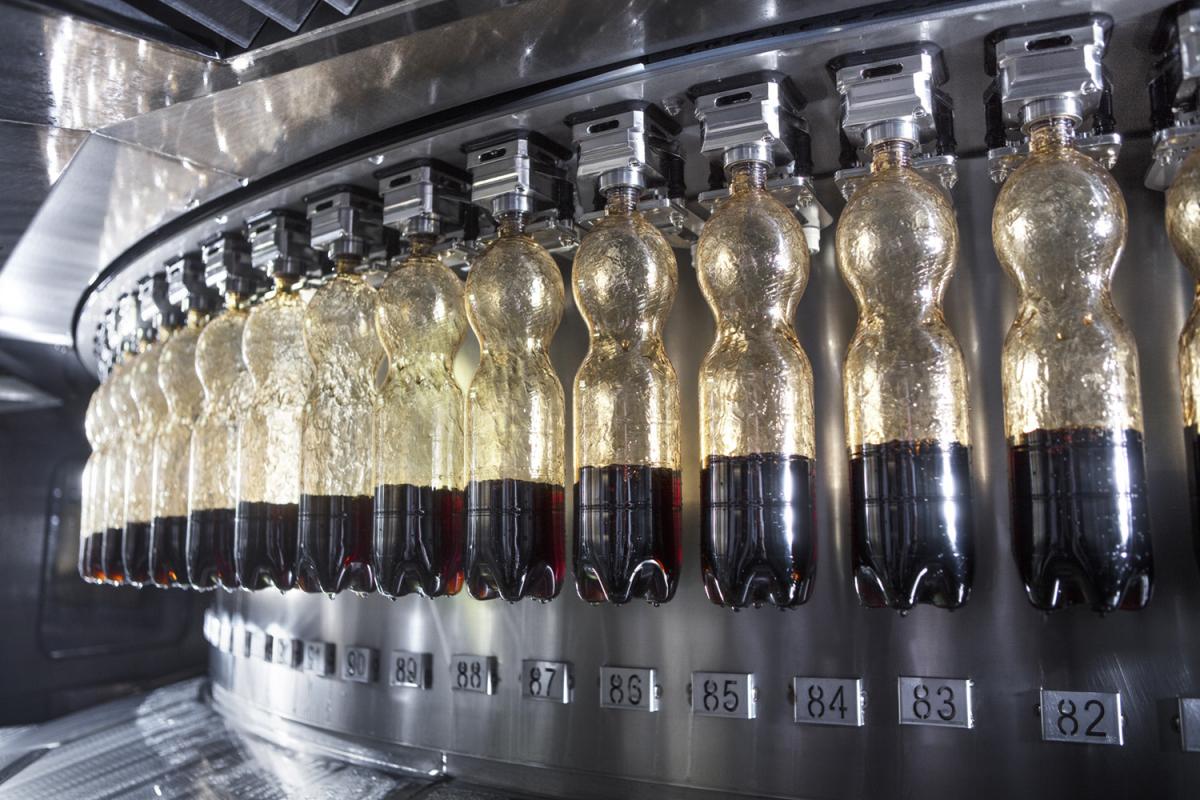
With equipment that can easily be converted to accommodate different stock-keeping units (SKUs), manufacturers can enjoy the flexibility to adapt to different market needs. Modular lines that convert to new beverage recipes and container formats are a quick and cost-effective way to get new products onto the supermarket shelves.
Sidel’s beverage filling solutions offer performance, product quality, flexibility, hygienic design, food safety, minimal maintenance, automatic changeovers and quicker cleaning – together with lowest total cost of ownership (TCO). With these, the company helps producers choose the filling technology best suited to their needs. The decision takes into account factors, including the producer’s hygienic requirements, their consumption of utilities, the skill levels of their operators and the ambient production and transportation conditions.
Alongside the need for the right technology is the means to identify how the beverage will perform within the bottle. Sidel has two laboratories for filling and aseptic microbiological contamination analysis in Parma, Italy – and two laboratories for liquid-packaging and aseptic analysis in Octeville, France, for global customers. To determine the most suitable size, shape, closure and PET resin to use for packaging, as well as identifying how it behaves during the filling process, Sidel experts test the recipe, viscosity, PH level and carbonations of the product being bottled over a period of time.
Sidel Matrix Filler SF300 FM
The Sidel Matrix™ Filler SF300 FM is for accurate filling of still and carbonated drinks, and utilizes modules with proven reliability and delivers up to 98 percent efficiency, filling PET bottles with precision at rates of up to 80,000 bottles per hour (bph). It reduces the use of carbon dioxide gas and, using servomotors, it reduces the consumption of electrical power. It also offers strict hygiene, fully automatic changeovers performed via HMI (Human Machine Interface). With magnetic or mass flow meter control, the machine ensures there are no limits in filling, whatever the beverage and regardless of conductivity level, for accurate precision and waste-free production.
Minimal product loss, reduced CO2 consumption
The Blendfill solution has a fully integrated filler and mixer to combine both processes in one system in order to minimize product loss when switching between beverages. A simplified solution with fewer components and functions, it has only one tank, utilizing the Sidel Matrix Mixer SM500 beverage tank as a shared tank with the filler, avoiding redundant pressure and level control functions. This reduces consumption of CO2 as well as the equipment footprint. It ensures automatic and fast recipe changes by using a single HMI.
Complete solutions for CSD
The Sidel Matrix provides three times more configurations, enabling producers to package various carbonates, types of beverages and recipes in varying formats up to 3.5 liters. Finding the optimum solution for filling carbonated drinks goes beyond the initial choice of filling equipment; the best solution requires a flexible approach to the complete line.
|
Production partner TO MEET market trends and consumer preferences, beverage manufacturers can collaborate with Sidel for water lines, carbonated soft drinks lines, and hot fill lines for packaging. The company which also recently introduced services for proactive maintenance of equipment ensures that customers anywhere in the world have access to field experts 24/7. In-house packaging laboratories and technical expertise help create lightweight, flexible and durable bottles of every size, shape or thickness. According to Eric Schaffner, vice president for sales, the company has this flexibility to design bottles and can release some 8,000 bottle designs in a year. A complete cycle can take anywhere from six months to a year – or shorter – depending on the customer. Lightweighting is of course an important aspect of bottle design that can bring down manufacturing cost and enhance sustainability. Mr Schaffner said the lightest possible PET bottle is about 7 grams, adding that with on-the-go products becoming more popular, small bottles have also become the trend. |
Air Jordan Shoes Men