
 Access
 Login/Register
 Supplier Login












DuPont has been playing a pivotal role in offering polymers which are building blocks for innovative product designs. DuPont Performance Polymers has never compromised quality or performance and in a recent interview with International Plastics News - Middle East and Africa (IRNE), Thomas Oury, EMEA Director at DuPont Performance Polymers, shared the company's sustainability practices and innovations.
IRNE: Which polymers does DuPont produce to foster progressive plastic designs?
Mr. Oury: We believe the best ideas start with materials, design and processing in mind and we support a collaborative approach throughout the value chain early in the design process to maximise the benefits of using polymers. DuPont Performance Polymers offers the industry’s broadest and deepest portfolio of polymers, elastomers, parts and shapes and renewably-sourced materials for progressive plastic designs, but what sets us apart from other materials suppliers is the products, the people and the process.
We have the ability to seamlessly leverage across DuPont for a wide variety of advanced materials, such as films, pastes and aramid fibres to help customers create the parts they design. Also, we offer technical and development experts in 34 countries around the world who work with customers to solve difficult challenges. And we operate 13 Innovation Centres around the world to connect visitors with a network of more than 10,000. DuPont scientists and engineers across the world. We have a strong application development process to support our customers’ product development cycle. We consider this the engine of innovation and it is how we work with customers throughout the process to help take cost and time out of product development.

Thomas Oury, EMEA Director, DuPont Performance Polymers
IRNE: Which initiatives has DuPont taken to focus on polymer innovation?
Mr. Oury: Our primary objective is to work with customers throughout the world to help improve the performance, sustainability and cost of components used in automotive, aerospace, consumer electronics, health care, medical and other industries.
Many of our initiatives support three areas of innovation. One area is application development to help take cost and time out of product development. In this, we continuously build our application-development capabilities with an emphasis on helping customers select the right material and helping test the component or product.
DuPont Performance Polymers also partnered with the DuPont Engineering Research and Technology to enhance their fundamental materials science with added resources, capabilities and expertise. State-of-the-art advanced computer modeling and simulation have been pivotal in the evolution of advanced performance materials. Advanced material models are developed to run highly sophisticated finite element analysis (FEA), providing material design data and part performance analysis, and minimising prototyping.
Another area is automotive light weighting to lower CO2 emissions and improve fuel efficiency. Here, DuPont Performance Polymers lightweight plastics and elastomers to withstand long-term exposure to high-heat, pressure and chemicals created by smaller, more powerful engines enable parts integration for lower overall cost. We are also working with customers on new thermoplastic composite technology and light-weighting concepts that combine strength and stiffness into lightweight structures to help automakers reduce mass in structural vehicle applications.
The third area is bio-based polymers that offer better performance and better cost position. In this area, DuPont offers the industry’s broadest range of renewably sourced polymers and they offer a variety of performance attributes – some are strong and stiff, others flexible. They are all durable and stand up to high temperatures. They can be found in components of automobile engines, fuel lines or in sporting goods and the structural backbones of cellphones. We are committed to converting petro-based plastics ingredients to renewables where it's technically feasible and cost-effective.
There is strong pull to use renewably sourced materials from multiple directions – sometimes it is the consumer, sometimes it’s the manufacturer because they want to project a responsible image and sometimes the driver is regulatory as in LEED (Leadership in Energy and Environmental Design).
Here is a basic overview of the products and where they are typically considered for use:
Zytel® RS PA610 and PA1010 resins are typically used or considered for automotive coolant systems; fuel lines and tubing; monofilaments; oil and gas applications; pneumatic tubes such as air brake tubes; metal tube replacement; automotive under the hood metal replacement such as radiator end tanks.
Hytrel® RS thermoplastic elastomer resins are typically used or considered for automotive and industrial hose and tubing; constant velocity joint (CVJ) boots; air bag doors; energy dampers; air ducts; coil cords; sporting goods; furniture and suspension fabrics.
Sorona® EP polymer resins are typically used or considered for electrical and electronic components; automotive components; appliance parts; power tool applications; furniture; and food contact compliant grades available.
DuPont Performance Polymers recently introduced a bio-based resin – DuPont™ Zytel® RS HTN high performance polyamide – to its handheld device materials portfolio so designers can continue to refresh the look, feel and upgrade performance, while delivering a better environmental footprint. Screens and circuit boards cannot twist or deform too much so stiffness is vital. This graphic shows the comparison between tensile modulus and tensile strength.
IRNE: Which multi-polymer solutions has DuPont introduced in recent times?
Mr. Oury: There is a tremendous amount of work in the automotive industry to reduce vehicle weight to lower CO2 emissions and improve fuel economy. We offer a range of light-weighting materials solutions, including DuPont™ Vizilon™ TPC. This continuous woven glass fibre thermoplastic composite technology combines strength and stiffness into a lightweight structure to help automakers replace metal and continue to reduce weight in structural vehicle applications. We are working closely with customers on development programmes as we recognise that large scale adoption of light-weighting technologies that significantly reduce vehicle mass will require a number of breakthroughs best achieved through collaborative efforts throughout the value chain.
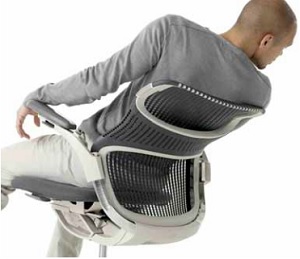
Generation by Knoll® work chair benefitted from sustainable material and application developmet from DuPont.
IRNE: Which are the top three industries deploying DuPont polymers?
Mr. Oury: Relevant for Middle East region, including Turkey, the three top industries are oil & gas, appliances, and automotive (Turkey).
IRNE: Which high efficiency mechanical plastics does DuPont produce?
Mr. Oury: DuPont thermoplastics offer high-quality performance materials, backed by a skilled global team focused on collaborative application development. Whether the challenge is durability, stiffness, workability, finish or strength, our broad range of thermoplastics support design freedom, without sacrificing performance.
One product is the DuPont™ Delrin® - High-Performance Acetal Resin. Delrin® acetal homopolymer resin is a highly-crystalline polymer that has high stiffness and strength without the need for glass reinforcement. When compared to acetal copolymers offered by competitors, Delrin® combines lubricity and wear resistance with higher tensile strength, stiffness, and creep resistance, and significantly outperforms on impact resistance, allowing for thinner and lighter part design. In addition, Delrin® offers outstanding low- and high-temperature performance, good color-ability, and good mating with metal and other polymers.
We also aim to bridge the performance gap with DuPont™ Zytel® HTN, a family of cost-effective, high performance polyamides offering strength, durability and ease of processing. When the goal is reducing weight, improving strength, enhancing durability, increasing thermal performance, simplifying processing, or all of the above, Zytel® HTN high-performance polyamide resin is a logical choice. These high-performance resins are available in specific grades that sustain high strength and stiffness over a wide range of temperatures, chemicals and moisture exposure. Zytel® HTN can replace metal parts that must withstand high temperature tolerances (such as engine cooling, handheld devices, and non-halogenated connectors), while reducing total cost and weight through parts consolidation.
Nike Hypervenom Phantom II FG Low