
 Access
 Login/Register
 Supplier Login












MiTeGen LLC, a provider of innovative consumables for X-ray diffraction, crystallography, and protein crystallization for academic, pharmaceutical, industrial, and government research, has launched a unique crystallization microplate made of TOPAS cyclic olefin copolymer (COC) from TOPAS Advanced Polymers. MiTeGen’s new In-Situ-1 crystallization plate uses TOPAS COC for its superior moisture vapor resistance and X-ray transparency compared to competitive thermoplastics like polyethylene terephthalate (PET), polystyrene (PS), polyethylene (PE), and polyimide (PI).
With the use of cyclic olefin copolymers, MiTeGen is pushing the boundaries when it comes to in-situ X-ray analysis, according to Benjamin Apker, director of business development for MiTeGen. The new crystallization plate design allows researchers to access another technique, so they can screen protein crystals in-situ compared to the previous plates which required manual crystal harvesting.
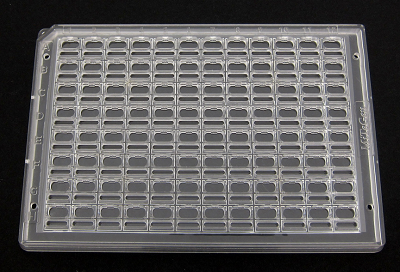
MiTeGen's In-Situ-1 crystallization plate (an SBS standard, 96-well microplate) enables X-ray crystallography researchers, who study the atomic-level structures of biological samples, to easily grow and screen crystals of their targets. The advanced features of the low-profile plates, many of which have never before been seen in a crystallization plate, allow for samples to be easily grown with more reproducible conditions, and sub-sequentially studied via X-ray diffraction in situ. This means that researchers can now learn about the inherent quality of their crystal samples without having to manipulate or manually retrieve them, which can often cause undesired changes or damage to the samples.
TOPAS COC’s versatility and advanced processability enables MiTeGen to combine an injection molded COC frame with a thin extruded COC film to generate a two-piece system with the performance benefits of both parts. The molded rigid frame (128-mm by 85-mm) allows for physical features such as ledges and channels that provide consistent results from experiment to experiment. The thin (100-micron thick) film bottom which is ultrasonically welded to the rigid frame, provides a surface for crystal growth drops to be dispensed and easily analyzed over a broad spectrum from visible light to X-rays.
The high-flow characteristics of TOPAS COC enable extensive detail to be designed into the In-Situ-1 crystallization plate. Well counts are maximized, flow channels are incorporated, and analyses are optimized. Due to its ultra-high purity, TOPAS COC also has lower leachables and extractables than competing materials, resulting in the most reliable and repeatable results. The inert nature of the material prevents interference with reactions and analyses. Other important features include superior optical (92% clarity) along with excellent UV transparency and low birefringence.
In new development work, MiTeGen is exploring the use of TOPAS COC resin in other crystallization plate products and sample holders. They will soon be launching a new plate geared at the crystallization of membrane proteins in lipid cubic phase.
Air Max