
 Access
 Login/Register
 Supplier Login












A NEW polymer powder developed at the Fraunhofer Institute for Applied Polymer Research IAP in Potsdam in collaboration with GEN-IAL from Troisdorf, Germany, could simplify and speed up monitoring processes for beers.
Breweries monitor the beer production process very closely to guarantee high quality. Companies ensure the product is free from harmful microorganisms because pathogens that enter the beer during the brewing process can result in strong taste and smell variations and make the beer cloudy, sour, and unwholesome
Traditional quality control using conventional microbiological methods, however, require five to seven days to detect beverage-spoiling organisms such as bacteria and yeasts, which is too late to allow breweries to take corrective action.
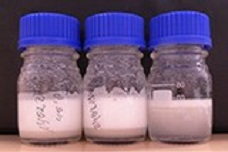 The new powder is seen as a potential replacement for the current process of filtering beer in a special equipment, which takes two to three days from test to the reliable result. In this method, the bacteria remain on a membrane and are then elaborately cultivated in a special culture medium before microscopical examination.
The powder can be added to the liquid sample and its functionalized surface binds the bacteria efficiently. As the pathogens adhere to the 100 to 200 micron powder particles, they can be easily removed together with the microbes in a specially developed system and analyzed directly using various microbiological methods.
This new method will allow food experts to check beer and other beverages for infection by pathogens, which was hardly or not at all possible with the traditional membrane filtration method.
According to Dr. Andreas Holländer, scientist at the Fraunhofer IAP, “Membrane filtration is not suitable for the quality control of beverages such as fruit juices, milk, cola, and red wine. They contain so much solid or suspended matter that the filter clogs quickly.”
In addition, large quantities of beverages can be analyzed as opposed to membrane filtration that can only be used with small sample volumes of up to one liter. The new technique can be useful wherever a small amount of microbes has to be extracted from a large amount of liquid, said Dr. Holländer.
“Through the use of the powder, food safety is increased, since it is more likely to find trace contaminants in large volumes of the beverages,” said Dr. Jutta Schönling, Gen-IAL managing director.
Dr. Holländer and his team from the IAP have also developed the equipment with which the surface of the powder particles is functionalized. GEN-IAL will use this equipment for pilot production.
The company is looking to launch the new product this year, with product purchase by interested parties kicking off by spring.
Air Max 2018 KPU