
 Access
 Login/Register
 Supplier Login












A FOOD waste study conducted by scientists at the research institute, Agroscope and Swiss university ETH Zurich, shows that from farm to fork about 50% of the potatoes is thrown away.
Christian Willersinn, an ETH doctoral student and the lead author said the study which appears in the Waste Management journal, aims to probe into the food waste problem “by looking at a single product.” Willersinn worked with group leader Michael Siegrist, Professor of Consumer Behaviour, and colleagues from Agroscope.
Together they examined potato losses that occur at the producer, wholesaler, retailer, processor and consumer levels. They recorded the quantities of table potatoes and of processing potatoes, which are processed into chips and crisps. They also compared the losses that occur in organically and non-organically produced potatoes in both categories.
For the producer level, data was collected from over 220,000 quality assessments of individual tubers. The researchers surveyed wholesalers and retailers to obtain the most accurate quantitative information possible at that level. On the consumer side, they carried out a written survey of 2,000 households to collect data on private potato waste. Furthermore, 87 people kept a diary for 30 days, in which they recorded their exact potato consumption and exactly how much of the originally purchased quantity, including preparation waste, ended up in their bins.
From data gathered, the researchers concluded that potato waste is high Switzerland. From the field to the home, 53% of conventionally produced table potatoes are wasted, while 55% of organically produced spuds are lost.
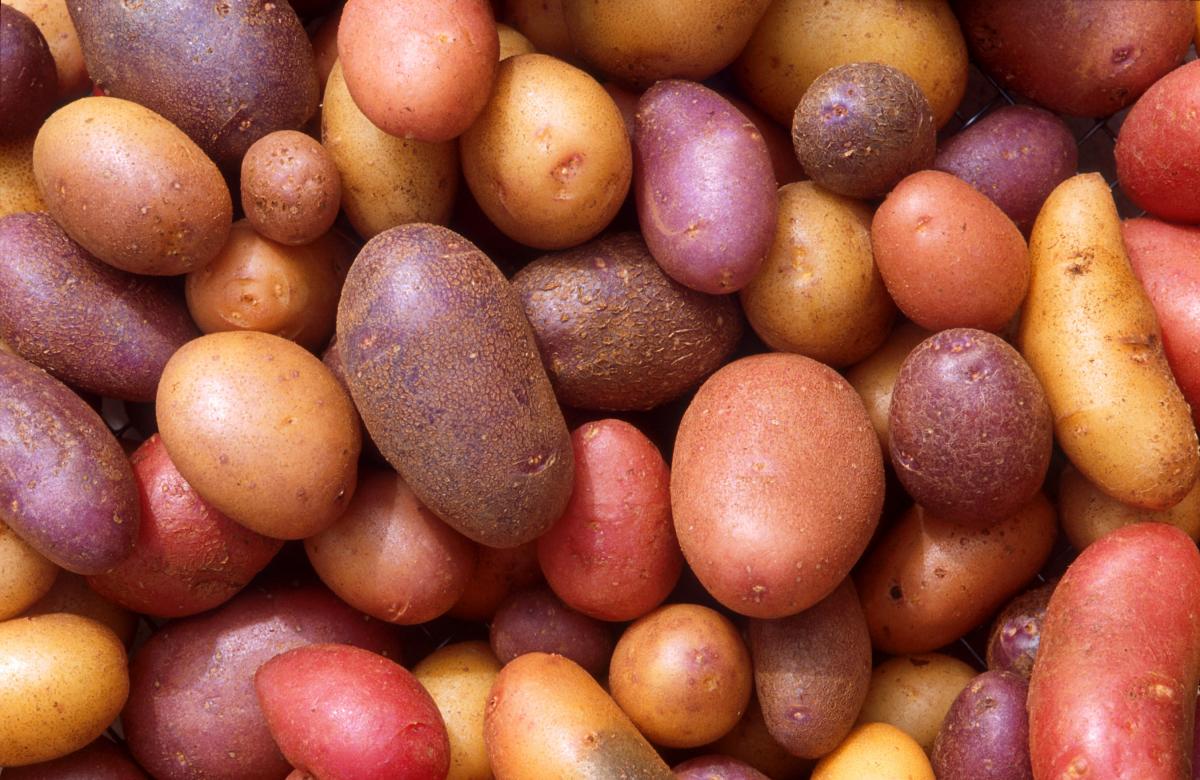
(Photo: Scott Bauer I US Department of Agriculture Agricultural Research Service)
For processing potatoes, the figures are lower: 41% of organic potatoes are discarded, compared to 46% of those from conventional production. The higher waste proportion for conventionally farmed processing potatoes is connected to the overproduction of this crop, which barely ever occurs with organic farming.
Waste is greater for organically farmed table potatoes because these fail to satisfy the high quality standards more often than conventional ones. “After all, consumers have the same expectations of quality and appearance for organic production as they do for conventional,” Willersinn said.
Producers lose a quarter
Back at the farm, about 25% of table potatoes goes to waste, while another 12% to 24% are sorted away by wholesalers. By the time the potatoes reach the retailer, another 1% to 3% is discarded, while household consumers junk another 15%.
Households make a big impact
According to Willersinn, consumers contribute the most impact in the chain of losses. This is because their unwanted potatoes end up in the garbage or compost. Whereas on the side of producers, distributors and processors, discarded potatoes get a chance to be recycled into animal fodder or feedstock for biogas plants.
Why are potatoes wasted?
Based on the study, apparently consumers have high standards with regard to fresh potatoes from conventional farming, while about three-quarters of organic potatoes are lost.
Another reason potatoes are thrown away is to protect consumers from those that have rotten and turned green – signs that these are not good for the health. Other potatoes are discarded when wireworms (the larvae of click beetles) have bored holes into them. Such potatoes are still edible, but these, along with misshapen or deformed potatoes end up as animal feed.
Where to begin
To reduce potato waste, Willersinn suggested that in the supply chain, producers have to take the first step. He said that farmers can use suitable cultivation methods such as crop rotation to minimize infestation, by protecting plants against wireworms, and breed new, more-robust varieties of potatoes. “These measures could improve quality and therefore result in less waste,” he explained. – The original article written by Peter Rüegg appears in the ETH Zürich. See
https://www.ethz.ch/en/news-and-events/eth-news/news/2015/10/potato-harvest-reduced-by-half.html
Nike Air Force 1