
 Access
 Login/Register
 Supplier Login












The plastics industry in the Middle East region is being led by a drive to introduce new products and applications locally and overseas. Leading regional plastic resin producers are establishing new products innovation centres which support convertors in developing new applications and penetrate new market segments at home and overseas.
“We see two important trends that are shaping the future of the region’s industry: the first is capacity expansion and the second is products diversification. At present, the GCC’s polymer capacity stands at 25.5 million tonnes/year. By the year 2020, the industry will add 8.3 million tonnes bringing the total polymer production capacity to 33.8 million tonnes/year. This 25% growth from present capacity will be combined with introducing 16 new polymers with a capacity of 2.7 million tonnes, stimulating a new set of downstream industries in the region. This move towards performance polymers is vital for the industry to remain competitive, especially against a backdrop of rising import tariffs in leading export markets for GCC polymer producers,” said Dr. Abdulwahab Al- Sadoun, Secretary General of the Gulf Petrochemical and Chemicals Association (GPCA).
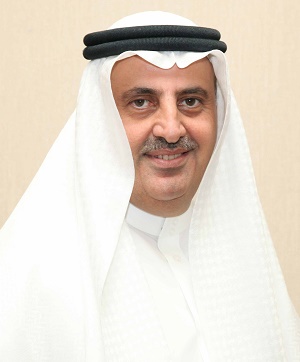
Dr. Abdulwahab Al- Sadoun, Secretary General of GPCA
GPCA confirmed that Sadara is slated to start production late 2015 and full operations are expected to be on track by end-2016 and predicts it to be a real game-changer for the industry in 2016. The capacity boost and focus on specialty chemicals will support growth in key GCC markets such as packaging and construction.
“Our focus on sustainability will continue and we will proudly present our second sustainability report at the GPCA Responsible Care Conference in October this year. Adding to our numerous projects to promote sustainable polymer manufacturing, the GPCA Plastics Committee planned on introducing eco-profiles for the regional polyolefins manufacturing plants next year,” said Mr. Al-Sadoun.
As a subset to cradle-to-cradle life cycle assessment of a product, the eco-profiles will aim to determine the environmental impact (per kg) of a product during its production phase, ie. Cradle-to-gate life cycle inventory. The results will be an industry average and also act as a benchmark against the European industry. The eco-profiles will be generated according to the provisions of ISO 14040 and ISO 14044. They will represent industry averages for the GPCA’s leading producers of polyolefin.
GPCA has grown consistently since its establishment nearly ten years ago. In 2006, GPCA counted just over 60 members, today GPCA membership stands at 240. The regional producers that are GPCA members represent 95% of the industry in the region. It is mostly a growing number of service providers and associated businesses that see the benefits of joining our networking, thought leadership and advocacy activities.
“We will give 2016 the best possible start with the seventh edition of PlastiCon from 10 to 12 January. The 2016 edition will be held under the theme 'Evolving GCC Plastic Conversion: Prospecting New Horizons' and will have world class experts share their knowledge about markets, polymers and plastics as well as the latest conversion technologies and highly exciting success stories from local plastic converters. In addition, the programme will focus on current issues like the production of resins from shale gas, while an entire session about food packaging will give insights about markets and applications.”