
 Access
 Login/Register
 Supplier Login












The plastics industry in the Middle East region is being led by a drive to introduce new products and applications locally and overseas. Leading regional plastic resin producers are establishing new products innovation centres which support convertors in developing new applications and penetrate new market segments at home and overseas.
“We see two important trends that are shaping the future of the region’s industry: the first is capacity expansion and the second is products diversification. At present, the GCC’s polymer capacity stands at 25.5 million tonnes/year. By the year 2020, the industry will add 8.3 million tonnes bringing the total polymer production capacity to 33.8 million tonnes/year. This 25% growth from present capacity will be combined with introducing 16 new polymers with a capacity of 2.7 million tonnes, stimulating a new set of downstream industries in the region. This move towards performance polymers is vital for the industry to remain competitive, especially against a backdrop of rising import tariffs in leading export markets for GCC polymer producers,” said Dr. Abdulwahab Al- Sadoun, Secretary General of the Gulf Petrochemical and Chemicals Association (GPCA).
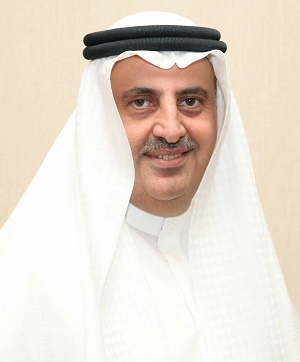
Dr. Abdulwahab Al- Sadoun, Secretary General of GPCA
GPCA confirmed that Sadara is slated to start production late 2015 and full operations are expected to be on track by end-2016 and predicts it to be a real game-changer for the industry in 2016. The capacity boost and focus on specialty chemicals will support growth in key GCC markets such as packaging and construction.
“Our focus on sustainability will continue and we will proudly present our second sustainability report at the GPCA Responsible Care Conference in October this year. Adding to our numerous projects to promote sustainable polymer manufacturing, the GPCA Plastics Committee planned on introducing eco-profiles for the regional polyolefins manufacturing plants next year,” said Mr. Al-Sadoun.
As a subset to cradle-to-cradle life cycle assessment of a product, the eco-profiles will aim to determine the environmental impact (per kg) of a product during its production phase, ie. Cradle-to-gate life cycle inventory. The results will be an industry average and also act as a benchmark against the European industry. The eco-profiles will be generated according to the provisions of ISO 14040 and ISO 14044. They will represent industry averages for the GPCA’s leading producers of polyolefin.
GPCA has grown consistently since its establishment nearly ten years ago. In 2006, GPCA counted just over 60 members, today GPCA membership stands at 240. The regional producers that are GPCA members represent 95% of the industry in the region. It is mostly a growing number of service providers and associated businesses that see the benefits of joining our networking, thought leadership and advocacy activities.
“We will give 2016 the best possible start with the seventh edition of PlastiCon from 10 to 12 January. The 2016 edition will be held under the theme “Evolving GCC Plastic Conversion: Prospecting New Horizons” and will have world class experts share their knowledge about markets, polymers and plastics as well as the latest conversion technologies and highly exciting success stories from local plastic converters. In addition, the programme will focus on current issues like the production of resins from shale gas, while an entire session about food packaging will give insights about markets and applications.”
Lower polymer prices
“Lower polymer prices will have a positive effect on the plastics consumption as it further increase the attractiveness of plastics over other materials like glass or metal used in e.g. packaging,” Gregor Keil, Head of Regional Marketing & KAM IMEA (India, Middle East and Africa) at Clariant said.

Mr. Gregor Keil, Head of Regional Marketing & KAM IMEA, Clariant
He added that the volume growth in the Middle East plastics industry is going to be impacted by the political situation in the region. Generally a trend towards more technically demanding applications along with a need for more locally provided service and technical expertise is seen. An increasing awareness about sustainability as a growth driver is recognised.
Mr. Keil said Clariant’s BU Masterbatches is a full service provider covering basically all applications from packaging, fibres, consumer goods, medical to automotive. With its long-time presence in Saudi Arabia, it is able to supply locally made masterbatches solutions and provide technical services to support the customers’ enhanced requirements. One example of additive masterbatches that meet new market requirements in terms of sustainability are Hydrocerol®, a range of chemical foaming and nucleating agents. Hydrocerol® helps to decrease the weight of products by reducing the amount of polymer without compromising on technical features.
The trend is moving towards more technically demanding applications (e.g. BOPET) to reduce the dependency on volume driven and price sensitive areas. Clariant Masterbatches is a full service provider with a complete portfolio offered not only in granulates but liquid form as well. “Anticipating the increasing consumption of PET, Clariant’s BU Masterbatches has built up local capabilities in Saudi Arabia to support customers in the Middle East with tailor-made formulations and technical support. Clariant Masterbatches Saudi Arabia is using the long lasting very good relation to important raw material supplier in the region and the international connections for raw materials which are not locally produced to be able to supply the market with needed solutions. We keep continually investing into our setup in the region and will be as well present on the next Saudi Plastic and Petrochem in January 2016 in Riyadh,” according to Mr. Keil.
Full-line automation on the rise
Automation of production processes is expected to be a major move for a growing number of companies in the Gulf region. According to Feyssal Omar, Regional Sales Director for Middle East and North Africa at Bosch Packaging Technology, “Bosch has been successfully bringing automation to the Middle East for the past 20 years. Regardless of the current level of automation in place in a manufacturer’s operation, Bosch offers solutions ranging from entry-level to high-end.” Bosch is continuously enhancing its product portfolio to help food producers meet new government regulations, address growing market demands and improve the bottom line.
“Working closely with our customers in the Middle East, we are seeing growing demand for full-line automation every year. Food manufacturers, especially chocolate and biscuit producers, are seeking to keep pace with evolving consumer demands, which in turn, creates more need for packaging automation. In the past, automation of the primary packaging process was the major concern, but today, we see equal interest in both primary and secondary automation, often addressed together. We anticipate these trends to continue into 2016 and are ensuring that our product portfolio is in line to support our customers in the region. “
Bosch’s flexible Module++ concept, which links the company’s proven standard modules for customised processing and packaging is ideal for producers taking their first steps in automation or for those taking automation to the next level. The portfolio includes processing, handling and packaging equipment, giving manufacturers the benefit of a single-source solution provider for their entire production line.
To create each line, Bosch draws from its local support that is backed by a global knowledge network. All machines are also available as standalone modules designed for simple integration with existing Bosch technology. An additional benefit stems from the single point of contact through all project phases, from complete evaluation and realisation of the line concept, to faster production start-up and reliable after-sales services and training.
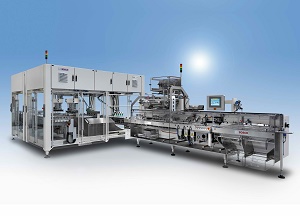
Bosch offers a whole range of equipment for maximising productivity in the packaging sector.
For high-speed production, Bosch Seamless Systems feature high-end technology that takes manufacturers to the peak of productivity by eliminating bottlenecks and maximising overall equipment effectiveness (OEE). Bosch’s bar line is a Seamless System designed specifically for high-speed bar-shaped product packaging, from primary to secondary to end-of-line technologies. The line handles speeds up to 1,500 products per minute. To complement the primary packaging process, the line also includes an integrated top loader combined with a new user-friendly case packer with improved ergonomics for safer and simpler operation.
With global consultation services, complete line competences and Bosch experts available in the region, the company is well positioned to help Middle Eastern manufacturers choose the ideal solution for their individual requirements. “At Gulfood Manufacturing 2015, Bosch showcased its latest system for the efficient and flexible packaging of biscuits on edge, the Pack 301 LS (Length Slug). The mid-range automation solution was developed as an addition to the Pack Series of horizontal flow wrappers exhibited at Gulfood Manufacturing in 2014, which range from entry-level models to fully automated technologies. It is designed to help Middle Eastern manufacturers meet the increasing market growth in biscuit wrapping while achieving premium product quality. “
The biscuit packaging solution is comprised of a Smart Measuring Loader, a Smart Slug Feeder and a Pack 301 LS horizontal flow wrapper. The new development also addresses the ongoing product diversification in the global biscuit market, as well as the increasing demand for smaller portion packs and large family packs of flow wrapped biscuits on edge. With innovative features for gentle product handling, as well as fast and simple changeovers, all components have been developed with a holistic approach and for high reliability and robustness.
Enhancing operational efficiency and lay-out flexibility, the new Pack 301 LS allows Middle Eastern biscuit producers to increase production. Bosch also provides training for operators and technicians to improve their skills and eliminate errors, ultimately reducing downtime. With automation solutions from Bosch, manufacturers can now increase their output without significant staff expansions.