
 Access
 Login/Register
 Supplier Login












Corbion Purac launched at Fakuma 2015 its PLA bioplastic product portfolio of neat PLA resins tailored for plastics processors. PLA is a biobased plastic derived from natural resources and offers a significant reduction in carbon footprint compared to oil-based plastics. Corbion uses carbohydrates as the raw material to produce lactic acid, which is polymerised into PLA. PLA is currently being used in a variety of applications like packaging and food serviceware, and is increasingly becoming the material of choice for more demanding applications in automotive, electronics and textiles.
Combining high biobased content with a low carbon footprint, PLA is a great replacement for PS, PP and ABS. Furthermore, as demonstrated by the range of applications, PLA is an extremely adaptable material that can be processed on existing equipment, with commercially acceptable cycle times. This offers converters and brandowners a unique opportunity to be a sustainability frontrunner in their field, for both their products and their packaging.
Most relevant regulations met
Corbion Purac's neat PLA resins are compliant with the most relevant regulations and requirements related to bioplastics. They are approved for use in food contact applications (EU Framework Regulation EC No. 1935/2004 and No. 10/2011) and are compliant with EN13432 standard for industrial composting. With biobased content of 100%, Corbion Purac’s PLA resins are REACH compliant. Because these are exclusively made from non-GMO feedstocks, reduced carbon footprint can be achieved.
As demonstrated at Fakuma, the PLA applications based on Corbion Purac technology include PLA single-serve coffee capsules, courtesy of ATI, recently commercially launched in the German market. An air filter box and interior trim parts for the automotive industry was also shown courtesy of Röchling Automotive. The injection moulded parts boast heat resistance up to 140°C, impact resistance, UV resistance, high gloss, excellent colourability and dimensional stability, and they withstand the demanding conditions in today's engine compartment. This makes PLA an excellent alternative to most polyesters (PC, PET, PBT) as well as polystyrenes (ABS), polyolefins (such as PP) and polyamides (PA6).
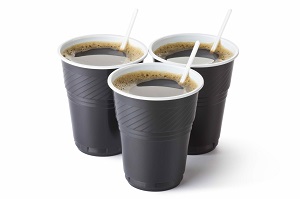
The world's first bioplastic touchscreen computer is also an important demonstration, courtesy of SUPLA and Kuender together with a tablet. The housings are high gloss white and have an improved impact resistance, high heat resistance and good scratch resistance. Furthermore, high dimensional stability allows for tight tolerances during processing. The latest PLA bioplastic also finds use in a range of packaging and serviceware including single-use thermoformed hot drink cups (courtesy of Huhtamaki), lids (made by WinGram), BioFoam ice cream packaging from Synbra and fruit and vegetable storage bags from NaturalShield.
Corbion Purac's PLA homopolymer resins are available in a range of melt viscosities and deliver improved heat resistance over standard PLA. These grades can be used as neat resin or as part of a compound in order to further optimise overall material properties. PDLA, when combined with PLA homopolymers, will yield a compound that combines good heat resistance with excellent mechanical properties.
Successful development of new resins
Corbion Purac has successfully made PLA bioplastic resin from second generation feedstocks. Second generation feedstocks are those which are not suitable for human consumption, and include plant-based materials like bagasse, corn stover, wheat straw and wood chips.
Following an intensive research project, Corbion Purac has succeeded in producing high grade lactic acid from alternative feedstocks, from which PLA resin has been made. Today, first generation feedstocks such as industrial cane sugar, sugar beet, corn and cassava are used for producing lactic acid. They are grown following principles of sustainable agriculture and have a high yield per hectare of land used. These highly efficient feedstocks are, and will most likely remain, a good choice for lactic acid and PLA production.
Corbion Purac is the first company in the world to have made PLA from second generation feedstocks, optimising the lactic acid fermentation process to fit the special characteristics of the biomass. In the future, these alternative feedstocks can have a high impact on the biochemical and bioplastics industries.