
 Access
 Login/Register
 Supplier Login












FOOD manufacturers are eager to ride on the doughnut popularity trend. However, one of the biggest challenges that doughnut sellers face is short shelf life. Take the ever popular glazed doughnuts for instance. Transparent coatings, or more commonly known as ‘glazes’, are (un)saturated solutions of sugars. If saturated, this type of coatings generally contains large crystals that refract the light in such a way that they give a “transparent appearance”. However, this visual appeal will vanish shortly due to re-crystallisation of the glaze. Glazed doughnuts commonly have a short shelf-life of just two days1.
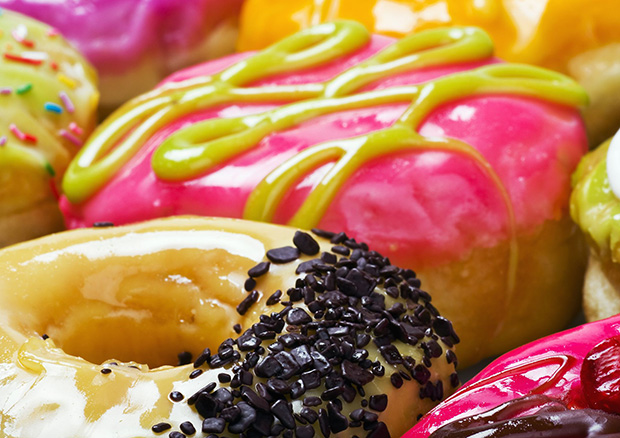
It is common to see glazed doughnuts not just to lose the transparency of their sugar coatings but also to harden over time. This happens when water migration occurs as the water activity between the doughnut and the glaze is not the same. Generally, the water activity of a doughnut is higher than the water activity of a sucrose glaze. In order to attain balance, free water migrates from the layer with the highest water activity to the layer with the lowest, resulting in the doughnut drying out over time.
Furthermore, in packed frozen doughnuts the glaze coating often tends to stick to the packaging during freezing and after defrosting. This can cause the doughnuts to look unappealing to consumers.
Improving shelf-life and quality
Beneo, one of the leading manufacturers of functional ingredients, has conducted technical trials to address these problems. The trials reveal that a small change in recipe and process can help improve the overall quality of glazed and iced bakery products and extend shelf life.
Katja Reichenbach, Beneo product manager for Palatinose™, says,“Beneo trialled the partial replacement of sucrose with Palatinose in glazings and icings and the results showed that water activity was brought under control in the glaze, keeping the doughnuts moist for longer. As well as extending shelf life in freshly packed doughnuts, partial sucrose replacement with Palatinose has also been trialled in frozen packed doughnuts. These test results show that our unique carbohydrate substantially improves the quality of the doughnut upon defrosting.”
This is due to the low hygroscopicity of Palatinose that prevents the glaze from sticking to the foil during frosting and, of even greater importance, after defrosting. Moreover, by using Palatinose, the glaze in frozen-packed doughnuts will remain transparent throughout the freezing and defrosting processes. Similarly, the glazing of freshly-packed doughnuts will be kept transparent even throughout the extended shelf life.
These technical benefits go hand in hand with appealing sensorial characteristics of the company’s functional carbohydrate. With its sugar like taste, Palatinose provides a naturally pleasant and slightly reduced sweetness in comparison to using sucrose alone.
Support along the value chain
Today’s consumers have better exposure to quality food options, and they are often spoilt for choice in indulgent sweet snacks. The market is competitive, and successful manufacturers need to deliver foods that are both visually and sensorial appealing throughout their shelf lives.
With its unique chain of expertise including the Beneo-Institute, the Beneo-Technology Center and support in marketing functional ingredients the company helps manufacturers along the whole development process. This way, food and beverage producers will find new ways to fulfill consumers’ growing demands for high quality, convenient and affordable products with great taste.
1Business Insider (2013) ‘Krispy Kreme donuts don’t last long enough’
Nike Air Max