
 Access
 Login/Register
 Supplier Login












A material that is stronger than steel and lighter than aluminum, carbon fiber composite has been increasingly preferred in the production of a growing range of products. Carbon fiber composite is viewed as an important contributor to solving global environmental problems, as its lightweight properties significantly reduce carbon dioxide emissions over the entire lifecycle of products in which it is used.
In Europe, the average car weighed about 1,400 kilograms in 2012, according to a European Commission report. An average vehicle of this weight can emit about 132 grams of carbon dioxide per kilometer travelled. The figures may vary in other parts of the world and in this aspect, the automotive industry has turned toward carbon fiber composite as material to achieve lightweighting that will result in lower emissions and increased fuel efficiency. Thus, lightweight composites are incorporated in materials for the production of automotive chassis, under-the-hood components, and interiors.
As a result, demand for carbon fiber composites is expanding across a wide range of applications, including aircraft. In conjunction with the growing demand, market expectations for the development of carbon fiber recycling technologies are rising. But recycling carbon fiber composites is difficult owing to the complex composition of the material and the requirement for more sophisticated technology and process.
Energy-saving method
A recent study by a team of researchers led by the University of Colorado Boulder found an easy and cost-effective way to recycle carbon fiber composites into new material just as robust as the original. In addition, both the fabrication of the new material and the recycling are energy-efficient and comparatively fast, potentially addressing obstacles to wider use in manufacturing. For these reasons, the team’s carbon fiber composites are “unprecedented,” said Wei Zhang, CU-Boulder associate professor of chemistry and biochemistry.
The findings, published in the journal Advanced Materials, address a growing issue with these composites, plastic material that gets its brawn from embedded carbon fibers. These composite materials – used in everything from jetliners to fishing poles – are expensive but often used wherever high-strength light-weight ratios and rigidity are required.
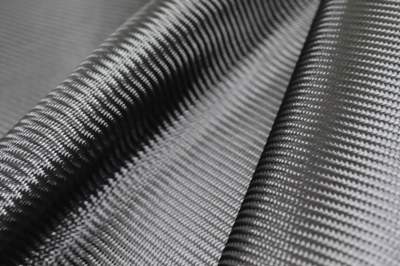
Unlike metal, however, carbon fiber composite is generally not recyclable. The glue that binds the fiber in most carbon fiber composites can be broken down with expensive, energy-intensive processes that may yield toxic waste. Carbon-fiber composites can also be crushed into a fine powder, but composites made with short fibers are weak. Millions of pounds of carbon-fiber composites are therefore destined for landfills.
The researchers, however, have achieved complete recyclability of both the glue and the carbon fiber, according to Professor Zhang. Philip Taynton, who earned his doctorate in Zhang’s laboratory last year, is the lead author of the paper and co-founder of a start-up company working to bring the novel carbon fiber composite to market. The company’s name, Mallinda, is itself a composite of the words “malleable” and “industries.” Taynton and Zhang have also discovered a way to make hard but malleable plastics that can be refashioned into new equally strong plastic using just heat or water.
Recycling the team’s carbon fiber composites simply requires soaking the composite in an organic solution at room temperature. This presents an energy-efficient and eco-friendly solution to recycling of such material. The group is able to reuse all of the stuff that that they reclaim and nothing is thrown away. The team’s carbon fiber composite, for which the university’s Technology Transfer Office has filed a U.S. patent application, is more quickly fabricated than most carbon fiber composites, which can take an hour to cure. The CU-Boulder team’s composites can be formed in 60 seconds.
Mallinda, LLC, which Zhang and Taynton co-founded with CU-Boulder alumnus Chris Kaffer, has gotten $150,000 in support from an NSF Small Business Innovative Research Grant. Kaffer holds a master of business administration from CU-Boulder and a doctoral degree in immunology from the University of California, Berkeley. The university and Mallinda have signed an exclusive licensing agreement.
The company’s first marketing target is sporting gear such as shin guards. The sporting gear can be molded directly to the wearer’s body, but it will take whatever impact thrown
Thermal composition method
The use of recycled carbon fiber has also started to gain acceptance. Toray Industries, Inc. and Toyota Tsusho Corporation embarked on a joint carbon fiber recycling initiative to develop highly efficient recycled carbon fiber manufacturing technology using an innovative and energy-efficient thermal decomposition method. The companies’ joint proposal for this technology was selected by the New Energy and Industrial Technology Development Organization (NEDO) as part of its FY2015 "Strategic Innovation Program for Energy Conservation Technologies."
Toray and Toyota Tsusho’s proposal to recycle carbon fiber is based on an innovative and energy-efficient thermal decomposition method. In this method, combustible decomposition gas from matrix resin is used as the energy source for the thermal decomposition process, which typically consumes the most energy in carbon fiber recycling. As a result, the companies expect to achieve a large reduction in the amount of energy consumed in the recycling process.
The companies plan to build a pilot plant within the Handa Plant operated by Toyota Tsusho’s wholly owned subsidiary Toyota Chemical Engineering Co., Ltd. With an eye toward future commercialization, the facility will demonstrate energy-efficient recycled carbon fiber manufacturing technologies while promoting the development of new applications for recycled carbon fiber.
Toray has taken initiatives to develop carbon fiber recycling technologies as a member of the Consortium for Carbon Fiber Recycling Technology Development (dissolved at the end of March 2015). In the 1970s, the Toyota Tsusho Group launched a business to recover and recycle scrap iron, nonferrous metals and other resources from end-of-life vehicles. Today, the Toyota Tsusho Group operates recycling businesses in countries around the world.
The successful development of recycled carbon fiber and its applications will require collaboration with a wide range of customers to explore the possibilities for specific types of parts and materials. Toray and Toyota Tsusho is expected to leverage their respective expertise and know-how to jointly implement carbon fiber recycling initiatives and contribute to the creation of a recycling-oriented society for the entire carbon fiber lifecycle.