
 Access
 Login/Register
 Supplier Login












Global rubber consumption is projected to rise by as much as 4.3% annually from 2015 to 30.5 million metric tonnes. The study by Freedonia Group attributes the growth to increase in tyre output due to the rise in global motor vehicle production which has recovered from the 2005-2010 sluggish performance. Since tyres represent the largest market for rubber, strong increases in the number of motor vehicles in use throughout the world will in turn result in the upsurge in the amount of rubber consumed worldwide. Aside from tyres, rubber is also needed in the production of automotive parts and components. Asia/Pacific region is by far the largest regional market for rubber and is likely to post the fastest growth in rubber consumption through 2015. But gains in the Middle East and Africa markets will match the global pace, according to Freedonia.
The World Rubber Industry Outlook presents long-term projections for the next 10 years on the tyre and rubber sectors. World total rubber demand is forecast to increase at an accelerating rate of 4.4% in 2015, to post long-term growth of 3.7% under the IMF Scenario to 29.2 million MT by 2015. The world total natural rubber consumption is projected to reach 12.4 million MT in 2015 and rising further to reach 17 million MT by 2023. In the same manner, synthetic rubber demand is estimated to hit 16.8 million MT in 2015 under the IMF Scenario. By 2023, the demand for sythentic rubber will climb to 22 million MT.
Fast-growth sectors to record high rubber consumption
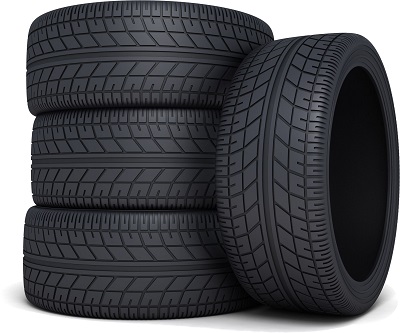 Aside from the automotive industry, fast growing sectors that are expected to provide high demand for rubber in the Middle East and African regions are building and construction, medical and health care, and other consumer products (sporting goods , etc.). In particular, the market for silicones remain robust as silicones are needed in most industrial sectors. Global sales of silicones was valued at about $15 billion in 2013, with projection of at least 5% growth in the next three years. Ceresana, in its report on the global silicones market, expects high growth rates for the electronics and electrical sector due to the use of silicones in such products as keyboards, computers, telephones and several other products, especially those where insulation and safety are of foremost importance.
In the Middle East, the high demand for synthetic rubber has generated response from big players. SABIC is bringing on stream a new plant that will produce 400,000MT synthetic rubber yearly by 2015 to meet the region’s demand. This was announced by Mr. Abdullah Al-Rabeeah, executive vice president for performance chemicals. The project, in partnership with ExxonMobil Chemical, will produce both ethylene propylene diene monomer and polybutadiene rubbers to serve the demand of countries in the Middle East and nearby regions. The Middle East region alone consumes 25 million tyres annually, and huge investments in building and infrastructure is also creating demand for rubber products. SABIC’s EPDM rubbers are applied in the construction sector in such products as bridge bearings, dock fenders, tunnel segmentation seals, flooring, window profiles, seals for building components of various types, flexible tanks and water hoses.
In partnering with SABIC, ExxonMobil aims to create a world-class rubber and elastomer value chain in Saudi Arabia, and also provide a strategic platform to help it meet the growing demand for rubber-based automotive, construction and appliance products in the Middle East.
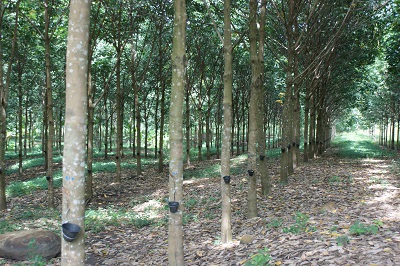
Africa is expected to push production of natural rubber in response to high demand.
Africa’s rapid industrialisation is pushing demand for rubber and this scenario will likely persist in the medium to long-term, according to analysts. According the report on South Africa tyre market covering the period 2014-2019 by ResearchandMarkets, the South African tyre market is expected to witness phenomenal growth over the next five years due to the increasing exports and domestic sales of automobiles coupled with the demand for tyres in the replacement market. The tyre market in South Africa is projected to grow annually by 9% during 2014-2019.
Increasing automobile exports and continuous launch of new vehicle models in the domestic market are driving the tyre industry in South Africa. Major global automobile manufacturers have established their production or assembly plants in the country to address the growing domestic and global demand. Also, South Africa has various trade agreements such as SADC (Southern African Development Community), EAC (East African Community), COMESA (Common Market for Eastern and Southern Africa) and BRICS, which have helped the country in establishing itself as a manufacturing base for automotive products. The country has also launched APDP (Automotive Production and Development Programme) to support domestic manufacturing.
Ghana is also seen as a key player in the African rubber industry. The country is expected to export large volumes of rubber by 2020, valued at almost $250 million. Main importers of Ghana’s rubber produce are France, Turkey, East Africa, South Korea and Burkina Faso. In Gabon, Olam International announced investment of $183 million to develop 28,000 hectares of rubber plantations in partnership with the government of the Republic of Gabon. Planting is expected to be completed by 2019. The average yield is targeted between 2 and 2.2 tonnes of dry rubber.
adidas superstar damen glitzer silber