
 Access
 Login/Register
 Supplier Login












The plastic’s market is forever expanding and the extrusion of intricate shapes, greater volumes and variable densities are challenging even to the seasoned veteran. The demands on plastic extrusion machines become ever greater, higher outputs, extended operational life, greater gaps between servicing and maintenance. Such pressures on production goals should not be at the expense of proper safety management.
Excessive build-up of pressure with an extrusion machine can lead to a major machine malfunction, costly downtime and operator safety issues.
None of these are welcomed on any shop floor so how can protection of the extrusion machine from over pressurisation be improved?
New manufacturing methods, material traceability, specification controls and extensive testing of the finished product are all essential to offering increased safety and reliability.
New manufacturing technology
For decades the method of attaching a rupture disc to an extruder barrel has been utilising a soldering operation. This is not so much a science but a “rural cottage industry” approach where the depth and quantity of solder applied can vary on each barrel. The result is that each rupture disc’s retention is variable and unknown.
Typically a user of a plastic extrusion machine in which a “soldered unit” was installed would have experienced “leakage” of the extruder barrel assembly leading to costly downtime and unforeseen maintenance.
Today, laser-welding technology ensures that a known proven procedure is undertaken that is high in quality, repeatable and predictable. The leakage factor is removed, as too is the mechanical variability of the joint of the rupture disc to the barrel. Laser welding enables a longer operating life expectancy compared to the soldered version that is still widely used today.
Material traceability and specification control
Where does the material used to construct the extruder barrel pressure relief device originate and is it to a known material standard? Some parts of the Oil and Gas Industry were quick to respond to defective materials being supplied from parts of Asia when raw materials were found not to meet the necessary standards where contamination to a high degree was present. This resulted in two countries primarily being blacklisted from future material supply.
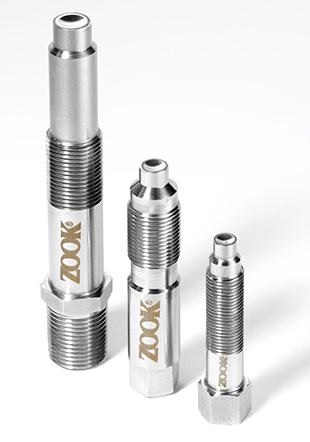
A pressure relief device that is designed to protect capital plant and plant personnel needs to be made from known and approved material standards and specifications. Major material failure under high pressure is not an option and all components for an extruder barrel pressure relief device must be made from known materials and from known mills backed up with authentic material certification to a recognised global standard.
Final product testing
When a completed batch of extruder barrel pressure relief devices runs off a production line a series of final acceptance tests are mandatory in order to qualify the finished product. Destructive testing of a suitable quantity of finished product to meet international standards is a must to ensure compliance to industry standards. Leakage testing to ensure that the disc joint is perfect has to be undertaken on each completed unit, assumptions prove to be the undoing of less thorough manufacturers.
Conclusions
Three basic steps will ensure that you have a professionally manufactured pressure relief device for your plastic extrusion machine.
The first one is to ask for 3.1 material certificates for the barrel and rupture disc material to a known material grade acceptable to the relevant international standard.
Next, make sure the “Mill” complies to also known industry and international standards with the necessary approvals. This can be identified by the Mill Certificate and to check the country of - origin.
Last, always insist on receiving proving burst certification that details the destructive test results listing the burst pressures at which the rupture disc failed. Also insist that such destructive tests are undertaken to known international standards such as ASME or ISO 4126-2/PED. Ensure that each pressure relief device delivered has been leak tested to avoid costly downtime.
Safety is of paramount importance and should never ever be compromised by cost cutting on unknown materials of construction, outdated manufacturing procedures or lack of material and performance certification.
ZOOK is a leading manufacturer of metal and graphite rupture disks, including burst plugs and other related over-pressure protection products. ZOOK’s full line of metal rupture disk products is manufactured out of its plant in Burlington, Ontario Canada which has recently received investment in plant and buildings to double production capacity. The ZOOK graphite production plant is located in a suburb of Cleveland, Ohio, USA and is the world’s only facility dedicated solely to the production of graphite rupture disks. For more information on the company’s products ad services, visit: www.zook.cc