
 Access
 Login/Register
 Supplier Login












IN RESPONSE to intensifying consumer demand for natural ingredients, several major food companies have recently announced a shift away from artificial ingredients such as those pertaining to color and flavor in the next few years.
The switch will present a challenge to the industry, said Lester Wilson, Food Science and Human Nutrition university professor at Iowa State University.
Similar to the push for antibiotic-free poultry or the recent ruling by the Food and Drug Administration to remove partially hydrogenated oils from its “Generally Recognized as Safe” list, Mr Wilson said consumers want a “clean label” that is easy to understand as opposed to a lengthy list of unknown, hard-to-pronounce ingredients.
“If consumers weren’t saying we want a clean label and that we want to be able to understand everything on there, the industry would not change, unless companies felt they could make something better or less costly,” Mr Wilson stated.
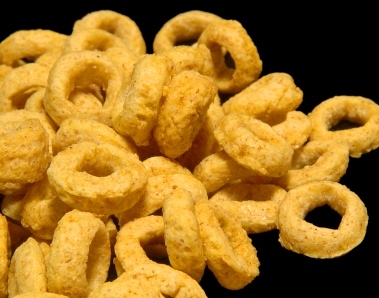
The switch from artificial to natural ingredients is a long process that doesn't always end up with a successful product if sensory characteristics fail to satisfy consumers (Breakfast cereal © Kutt Niinepuu I Dreamstime.com)
“The industry is going to react to what consumers want, because we vote with our pocketbook. The challenge for these companies as they switch from artificial colors is trying to find the right natural pigments that fit and withstand the process for making those products,” he added.
Companies such as General Mills and Kraft, which are making the change in response to sales and consumer feedback, face risks in making the change despite consumers finding it favorable. Switching from artificial to natural ingredients may alter the flavor, taste, color, or texture of the product, as well as the price. If the natural ingredients dramatically change what consumers like most about the product, they’ll stop buying it, Mr Wilson said.
“If a brand name is the gold standard leader and they start messing with it, often that can create problems, unless their product development people are really good and can keep the same color, taste, texture, viscosity, whatever the sensory characteristics are for the consumer,” he added.
Mr Wilson noted the key differences between natural and artificial ingredients. Besides greater heat stability, artificial colors retain color longer than natural pigments, which are more sensitive to environmental conditions such as heat, acid and oxygen levels, or light. Moreover, they are less pricey than natural ingredients. For example, vanilla ice cream made with vanilla extract is pricier than one made with vanillin, an artificial ingredient. In addition to the cost difference, vanilla extract’s flavor is not as strong.
“It’s going to take time for some of these companies to find all of the replacement ingredients that fit. In doing this, companies want to be viewed as good citizens. They want to provide a healthy product, something that tastes good and something that they can make a profit with so the company survives. They’re juggling a lot of different components in this issue,” he said.
He added that time and sales will be the key determinants of companies’ response if consumers do not like the new, natural ingredients. They may follow the path taken by some soft drink companies that reverted back to popular ingredients after introducing new recipes.
Jordan XII Slide