
 Access
 Login/Register
 Supplier Login












PROSECCO is a lively and fragrant white Italian wine, the origins of whose production date back to the second half of the 19th century in the hills between Conegliano and Valdobbiadene. Its production takes place in accordance with the D.O.C.G. and D.O.C. regulations, which govern the cultivation of the grapes, their fermentation and the subsequent natural “prise de mousse”. These processes give rise to 380 million bottles of semi-sparkling and especially fully sparkling wine. The latter version is produced by the “Italian method” in large pressurized tanks, a technique that intensifies the perfumes that are the secret of the wine’s great success.
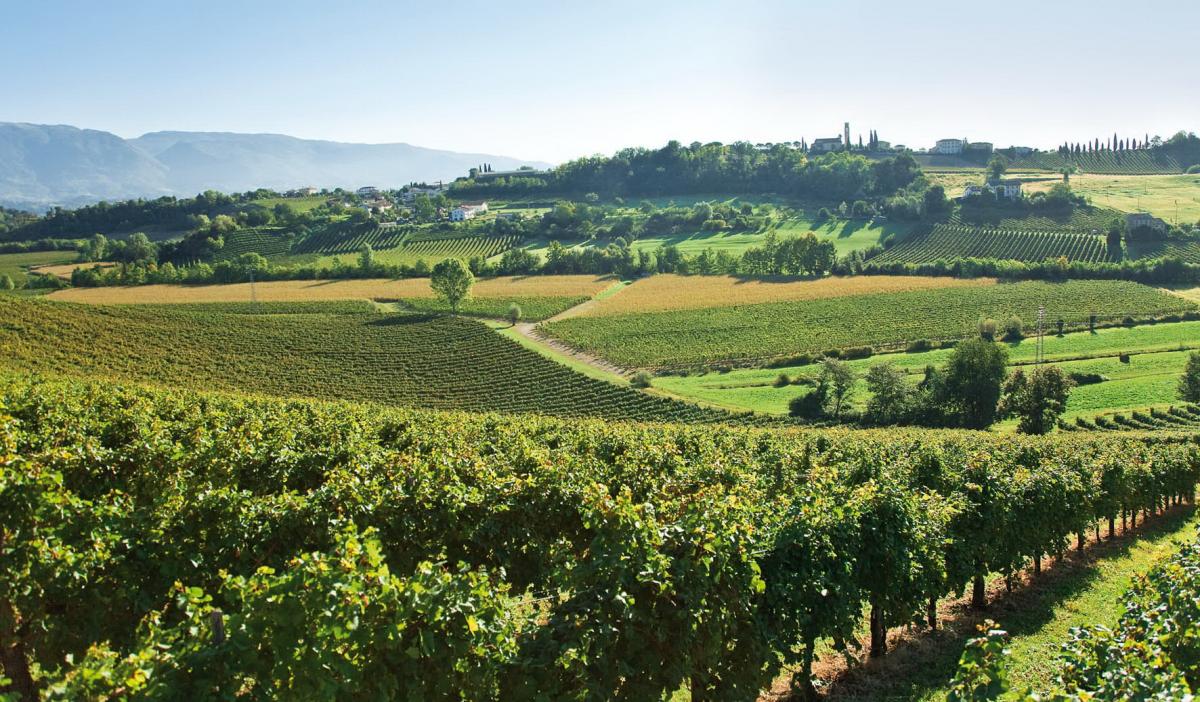
Today Prosecco is produced exclusively in the D.O.C. zone that covers nine provinces in the regions of the Veneto and Friuli Venezia Giulia. In the heart of the denomination, between Venice and the Dolomites, lies Treviso, the province with the greatest number of high-quality vineyards, which also contains the famous and historic hilly areas of Conegliano Valdobbiadene and of Asolo: both of these zones can boast D.O.C.G. (Denominazione di Origine Controllata e Garantita) status. D.O.C.G. sparkling wines from these hilly zones can easily be recognized because the label always shows the name of the production area – Conegliano Valdobbiadene or Asolo – and the wine is also entitled to the “Prosecco Superiore” appellation. Asolo offers a combination of winemaking tradition and Venetian art. Conegliano Valdobbiadene is the better-known area. Conegliano is the main location for actual production as well as for research, boasting as it does Italy’s first School of Oenology, dating back to 1876; Valdobbiadene and its area are renowned for the beauty of the vineyards that adorn the hills, whose steep slopes compel growers to tend them by hand, in the traditional way. This unique area is also the source of Cartizze, the Grand Cru of the D.O.C.G. zone.
The production method
The production protocol states that vinification must occur within the same municipalities where the grapes are grown, namely Conegliano, San Vendemiano, Colle Umberto, Vittorio Veneto, Tarzo, Cison di Valmarino, San Pietro di Feletto, Refrontolo, Susegana, Pieve di Soligo, Farra di Soligo, Follina, Miane, Vidor and Valdobbiadene.
The blend of grapes for Conegliano Valdobbiadene Docg must be at least 85% Glera. A maximum of 15% can be added of Verdiso, Bianchetta Trevigiana, Perera or Glera Lunga, or Pinot Bianco, Pinot Grigio, Pinot Nero and Chardonnay grapes, on their own or together. The maximum must-to-fruit ratio must be no higher than 70% for all the types.
These are the rules set down for the wines in the “Conegliano Valdobbiadene Prosecco Superiore” and “Superiore di Cartizze” category. Here is how they present themselves in the glass. For Conegliano Valdobbiadene Prosecco Superiore, the colour must be straw yellow, bright, with a persistent mousse. The scent must be pleasant and characteristically fruity, while the flavor must be fresh, harmonious, fruity and characteristic. When it comes to analytical values, the alcohol level must be at least equal to 11% abv, the total minimum acidity 5.0 g/l and the non-reducing extract a minimum of 14.0 g/l. Moving on to Cartizze, beyond sensory traits effectively identical to the previous wine, it must have an alcohol level at least equal to 11.5%, a total minimum acidity of 5.0 g/l and a minimum non-reducing extract of 14.0 g/l.
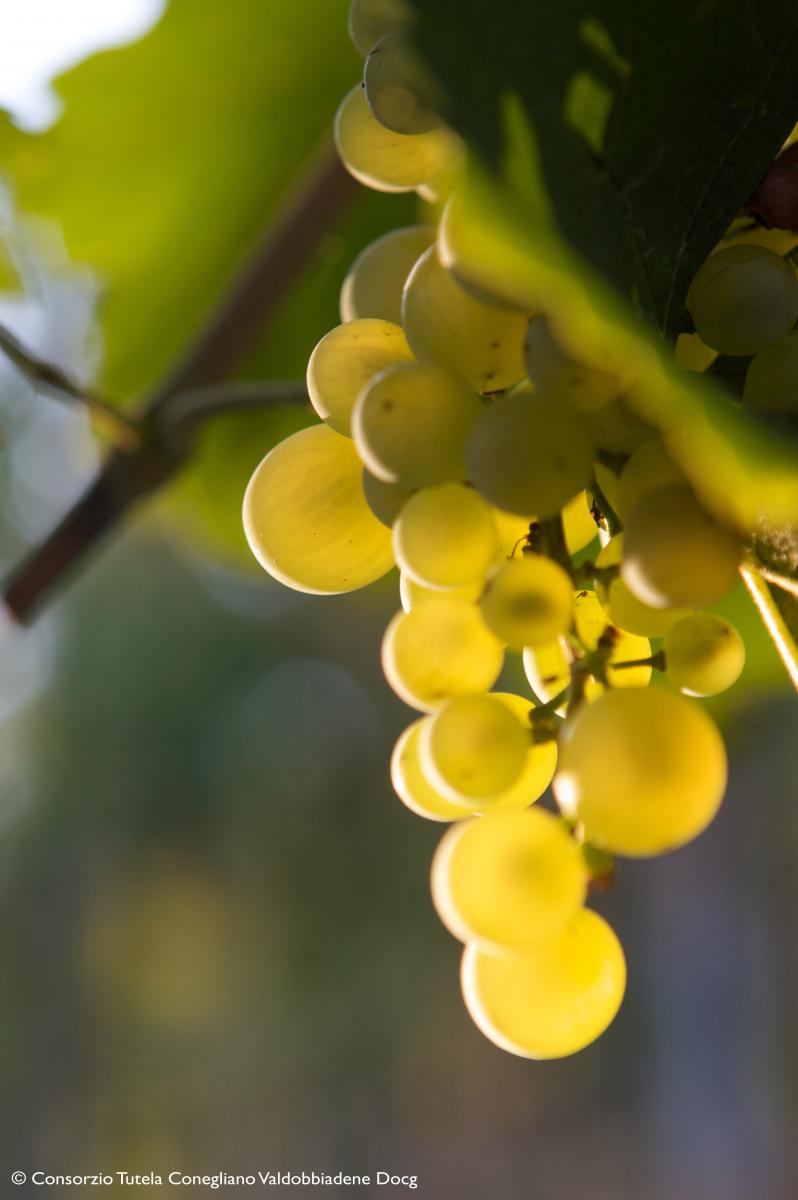
After the harvest, the grapes, picked by hand in their individual vineyards, are brought to the winery. The first step is pressing, which takes place in special presses that crush the berries softly, extracting only first-pressing must. No more than 70 liters of wine can be obtained from 100 kilos of grapes. Decantation takes place after the pressing. The cloudy must is left to rest in cold steel tanks at 5°- 10°C. After around 10 to 12 hours, the limpid part of the must separates from the sediment and fermentation can start. Vinification takes place thanks to natural yeasts, which when added to the must trigger alcoholic fermentation. This takes place in steel tanks at a constant temperature of 18-20°C and lasts for 15 to 20 days. The end result of vinification is the base wine, the starting point for sparkling winemaking. The refermentation takes place when the base wine has been clarified.
After special tastings, the different batches in the winery are blended. The wines that until now had been kept separate based on origin, harvest time and sensory characteristics are mixed together in precise proportions, creating the so-called cuvée. Conegliano Valdobbiadene Docg is almost always made using the Italian method, involving refermentation in pressurized containers. This technique has been further refined by the Conegliano oenological school with the aim of obtaining the best expression of the grapes’ aromas. This is why producers today love to talk about the “Conegliano Valdobbiadene method.” The method involves the use of large pressurized autoclaves into which the wine is placed together with sugar and yeasts. This is the best technique for preserving the varietal aromas of the grape, maintaining the primary perfumes as much as possible and producing a fruity and floral wine. With this processing technique, during refermentation the yeasts turn the sugar into carbon dioxide, which produces the velvety bubbles typical of Conegliano Valdobbiadene Docg. The whole process lasts for at least 30 days, and sometimes continues for up to 60-90 days, if winemakers are seeking greater complexity from longer contact with the yeasts. The Conegliano Valdobbiadene method is different from the classic method because refermentation happens in autoclaves rather than in the bottle for months or even years.
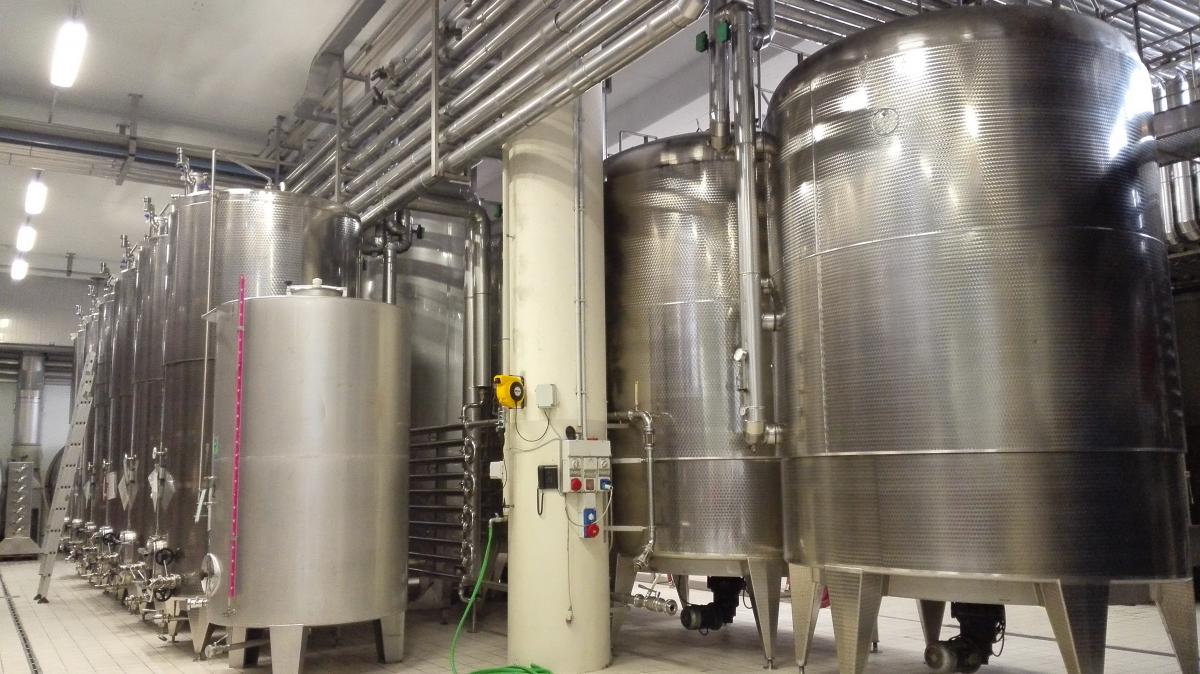
Wine produced in large pressurized tanks using the “Italian method” intensifies perfumes
The Superiore types
The Spumante (sparkling) version is the best-known Conegliano Valdobbiadene Docg wine, offering the most modern approach and the interpretation most easily exported outside the region. The Spumante fully expresses the agile and energetic character of Prosecco Superiore. Three basic types are produced: Brut, Extra Dry and Dry, their essential differences coming from different levels of residual sugar.
Brut: The Brut type is the most contemporary, the best able to meet international tastes. It is characterized by rich scents of citrus and vegetal notes, accompanied by a pleasant hint of bread crust, joined to a beautiful and lively gustatory energy. The fine perlage ensures a persistence of flavor and a clean palate. It is best served at 6°-8°C, paired with simple or complex fish or vegetable appetizers, seafood dishes or baked fish, or, as is common in the production zone, with the whole meal. The residual sugar ranges from 0 to 12 g/l.
Extra Dry: Extra Dry is the most traditional type, combining the varietal’s aromatic spirit with a sapidity enhanced by the effervescence. The bright straw-yellow colour is enlivened by the perlage. Fresh and elegant, it is rich in scents of fruit like apple and pear, with a hint of citrus that blends into the floral notes. The wine is soft and at the same time dry, thanks to a vivid acidity. Excellent as an aperitif, it is also ideal served at 6°-8°C with vegetable or seafood soups, pastas with delicate meat sauces, fresh cheeses and white meats, particularly poultry. The residual sugar ranges from 12 to 17 g/l.
Dry: The least common type is the Dry, which has an intense floral fruitiness. Pale straw-yellow in color, its delicate, fruity scent has notes of citrus, white peach and green apple. The wine is sapid and fresh, soft on the palate from the elegant sweetness. It is served very cold, to mitigate the sugar, at 6°C. This type requires more specific pairings, such as dry desserts or the spicy foods of fusion cuisine. Residual sugar ranges from 17 to 32 g/l.
Frizzante (Semi-Sparkling): This is a more informal and straightforward style. When refermented in bottle (sur lie) it is an authentic representative of a long-standing vignerons’ tradition. In most cases, however, this semi-sparkling style is obtained using the Italian Method. It has a characteristic straw color. On the nose, its aroma displays rich floral and fruity notes and it offers great freshness on the palate. Serve at 8°C; it is ideal as an aperitif, with hors d’oeuvres and with relatively simple pasta or rice dishes.
Tranquillo (Still): This is the least-known version. It comes from the most densely planted vineyards with the lowest yields, where the grapes are harvested very ripe. Its color is a delicate straw yellow and its aromas are of apples, pears, almonds and honey. Serve at 8°–10° C with seafood and other hors d’oeuvres.
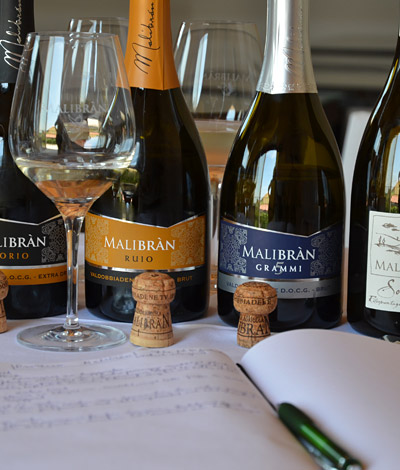
Different Prosecco from Malibran
Air Jordan