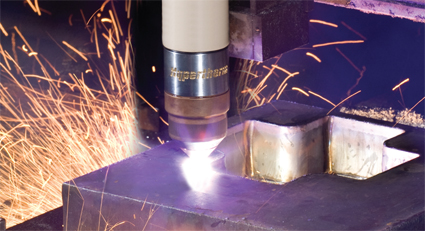
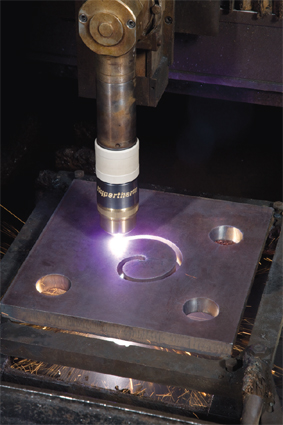
The ability to pierce metal plate is a necessity for many fabricators and steel processing centres. Using plasma, rather than oxyfuel, is most desirable as it means faster piercing times, faster cut speeds, and a cleaner finished product. However, despite plasma's many benefits, some companies find piercing thicker material-say anything over 1 1/4-inch-difficult with plasma. Several factors often left operators with a torch filled with melted consumables, or consumables covered in a quick layer of dross. Today, thanks to recent improvements in plasma torch and consumable design, the piercing capabilities of plasma are significantly better. This article will look at the factors that have traditionally impacted piercing, as well as the technological advancements that are making plasma a worthy choice when it comes to piercing thicker material. Physics of limitations on plasma piercing Sounds good in theory, however as piercing takes place and the hole becomes deeper, three limiting factors begin to impact the process. The first is associated with the energy transfer to the bottom of the hole. This transfer of energy is reduced as the hole becomes deeper and the arc transfers its energy not only to the bottom of the hole but to the sides as well, enlarging the hole near the top of the plate and slowing the rate of pierce progression. As the hole becomes deeper and wider, the distance between the torch and the workpiece lengthens, increasing the arc voltage and the chances of the arc going out. Even if the power supply has enough voltage to maintain the arc, the longer pierce times mean the torch is kept over the hot molten steel for a longer period of time, which begins to melt the consumables, particularly the shield. The second limiting factor is associated with the fluid dynamics of removing the molten material from the hole. Cold plasma gas and shield gas are supposed to blow the molten slag out of the hole and away from the pierce. However, as the hole becomes deeper, this becomes more difficult. As a result, gas flow tends to puddle at the bottom. The third and most impactful factor limiting piercing of thick metals is the effect of the molten material coming out of the pierce hole. Much of it winds up on the end of the torch. As the torch sits directly over the metal being pierced, heat and molten metal travel back to the torch. As the temperature of the torch-particularly the shield-increases, molten material more readily adheres to it.This transfers even greater levels of heat into the shield, creating a continuously increasing condition of slag adhesion and heat build-up. This progressive build-up of slag can block vent holes, block the main orifice and affect the torch's initial height sensing; all of which negatively impact pierce capability and cut quality. Eventually, the shield and even the nozzle can melt. Another problem: any molten metal that doesn't wind up on the torch, often winds up on top of the plate. This significant puddle, which usually forms on the top surface of the plate around the edge of the pierce hole, can cover a large area of the plate and be quite thick. If the torch runs through this slag after it has begun to solidify, damage will occur to the tip of the torch (usually the shield). Using a torch lifter with voltage control provides the ability to raise the torch over this puddle and prevent physical contact, but the action of raising the torch during the cut can cause striations in the cut edge as it passes through the slag puddle. The best way around this problem is to provide a sufficiently long lead-in to the cut, preventing the torch path from crossing the slag puddle. As a general rule of thumb, a lead in equal to the material thickness being cut is usually recommended.
Addressing limitations of plasma piercing The first limitation to piercing thick meta
Nike
 Access
 Login/Register
 Supplier Login












