
 Access
 Login/Register
 Supplier Login












EARLIER this year, the World Health Organization released an updated guideline on sugar intake for adults and children. The UN health agency urged consumers to cut back on free sugars usually found in processed foods and beverages.
In a guideline based on new evidence and information, the WHO recommended that adults and children reduce their sugar consumption to less than 10% of their total energy intake. It also said that a further 5% reduction would increase health benefits. The suggested amount is from 6 to 12 teaspoons of sugar a day.
While many consumers are unaware of the amount of sugars they consume because free sugars are found in many processed foods that are not classified under sweets, a good deal of research also show that consumers in Asia and other parts of the world are increasingly seeking low or sugar-free products.
In 2013, the global market for non-sugar sweeteners totaled almost $13.2 billion, and nearly $13.5 billion in 2014. The total market is projected to grow at a CAGR of 1.7% from 2014 through 2019 and reach $14.6 billion by 2019.
The past five years has seen the market for non-sugar sweeteners growing at a significant rate, alongside their applications for food and beverages, pharmaceuticals, health and personal care, driven by the North America, Asia-Pacific and European markets.
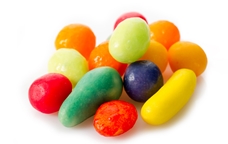
Non-sugar sweeteners
The introduction of new technologies for non-sugar sweeteners has brought about a shift towards natural non-sugar sweeteners rather than artificial sweeteners. To assess the market, non-sugar sweeteners are broadly divided into three types, high fructose corn syrup (HFCS), high intensity sweeteners (HIS) and sugar alcohols. HFCS and HIS have their major application as a sugar substitute while sugar alcohols have application in pharmaceuticals and oral health care products as well as food and beverages.
In terms of the demand growth rate of the non-sugar sweeteners, Asia-Pacific is the second-largest market, next to North America. In North America and Europe there has been an increase in the demand for low calorie products due to the increase in diabetes and obesity. Increasing consumer awareness, greater disposable income and changes in lifestyle will drive the Asia-Pacific market.
Demand for stevia
Changing consumer preferences for natural sweeteners are spurring the stevia market around the world. The industry is projected to hit US$565.2 million by 2020, according to a new report from Future Market Insights (FMI). In its latest report, “Global Stevia Market – Market Analysis and Opportunity Assessment, 2014 – 2020”, it forecasts a single-digit CAGR from 2014 through 2020. Stevia will account for about 15% of the overall sweetener market by the end of the forecast period.
In addition to shifting natural sweetener preferences of consumers, growing awareness and health concerns, urbanization, and modern retail trends are helping boost demand for stevia around the world. The broadening range of products with stevia-based sweetener ingredients in various end-use industries will also continue to fuel market expansion.
The need for effective alternatives for artificial sugar-based products will provide an additional market boost. Changing consumer lifestyle, increasing product visibility in urban areas, and approval by the U.S. Food and Drug Administration (FDA) for rebaudioside A as an ingredient in food products in European countries will speed up the shift to natural sweeteners.
FMI analyst Vipassa K said stevia extracts will become a mainstream ingredient in the global food and beverages industry in the near future. “Increasing demand for alternatives to synthetic or artificial sweeteners due to health concerns, coupled with rising demand for plant-based sweeteners is projected to fuel growth of the stevia market over the next five to six years,” she added.
Powdered stevia is predicted to dominate the global stevia market, which is divided into liquid, powdered, and leaf forms. Ease of availability and use will stimulate demand for the category, which is forecast to take up about 65.4% of the global industry by 2020. Liquid stevia, meanwhile, will post a CAGR of about 9% during the forecast period.
The high-intensity natural sweetness properties of stevia extracts will encourage their increasing adoption in soft drinks and juices, ice creams, and various other products. All forms of stevia extracts are currently extensively used in the dairy, bakery, confectionery, beverages, packaged food, and snacks industries. Besides expanding applications in the food and beverages segments, adoption of stevia-based sweeteners in more products across end-use sectors such as bakery and confectionery will help boost growth further.
Monk fruit as substitute
Monk fruit is increasingly being used as a natural low-calorie alternative to sugar, and competes with other natural and artificial sweeteners. According to Monk Fruit Corp, which is among the leading producers of the sweetener, the fruit has recently been highlighted as an ingredient in product launches from a number of brands including Starbucks, Yoplait, and Nestlé.
Rising demand for the fruit has encouraged the company to double its supply this year. Along with this, it announced a corporate rebranding and the completion of a new round of equity to fund future growth.
“The new investment has allowed us to significantly increase our grower network and fruit supply, cementing our position at the top of the industry,” explained Frank Lan, CEO and founder of Monk Fruit Corp. “Monk Fruit Corp. now has a raw material supply chain that will produce at least twice as much fruit as our nearest competitor this year.”
David Thorrold, general manager, Sales and Marketing added, “Working with our partner Tate & Lyle, we have built confidence among food and beverage companies in our monk fruit products, and that is now translating into a number of exciting product launches in global brands.”
Monk Fruit was formerly known as “BioVittoria” in the US and “Guilin GFS Bio-Tech Co.” in China.
“The change of name reflects the fact that our business is exclusively focused on the cultivation, processing and marketing of monk fruit, and that we are the only company to do this. At the same time, it communicates our more than decade-long history of innovation, focus and leadership in the monk fruit industry,” said Mr Lan.
According to the company, US food and beverage product launches with monk fruit have nearly doubled in the first four months of 2015 compared to the same period last year, and this builds on strong growth in 2014 when new product launches increased by 75% compared to 2013. The company estimates that its share of the market for monk fruit ingredients is now about 70%.
Air Zoom Pegasus 35