
 Access
 Login/Register
 Supplier Login












RESEARCHERS from the University of Chicago said children who had the surgery to remove their tonsils and adenoids had a 30% reduction in acute asthma exacerbations and a 38% decrease in acute asthma in the first year after the operation. The results of the first large study*, which involved data on more than 40,000 children between the ages of 3 and 17, was published in the journal PLOS Medicine.
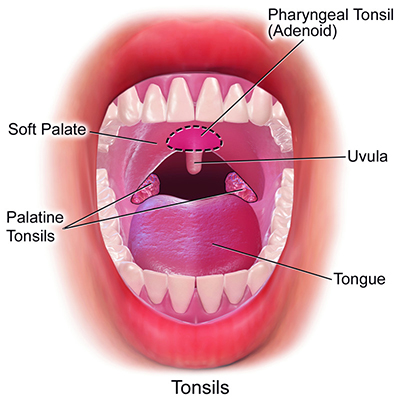
Surgical of the tonsils and adenoids also to reduce asthma severity and decrease reliance on medications in asthmatic children (The University of Chicago Medicine)
Lead author, Rakesh Bhattacharjee, MD, and his co-researchers also found pediatric patients who received the surgery had a 36% reduction in asthma-related hospitalizations and a 26% decline in asthma-related emergency room visits. Children who did not have the surgery did not have significant reductions.
"Several small studies have described a strong association between obstructive sleep apnea and asthma, two common inflammatory conditions that impair breathing in children. But we wanted to test the strength of the connection when studied in a much larger population," said Dr. Bhattacharjee, assistant professor of pediatrics at the University of Chicago and an authority on pediatric sleep medicine.
"Our study adds weight to the growing sense that obstructive sleep apnea aggravates asthma and further tips the balance toward early identification of obstructive sleep apnea," he said. "This will help physicians advocate for surgical intervention, not just to eradicate sleep-disordered breathing, but also to reduce asthma severity and decrease reliance on medications in asthmatic children."
Bhattacharjee said a prospective, randomized, controlled clinical trial is still needed to show a direct causal relationship.
The study involved data on more than 40,000 children between the ages of 3 and 17, obtained from Truven Health's MarketScan? databases. It included 13,506 U.S. children with asthma who underwent removal of their adenoids and tonsils as treatment for obstructive sleep apnea. The researchers compared their asthma symptoms from the year before surgery to the year afterwards.
They also compared those results to 27,012 children with asthma -- carefully matched in a 2:1 ratio for age, sex and location -- who retained their tonsils and adenoids.
The authors note several concerns about their data. The MarketScan database includes only patients with private insurance, not those with government coverage or no health insurance. Nor is it clear from the available data why patients underwent adenotonsillectomy, although the vast majority of such procedures are performed for sleep apnea.
Despite the limitations, they emphasize that the many plausible connections that link obstructive sleep apnea to asthma. Both are inflammatory diseases. They share risk factors such as allergies, obesity and exposure to tobacco smoke. Severe obstructive sleep apnea is often associated with poorly controlled asthma.
The journal's editors, in a brief summary, note that adenotonsillectomy is associated with some risks, but note that the study's findings "suggest that the detection and treatment of adenotonsillar hypertrophy may help to improve asthma control in children."
* Rakesh Bhattacharjee, Beatrix H. Choi, David Gozal, Babak Mokhlesi.”Association of Adenotonsillectomy with Asthma Outcomes in Children: A Longitudinal Database Analysis.” PLoS Medicine, 2014; 11 (11): e1001753 DOI:10.1371/journal.pmed.1001753
Nike