
 Access
 Login/Register
 Supplier Login












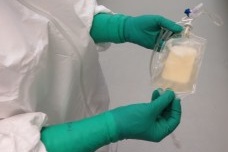 PERSONALIZED melanoma vaccines can be used to marshal a powerful immune response against unique mutations in patients' tumors, according to early data from Washington University School of Medicine research* reported in Science Express. The finding is a boost to cancer immunotherapy, a treatment strategy that unleashes the immune system to seek out and destroy cancer.
In a first-in-people clinical trial at Washington University School of Medicine in St. Louis, the tailor-made vaccines given to three patients with advanced melanoma appeared to increase the number and diversity of cancer-fighting T cells responding to the tumors. The melanoma patients had had surgery to remove their tumors but whose cancer cells had spread to the lymph nodes, an indicator the deadly skin cancer is likely to recur.
In a new approach that merges cancer genomics with cancer immunotherapy, the cancer vaccines were developed by first sequencing the genomes of patients' tumors and samples of the patients' healthy tissues to identify mutated proteins called neoantigens unique to the tumor cells. Then, using computer algorithms and laboratory tests, the researchers were able to predict and test which of those neoantigens would be most likely to provoke a potent immune response and would be useful to include in a vaccine.
"This is about as personalized as vaccines can get," said co-author Elaine Mardis, PhD, co-director of the McDonnell Genome Institute at Washington University, where the cancer genome sequencing, analysis and neoantigen prediction were performed. "The approach we describe is fundamentally different from conventional mutation discovery, which focuses on identifying mutated genes that drive cancer development. Instead, we're looking for a unique set of mutated proteins in a patient's tumor that would be most likely to be recognized by the immune system as foreign."
Melanomas are notorious for having high numbers of genetic mutations caused by exposure to ultraviolet light. Biopsy samples of melanomas typically carry 500 or more mutated genes. Using prediction algorithms, the researchers narrowed their search for vaccine candidates by identifying neoantigens that not only were expressed in a patient's tumor but also were likely to be seen by that patient's immune system as "non-self."
After the vaccine infusions, the patients' blood was drawn every week for about four months. By analyzing the blood samples, the researchers could see that each patient mounted an immune response to specific neoantigens in their vaccines. The vaccines also stimulated diverse clones of battle-ready T cells against neoantigens, suggesting this approach also could be used to activate a range of T cells and target them to mutations in other cancers with high mutation rates, such as lung cancer, bladder cancer and certain colorectal cancers.
"This proof-of-principle study shows that these custom-designed vaccines can elicit a very strong immune response," said senior author Gerald Linette, MD, PhD, a Washington University medical oncologist leading the clinical trial at Siteman Cancer Center and Barnes-Jewish Hospital. "The tumor antigens we inserted into the vaccines provoked a broad response among the immune system's killer T cells responsible for destroying tumors. Our results are preliminary, but we think the vaccines have therapeutic potential based on the breadth and remarkable diversity of the T-cell response."
It's too early to say whether the vaccines will be effective in the long term, the researchers cautioned. The study was designed to evaluate safety and immune response; however, none of the patients has experienced adverse side effects.
"Our team has developed a new strategy for personalized cancer immunotherapy," Dr. Linette said. "Many researchers have hypothesized that it would be possible to use neoantigens to broadly activate the human immune system, but we didn't know that for sure until now. We still have much more work to do, but this is an important first step and opens the door to personalized immune-based cancer treatments."
These clinical findings set the stage for a phase I vaccine trial, approved by the Food and Drug Administration as part of an investigational new drug application. The trial will enroll six patients.If additional testing in more patients indicates the vaccines are effective, they may one day be given to patients after surgery to stimulate the immune system to attack lingering cancer cells and prevent a recurrence.
* Carreno BM, Magrini V, Becker-Hapak M, Kaabinejadian S, Hundal J, Petti AA, Ly A, Lie W-R, Hildebrand WH, Mardis ER and Linette GP. “A dendritic cell vaccine increases the breadth and diversity of melanoma neoantigen-specific T cell.” Science Express, April 2, 2015.
Junior